Winter harvest? Russian grass genes could hold key to developing cold-tolerant corn, sugar cane

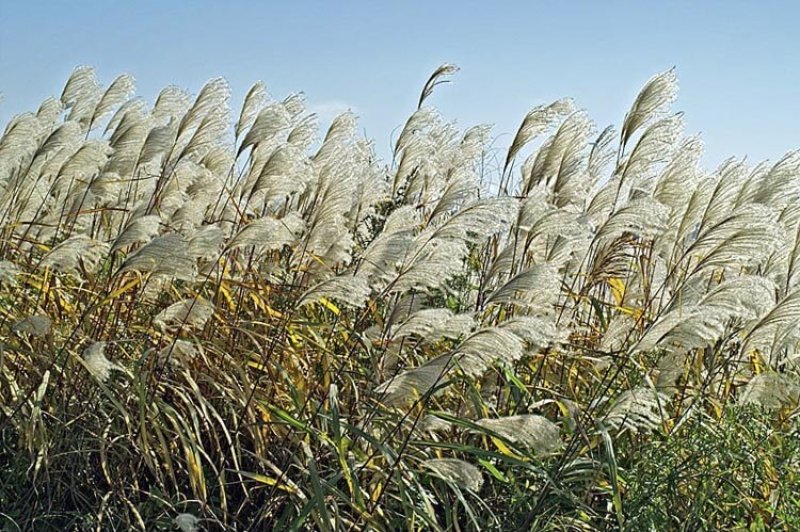
Miscanthus sacchariflorus

Winters in eastern Russia are intensely cold, with air temperatures regularly reaching minus 30 degrees in some locations. It is a seemingly inhospitable climate, but native plants have found ways to thrive there.

University of Illinois plant geneticist Erik Sacks suspected one of these plants may hold the key to breeding cold-tolerant food and biomass crops.

To find out, the modern-day botanical explorer set off across eastern Russia with colleagues … to collect specimens of the perennial grass Miscanthus sacchariflorus.

“Miscanthus is part of a tribe of grasses, the Andropogoneae, that includes sorghum, sugarcane, and corn,” Sacks explained. “Because it is found so far north, this population of Miscanthus sacchariflorus is likely the most cold-hardy of that group. If we want to improve cold hardiness in this very important group of plants, this is going to be best population to study.”

The analysis also showed that plants in the collection were genetically diverse, a fact that could potentially be exploited by breeders to express desirable traits in new miscanthus varieties or to add greater cold hardiness to its relatives, sugarcane and maize.

[Read the full study here.]

The GLP aggregated and excerpted this blog/article to reflect the diversity of news, opinion, and analysis. Read full, original post: Improving cold hardiness in miscanthus

{{ reviewsTotal }}{{ options.labels.singularReviewCountLabel }}
{{ reviewsTotal }}{{ options.labels.pluralReviewCountLabel }}
{{ options.labels.newReviewButton }}
{{ userData.canReview.message }}

Related Articles

Infographic: Global regulatory and health research agencies on whether glyphosate causes cancer

Infographic: Global regulatory and health research agencies on whether glyphosate causes cancer

Does glyphosate—the world's most heavily-used herbicide—pose serious harm to humans? Is it carcinogenic? Those issues are of both legal and ...

Most Popular

Picture1-5
Science Disinformation Gap: The transatlantic battle over social media and censorship
Screenshot-2026-04-23-at-11.00.36-AM
Regulators' dilemma: Thalidomide, Metformin, and the cost of getting drug approvals wrong
ChatGPT-Image-May-12-2026-08_39_41-PM
GLP podcast: Big Pharma, Big Ag, Big Food—health harming industries or life-saving innovators?
Screenshot-2026-05-12-at-9.58.31-PM
'He seems fine': Marty Makary out as FDA commissioner
ChatGPT Image May 10, 2026, 08_16_59 PM 2
Overmedicalization? RFK Jr.’s antidepressant crackdown raises conflict questions over his fee stake in Wisner Baum, the tort firm built on suing drug makers
Picture1-1
Cooling the planet with balloons: Could a geoengineering gamble slow global warming?
Screenshot-2026-05-12-at-10.05.11-AM
Pro-vaccine “hero” vs. an anti-vax “villain”: ‘Bad Vaxx’ video stirs MAHA backlash
ChatGPT Image May 12, 2026, 10_19_00 AM 2
Viewpoint— 'Muscular governance': How authoritarianism is surging corporate-linked energy misinformation
Screenshot-2026-05-11-104424
Hantavirus outbreak research: Trump administration shut down study last year on rodent-to-human transmission
Screenshot-2026-05-01-at-1.29.41-PM
Viewpoint: What happens when whole grains meet modern food manufacturing? Labels don’t tell the whole story.
S
As vaccine rejectionism spreads, measles may be taking a more dangerous turn
Picture1-14
When superbugs threaten vulnerable children: Can AI help solve antibiotic resistance?
images
The never-ending GMO debate: Pros and cons
glp menu logo outlined

Get news on human & agricultural genetics and biotechnology delivered to your inbox.