Fighting bioterrorism, disease: ‘Radically redesigned’ antibiotics show promise

PELL LAB x
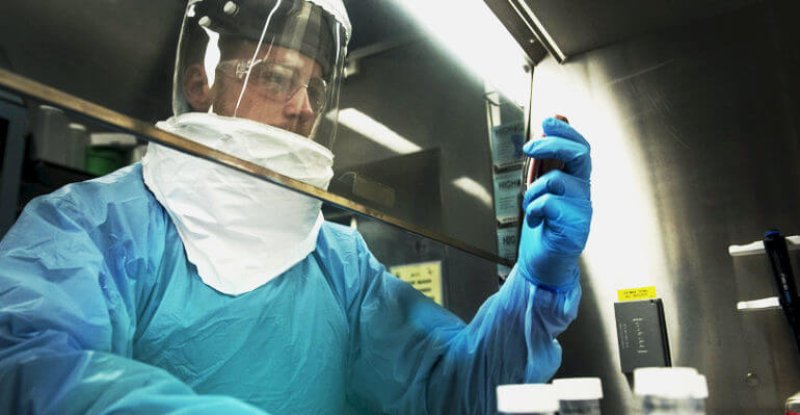
(Photo: Penn State, Patrick Mansell)

Early tests of radically redesigned antibiotics suggest the drugs could bolster defenses against biowarfare and bioterrorism.

[R]esearchers used two inhibitors … to stop the proliferation of Franscisella tularensis, [a] bacteria that the US Centers for Disease Control classifies as a tier 1 select agent because the strain is highly infective and easily spread….

Franscisella tularensis can cause fatalities in up to 60 percent of the cases if left untreated…. It was also stockpiled as a biowarfare agent during the Cold War.

“In today’s world of terrorism, it is essential that we are well-prepared to defend ourselves and our military personnel against biowarfare agents,” says [Girish] Kirimanjeswara [assistant professor of veterinary and biomedical sciences at Penn State]. “In that regard, finding new targets and antibiotics against these agents is critical and our research shows that these compounds may be very.”

“If we don’t develop new drugs and the resistant genes are going to continue to spread, more and more diseases will become untreatable,” [said Kenneth Keiler, professor of biochemistry and molecular biology at Penn State.]

He suggests that because the researchers are using a new compound and targeting a new pathway, Franscisella tularensis — and possibly other pathogens — may struggle to adapt resistance to the treatment.

[Read the full study here]

The GLP aggregated and excerpted this blog/article to reflect the diversity of news, opinion, and analysis. Read full, original post: Can these next-gen antibiotics defend against bioterrorism?

{{ reviewsTotal }}{{ options.labels.singularReviewCountLabel }}
{{ reviewsTotal }}{{ options.labels.pluralReviewCountLabel }}
{{ options.labels.newReviewButton }}
{{ userData.canReview.message }}

Related Articles

Infographic: Global regulatory and health research agencies on whether glyphosate causes cancer

Infographic: Global regulatory and health research agencies on whether glyphosate causes cancer

Does glyphosate—the world's most heavily-used herbicide—pose serious harm to humans? Is it carcinogenic? Those issues are of both legal and ...

Most Popular

Screenshot-PM-24
Viewpoint: The herbicide glyphosate isn’t perfect. Banning it would be far worse.
79d03212-2508-45d0-b427-8e9743ff6432
Viewpoint: The Casey Means hustle—Wellness woo opportunism dressed up as medical wisdom
d-b
Blocked arteries, kidney stones, nausea, constipation, fatigue: Long list of health problems caused by too much vitamin D 
ChatGPT-Image-Mar-27-2026-11_27_05-AM
The myths of “process”: What science says about the “dangers’ of synthetic products and ultra-processed foods
ChatGPT-Image-Mar-10-2026-01_39_01-PM
Viewpoint—“Miracle molecule” debunked: Why acemannan supplements don’t work
ChatGPT-Image-Apr-30-2026-05_00_48-PM
Wellness grifter physician turned wellness influencer out as surgeon general nominee
Screenshot-2026-04-30-at-11.33.46-AM
Anti-seed-oil to anti-vax pipeline: MAHA movement spreads to teen influencers
ChatGPT-Image-Mar-3-2026-01_17_14-PM
MAHA wellness influencers deride proven anxiety medications, tout lifestyle fixes
ChatGPT-Image-Feb-16-2026-01_04_32-PM
Raw milk myth wake-up call
Screenshot-2026-04-29-at-11.31.42-AM
Dad brains: Only women undergo bodily changes during and after childbirth? Think again.
glp menu logo outlined

Get news on human & agricultural genetics and biotechnology delivered to your inbox.