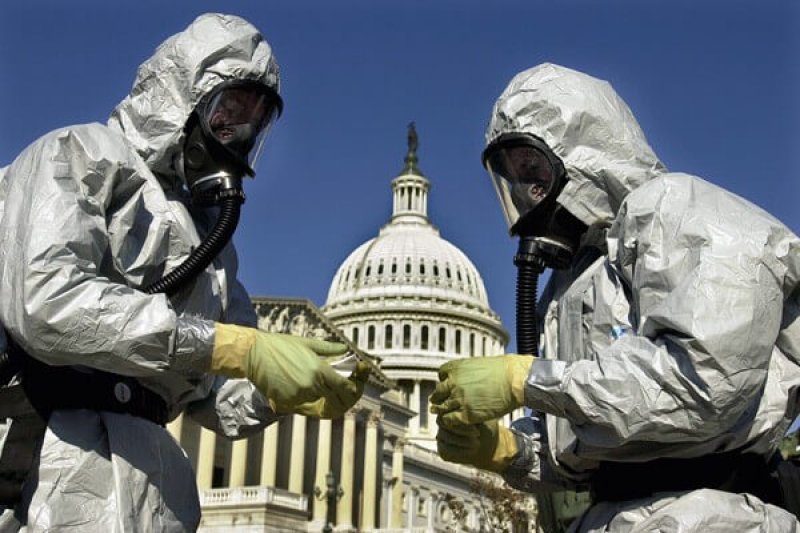
Synthetic bioterrorism: US developing medical rapid response plan

l bioterrorism x

The United States must prepare for surprise attacks at home and abroad from…the new, emerging and largely unknown consequences posed by synthetic biological threats, a senior defense official told House congressional members on [March 23].

Dr. Arthur T. Hopkins, acting assistant secretary for Nuclear, Chemical, and Biological Defense Programs at the U.S. Department of Defense (DOD), testified that…”emerging infectious diseases, synthetic biology and engineered diseases…[is] an area where we are focusing and we have to continue to focus.”

“It’s thinking about the biological threat that keeps me awake at night. It’s cheap, available and easy to transmit pathogens,” said U.S. Rep. Ralph Abraham (R-LA).

To counter such current and emerging threats, DOD’s Chemical and Biological Defense Program is developing new strategies to more rapidly respond, especially in the area of medical countermeasures, Hopkins said.

“The primary thing is early detection of a problem and then getting ahead of the curve on dealing with the problem. Early detection and warning are where [federal budget] investments should be made,” noted Peter Verga, the assistant secretary of defense for Homeland Defense and Global Security.

The GLP aggregated and excerpted this blog/article to reflect the diversity of news, opinion, and analysis. Read full, original post: Dept. of Defense aims countermeasures at WMD, synthetic biological threats

For more background on the Genetic Literacy Project, read GLP on Wikipedia

{{ reviewsTotal }}{{ options.labels.singularReviewCountLabel }}
{{ reviewsTotal }}{{ options.labels.pluralReviewCountLabel }}
{{ options.labels.newReviewButton }}
{{ userData.canReview.message }}

Related Articles

Infographic: Global regulatory and health research agencies on whether glyphosate causes cancer

Infographic: Global regulatory and health research agencies on whether glyphosate causes cancer

Does glyphosate—the world's most heavily-used herbicide—pose serious harm to humans? Is it carcinogenic? Those issues are of both legal and ...

Most Popular

Screenshot-2026-04-20-at-2.26.27-PM
Viewpoint — Food-fear world: The latest activist scientists campaign: Cancer-causing additives
Screenshot-2026-03-13-at-12.14.04-PM
The FDA wants to make many popular prescription drugs OTC—a great idea. Here’s why it’s unlikely to happen
Screenshot-2026-05-04-at-12.54.32-PM
How Utah became the country’s supplement capital  — and a haven for unregulated, ineffective and fake products
Screenshot-2026-05-01-at-11.56.24-AM
‘Science moves forward when people are willing to think differently’: Memories of DNA maverick Craig Venter
Screenshot-2026-04-03-at-11.15.51-AM
Paraben panic: How a flawed study, media hype, and chemophobia convinced the public of the danger of one of the safest classes of preservatives
ChatGPT-Image-May-1-2026-02_20_13-PM
How RFK, Jr.’s false vaccine claims are holding up $600 million to fight diseases in poor countries
Screenshot-2026-04-30-at-2.19.37-PM
5 myths about summer dehydration that could damage your health — or even kill you
ChatGPT-Image-Mar-27-2026-11_27_05-AM
The myths of “process”: What science says about the “dangers’ of synthetic products and ultra-processed foods
Drinking lots of water can help reduce the effects of aging
Nanoplastics in drinking water: MAHA activists forge science-based bipartisan coalition 
viva-la-vida-watermelons
Misinformation and climate change are endangering summer watermelons
ChatGPT-Image-Mar-10-2026-01_39_01-PM
Viewpoint—“Miracle molecule” debunked: Why acemannan supplements don’t work
circular-bioeconomy-should-focus-on-sustainable-wellbeing
GLP podcast: What's wrong with 'doomsday' environmentalism? It's false.
glp menu logo outlined

Get news on human & agricultural genetics and biotechnology delivered to your inbox.