Nanotechnology-inspired inkjet printers are growing stem cells that could help regenerate nerves

C S KBHXsAAEEiC

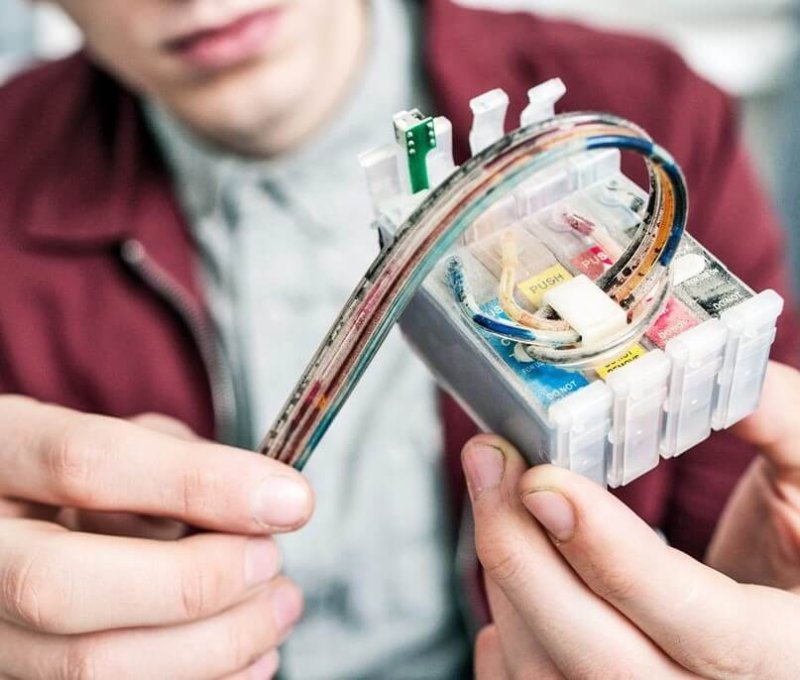
Inkjet printers and lasers are parts of a new way to produce cells important to research on nerve regeneration.

Researchers at Iowa State University have developed a nanotechnology that uses inkjet printers to print multi-layer graphene circuits….It turns out mesenchymal stem cells adhere and grow well on the treated circuit’s raised, rough, and 3D nanostructures. Add small doses of electricity—100 millivolts for 10 minutes per day over 15 days—and the stem cells become Schwann-like cells, [which secrete substances that promote the health of nerve cells].

“This technology could lead to a better way to differentiate stem cells,” says Metin Uz, a postdoctoral research associate in chemical and biological engineering.

The researchers report the results could lead to changes in how nerve injuries are treated inside the body.

“These results help pave the way for in vivo peripheral nerve regeneration where the flexible graphene electrodes could conform to the injury site and provide intimate electrical stimulation for nerve cell regrowth,” the researchers write in a summary of their findings.

[Read the original source here]

The GLP aggregated and excerpted this blog/article to reflect the diversity of news, opinion, and analysis. Read full, original post: How inkjet printers help transform stem cells

For more background on the Genetic Literacy Project, read GLP on Wikipedia

{{ reviewsTotal }}{{ options.labels.singularReviewCountLabel }}
{{ reviewsTotal }}{{ options.labels.pluralReviewCountLabel }}
{{ options.labels.noReviewsLabel }}
{{ options.labels.newReviewButton }}
{{ userData.canReview.message }}

Related Articles

Infographic: Global regulatory and health research agencies on whether glyphosate causes cancer

Infographic: Global regulatory and health research agencies on whether glyphosate causes cancer

Does glyphosate—the world's most heavily-used herbicide—pose serious harm to humans? Is it carcinogenic? Those issues are of both legal and ...

Most Popular

ChatGPT-Image-Jul-10-2026-12_21_03-PM
Viewpoint: Is there new evidence that the animal deworming drug ivermectin decreases the risk of Covid and cancer? Don’t waste your money.
ChatGPT-Image-Mar-10-2026-01_39_01-PM
Viewpoint—“Miracle molecule” debunked: Why acemannan supplements don’t work
Screenshot-2026-07-09-at-1.09.25-PM
Anti-vaccine myths rattle health care
Picture1
Hiroshima at 81: America’s new nuclear bomb, a buried Iranian target, and a question no one wants to ask
Screenshot-2026-07-30-at-3.07.42-PM
Controversy over WNBA star Sophie Cunningham’s comment opposing trans females in women’s sports reinvigorates the culture wars
leeteam
How Kennedy and his family could pocket millions from Merck’s $50 million vaccine injury settlement that he oversaw
Screenshot-2026-07-30-at-2.30.35-PM
Climate scientists claim conservative activists are promoting ‘lies’ that Europe’s summer heatwaves are far from unusual
ChatGPT-Image-Jun-25-2026-12_23_17-PM
No, Bill Gates did not secretly engineer ticks to promote veganism
ChatGPT Image Jul 29, 2026, 05_50_04 PM
Fear, science, and the law: If talc powder is unlikely to cause cancer and J&J was winning in court, why did it pay more than $5.5 billion to settle?

Sorry. No data so far.

glp menu logo outlined

Get news on human & agricultural genetics and biotechnology delivered to your inbox.