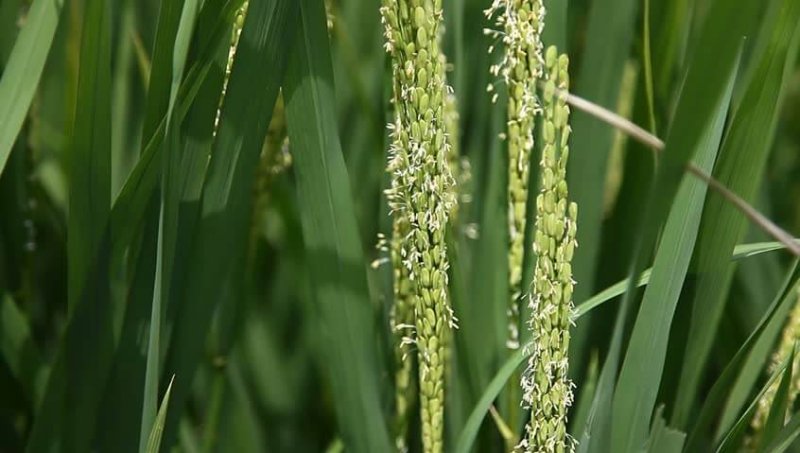

A new strain of rice that flowers within a certain period of time after being sprayed with commercial chemicals commonly used to protect rice from fungal diseases is now available, say Japanese scientists. This new strain could one day allow rice farmers to dictate the timing of their harvest regardless of weather, temperature and other conditions that currently affect cultivation.
A group of Japanese scientists led by Professor Takeshi Izawa at the University of Tokyo’s Graduate School of Agricultural and Life Sciences developed a new rice strain that flowers 40 to 45 days after being administered a common agrochemical, commercially known as Routine or Oryzemate, that prevents rice from being infected by a damaging disease called rice blast.
Izawa, who has been working on molecular mechanisms behind plant flowering for more than 20 years, thought that there would be a handful of promoters–genetic regions that switch on the gene–that will make the Hd3a respond to certain agrochemicals. “We identified 12 candidate promoters using a technique called ‘field transcriptome analysis’ that reveals which genes are activated in response to Routine or Oryzemate under natural cultivation conditions. We tested the efficacy of all the promoters and found that only one could be used to fulfill our purposes, instead of several as we had hoped.”




The GLP aggregated and excerpted this blog/article to reflect the diversity of news, opinion, and analysis. Read full, original post: New rice strain could help farmers predetermine harvest time
For more background on the Genetic Literacy Project, read GLP on Wikipedia