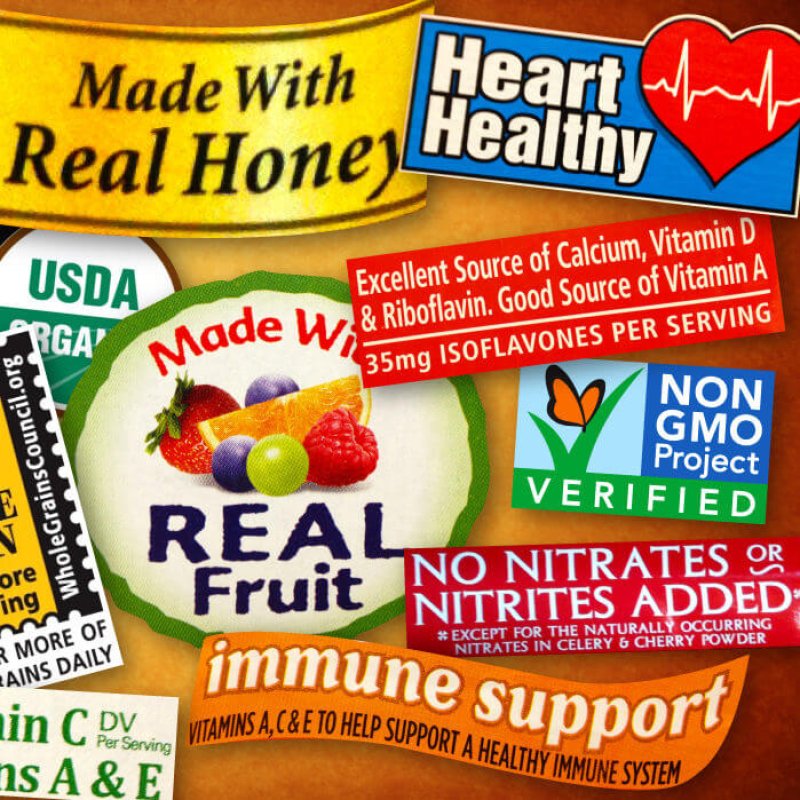
Americans pay less attention to ‘organic’ and ‘GMO’ in weighing food health benefits, survey finds

food label claims e

Determining what exactly is a “healthy” food has us all scratching our heads.

A new survey suggests that most Americans are confused about what counts as a healthy food choice.

About eight in 10 survey respondents said they have found conflicting information about what foods to eat and what foods to avoid — and more than half of them said the conflicting information has them second-guessing the choices they make, according to the International Food Information Council Foundation’s annual Food and Health survey….

The survey involved 1,002 American adults, who completed it online in March. Nearly 60% of respondents ranked being “high in healthy components or nutrients” as one of the top three factors for a “healthy” food.

Slightly more than half of respondents ranked “free from artificial ingredients, preservatives or additives” among the top three factors, and nearly 50% ranked “part of an important food group that I need to build a healthy eating style” among the top three factors.

Factors such as “organic” and “non-GMO,” or genetically modified, were less likely to be ranked.

“Looking at the survey results, it’s positive that the public recognizes the importance of foods being high in healthy components, nutrients, and part of an important food group and correctly pay less attention to criteria like GMO or organic,” [said Dr. Dariush Mozaffarian, dean of the Friedman School of Nutrition Science and Policy at Tufts University, who was not involved in the new survey.]

The GLP aggregated and excerpted this blog/article to reflect the diversity of news, opinion, and analysis. Read full, original post: ‘Healthy’ foods have most of us confused, survey finds


{{ reviewsTotal }}{{ options.labels.singularReviewCountLabel }}
{{ reviewsTotal }}{{ options.labels.pluralReviewCountLabel }}
{{ options.labels.newReviewButton }}
{{ userData.canReview.message }}

Related Articles

Infographic: Global regulatory and health research agencies on whether glyphosate causes cancer

Infographic: Global regulatory and health research agencies on whether glyphosate causes cancer

Does glyphosateโ€”the world's most heavily-used herbicideโ€”pose serious harm to humans? Is it carcinogenic? Those issues are of both legal and ...

Most Popular

Picture1
The Orange Bowl without oranges: Can CRISPR save Florida citrus?
ChatGPT-Image-May-1-2026-11_42_59-AM-2
Viewpoint: NAD is the wellness grifters latest evidence-lite longevity fad. At least the mice are impressed.
vax-misinformation-main
Facts & Fallacies Podcast: Limit free speech to blunt social media misinfo?
global warming
โ€˜Implausibleโ€™: Top climate scientists reject worst-case scenarioโ€”soaring temperatures and fast-rising sea levels
ChatGPT Image May 26, 2026, 12_06_53 PM
Fake Ebola cure promoters already cashing in as disinformation videos flood social media
Screenshot-2026-04-22-at-12.21.32-PM
Viewpoint: Why the retracted Monsanto glyphosate study doesnโ€™t change the scienceโ€”the worldโ€™s most popular herbicide is safeย 
ChatGPT Image May 24, 2026, 03_16_36 PM
Here come the biohackers' Enhanced Gamesโ€”The Olympics for athletes doping up on steroids, hormones and peptides. Whatโ€™s wrong with that?
Screenshot 2026-05-22 at 11.31
โ€˜Realistic and durableโ€™: EPA proposes loosening restrictions on some PFAS โ€˜forever chemicals.โ€™
Screenshot-2026-05-21-at-12.15.17-PM
UK gene-editing milestone: Livestock barley that increases ruminant value and reduces methane emissions is first-approved CRISPR crop
Picture1
The FDA couldnโ€™t find a vaccine safety crisis, so it buried its own research
glp menu logo outlined

Get news on human & agricultural genetics and biotechnology delivered to your inbox.