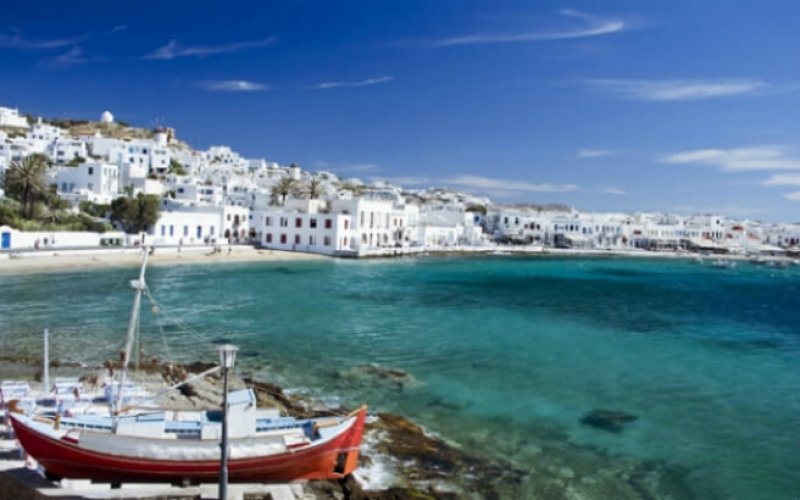
The Mediterranean Sea has represented one of the most important crossroads in human history, acting both as a barrier and a bridge between three continents and multiple human groups characterized by different genetic and cultural backgrounds. Despite this complex history and despite modern national borders, there is a shared Mediterranean genetic continuity, extending from Sicily to Cyprus, where the populations of certain Greek-speaking islands appear genetically closer to Southern Italian populations than to populations from continental Greece.
“This shared Mediterranean ancestry possibly traces back to prehistoric times, as the result of multiple migration waves, with peaks during the Neolithic and the Bronze Age,” says Stefania Sarno, researcher from the University of Bologna and lead author of the study. Apparently, the ancient Greek expansions (during the Magna Graecia foundation) were only one of the last events in a long history of East-West movements, where the Mediterranean Sea served as a preferential crossroads for the circulation of genes and cultures.
“These new genomic results from the Mediterranean open a new chapter for the study of the prehistoric movements behind the diffusion of the most represented language family in Europe. The spread of these languages in the Southern regions, where Indo-European languages like Italian, Greek and Albanian are spoken nowadays, cannot be explained with the major contribution from the steppe alone,” adds Chiara Barbieri from the Max Planck Institute for the Science of Human History in Jena.

The GLP aggregated and excerpted this blog/article to reflect the diversity of news, opinion, and analysis. Read full, original post: Populations along the eastern Mediterranean coast share a genetic heritage that transcends nationality