Video: ‘Weed seed pulverizing machine’ could help combat herbicide resistance

Screen Shot at PM

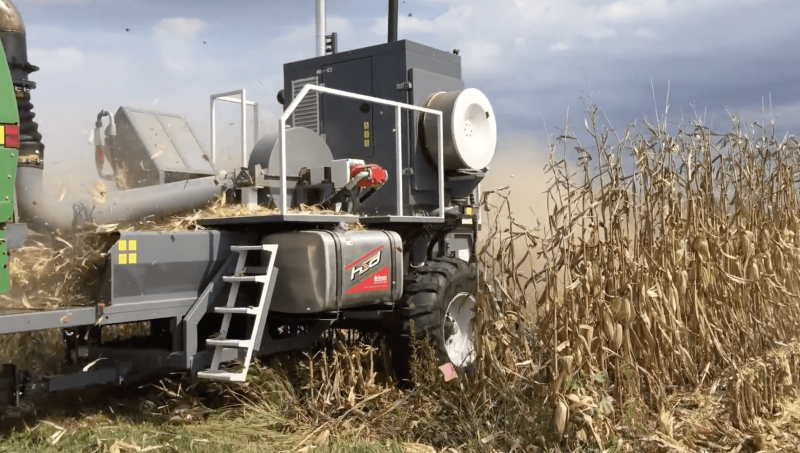
Known by a name seemingly out of a superhero comic book, the Harrington Seed Destructor is a mechanical beast that takes aim at a tiny but formidable enemy: the seeds from crop-destroying weeds. They plague farmers the world over, and left unchecked, weeds would cost an estimated $43 billion in lost soy and corn production alone in the United States and Canada each year.

To fight back, most farmers have two main choices, at least for now: rip the weeds from the ground by hand or by plow, or spray them with chemical herbicides so they wither and die. But these choices have long presented a paradox. Tilling can control weeds, but it also can disrupt and degrade the soil — and poor soil grows poor crops. Herbicides, on the other hand, are easier to use — just point and spray — and they can preserve the soil’s delicate structure. But just like bacteria exposed to too many antibiotics, weeds confronted by years of herbicide spraying can give rise to resistant varieties that are increasingly hard and expensive to kill.

That’s where [Steven] Mirsky [a USDA ecologist] and the Harrington Seed Destructor, or HSD for short, come in. Mirsky … has sought practical solutions to the weed paradox for more than a decade. One of his goals is to go after the seeds, when weed populations are especially vulnerable, rather than trying to control weeds that have already taken root.


The GLP aggregated and excerpted this blog/article to reflect the diversity of news, opinion, and analysis. Read full, original post: Meet the Weed Seed Pulverizing Machine

{{ reviewsTotal }}{{ options.labels.singularReviewCountLabel }}
{{ reviewsTotal }}{{ options.labels.pluralReviewCountLabel }}
{{ options.labels.newReviewButton }}
{{ userData.canReview.message }}

Related Articles

Infographic: Global regulatory and health research agencies on whether glyphosate causes cancer

Infographic: Global regulatory and health research agencies on whether glyphosate causes cancer

Does glyphosate—the world's most heavily-used herbicide—pose serious harm to humans? Is it carcinogenic? Those issues are of both legal and ...

Most Popular

Screenshot-2026-04-20-at-2.26.27-PM
Viewpoint — Food-fear world: The latest activist scientists campaign: Cancer-causing additives
Screenshot-2026-03-13-at-12.14.04-PM
The FDA wants to make many popular prescription drugs OTC—a great idea. Here’s why it’s unlikely to happen
Screenshot-2026-05-04-at-12.54.32-PM
How Utah became the country’s supplement capital  — and a haven for unregulated, ineffective and fake products
Screenshot-2026-05-01-at-11.56.24-AM
‘Science moves forward when people are willing to think differently’: Memories of DNA maverick Craig Venter
Screenshot-2026-04-03-at-11.15.51-AM
Paraben panic: How a flawed study, media hype, and chemophobia convinced the public of the danger of one of the safest classes of preservatives
Screenshot-2026-04-30-at-2.19.37-PM
5 myths about summer dehydration that could damage your health — or even kill you
ChatGPT-Image-May-1-2026-02_20_13-PM
How RFK, Jr.’s false vaccine claims are holding up $600 million to fight diseases in poor countries
ChatGPT-Image-Mar-27-2026-11_27_05-AM
The myths of “process”: What science says about the “dangers’ of synthetic products and ultra-processed foods
viva-la-vida-watermelons
Misinformation and climate change are endangering summer watermelons
ChatGPT-Image-Mar-10-2026-01_39_01-PM
Viewpoint—“Miracle molecule” debunked: Why acemannan supplements don’t work
Drinking lots of water can help reduce the effects of aging
Nanoplastics in drinking water: MAHA activists forge science-based bipartisan coalition 
circular-bioeconomy-should-focus-on-sustainable-wellbeing
GLP podcast: What's wrong with 'doomsday' environmentalism? It's false.
glp menu logo outlined

Get news on human & agricultural genetics and biotechnology delivered to your inbox.