New GMO crop: Brazil approves insect resistant sugarcane for commercial use

Screen Shot at PM

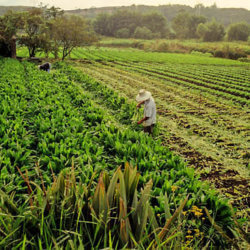
Brazilian biosecurity agency CTNBio on Thursday [June 8] approved commercial use of a genetically modified sugarcane, setting a milestone for Brazil’s highly competitive sugar industry which accounts for about 50 percent of the global trade.

This is the first time in the world that genetically modified sugarcane was approved for commercial use.

The chief executive officer of CTC Centro de Tecnologia Canavieira SA, which developed the technology and made the application seeking approval in December 2015, said it would take some years for sugar produced from GM crops to reach export markets.

CTC said the new variety is resistant to the insect Diatraea saccharalis, known locally as ‘broca-da-cana’ (cane borer), one of the main plagues threatening Brazil’s sugarcane fields, with an estimated 5 billion reais ($1.52 billion) of annual losses to producers. It uses the gene Bt (Bacillus thuringiensis), widely used in other GM crops such as corn and soybeans.

Brazil exports sugar to about 150 countries and some 60 percent of them do not demand regulatory approval to import sugar made from genetically modified organisms.

The GLP aggregated and excerpted this blog/article to reflect the diversity of news, opinion, and analysis. Read full, original post: Brazil biosecurity agency approves GM sugarcane

{{ reviewsTotal }}{{ options.labels.singularReviewCountLabel }}
{{ reviewsTotal }}{{ options.labels.pluralReviewCountLabel }}
{{ options.labels.newReviewButton }}
{{ userData.canReview.message }}

Related Articles

Infographic: Global regulatory and health research agencies on whether glyphosate causes cancer

Infographic: Global regulatory and health research agencies on whether glyphosate causes cancer

Does glyphosate—the world's most heavily-used herbicide—pose serious harm to humans? Is it carcinogenic? Those issues are of both legal and ...

Most Popular

Screen Shot at AM
Facts & Fallacies Podcast: Right-wing politics bad for your health? Separating speculation from science
ChatGPT-Image-Jun-13-2026-11_51_39-AM
Viewpoint: COVID lab leak? Misguided backers of the lab leak theory refuse to give up
drug look like ozempic
Six key health insights from taking weight-loss drugs
ChatGPT Image Jun 3, 2026, 03_54_37 PM
Viewpoint: “Turn on, tune in, drop out”—Kennedy embraces the Timothy Leary psychedelic revolution
ChatGPT-Image-Jun-14-2026-09_41_44-AM-2
Viewpoint—‘The gleeful efficiency of an arsonist’: Administration’s health and science research cuts are ‘sabotaging’ America’s future
Screenshot-2026-06-14-at-9.14.26-AM
‘Humanitarian catastrophe’: Trump’s USAID shutdown could help drive nearly 23 million deaths — including 5.4 million children — by 2030, Lancet study warns
ChatGPT-Image-Jun-11-2026-01_15_03-PM
Selective Pressure, Selective Silence
Screenshot-2026-06-14-at-9.53.54-AM
Is the World Cup a perfect storm for the spread of infectious diseases?
ChatGPT Image Jun 3, 2026, 03_14_43 PM
Viewpoint: How Earthjustice became the poster child for the abuse of special interest activist funding
ChatGPT Image Jun 12, 2026, 02_32_14 PM
‘Have you asked your doctor?’: AMA launches campaign to counter health misinformation
ChatGPT-Image-Mar-10-2026-01_39_01-PM
Viewpoint—“Miracle molecule” debunked: Why acemannan supplements don’t work
Screenshot-2026-06-05-at-2.12.30-PM
Some plants can poison you. So how did humans figure out what is safe to eat?
Screenshot-2026-06-11-at-3.40.06-PM
'Toxin' detox: A gastroenterologist weighs in on $71 billion health trend
glp menu logo outlined

Get news on human & agricultural genetics and biotechnology delivered to your inbox.