Green Revolution 2.0: Agricultural technology ‘moonshot’ could change future of food

Screen Shot at PM

The first meeting of โ€œScience Breakthroughs 2030โ€ just convened to discuss the key advances essential for revolutionizing food and agriculture in the next decade. The resounding theme: What’s needed is akin to a moonshot. Or as committee co-chair John D. Floros put it, a “green revolution 2.0.”

Half a century ago, scientists similarly asked how to feed a growing population. Their answer: “invest more in agricultural technology,” recounted Floros. That investment kick-started what became known as the green revolution. During it, new crop varieties, technological advances, changes in agricultural practices and shifts in the storage and transport of food all contributed to a dramatic increase in agricultural output.

But according to some experts, that investment and the growth it fueled has begun to stagnate. The U.S. Department of Agriculture’s budget for agricultural research “has been flat for a decade,” noted Robert A. Easter of SoAR.
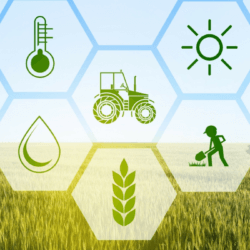

Genomic data is being used to breed new crops and satellite data to identify water and nutrient needsย within a field.ย “There will be data behind every seed we plant,”ย committee co-chair Susan Wesslerย said.

The GLP aggregated and excerpted this blog/article to reflect the diversity of news, opinion, and analysis. Read full, original post:ย This quiet agricultural โ€˜moonshotโ€™ could change the future of food

{{ reviewsTotal }}{{ options.labels.singularReviewCountLabel }}
{{ reviewsTotal }}{{ options.labels.pluralReviewCountLabel }}
{{ options.labels.newReviewButton }}
{{ userData.canReview.message }}

Related Articles

Infographic: Global regulatory and health research agencies on whether glyphosate causes cancer

Infographic: Global regulatory and health research agencies on whether glyphosate causes cancer

Does glyphosateโ€”the world's most heavily-used herbicideโ€”pose serious harm to humans? Is it carcinogenic? Those issues are of both legal and ...

Most Popular

Picture1
The Orange Bowl without oranges: Can CRISPR save Florida citrus?
ChatGPT-Image-May-1-2026-11_42_59-AM-2
Viewpoint: NAD is the wellness grifters latest evidence-lite longevity fad. At least the mice are impressed.
Screenshot-2026-04-22-at-12.21.32-PM
Viewpoint: Why the retracted Monsanto glyphosate study doesnโ€™t change the scienceโ€”the worldโ€™s most popular herbicide is safeย 
vax-misinformation-main
Facts & Fallacies Podcast: Limit free speech to blunt social media misinfo?
ChatGPT Image May 26, 2026, 12_06_53 PM
Fake Ebola cure promoters already cashing in as disinformation videos flood social media
global warming
โ€˜Implausibleโ€™: Top climate scientists reject worst-case scenarioโ€”soaring temperatures and fast-rising sea levels
Screenshot 2026-05-22 at 11.31
โ€˜Realistic and durableโ€™: EPA proposes loosening restrictions on some PFAS โ€˜forever chemicals.โ€™
ChatGPT Image May 24, 2026, 03_16_36 PM
Here come the biohackers' Enhanced Gamesโ€”The Olympics for athletes doping up on steroids, hormones and peptides. Whatโ€™s wrong with that?
Picture1
The FDA couldnโ€™t find a vaccine safety crisis, so it buried its own research
Screenshot-2026-05-21-at-12.15.17-PM
UK gene-editing milestone: Livestock barley that increases ruminant value and reduces methane emissions is first-approved CRISPR crop
Screenshot-2026-05-22-at-11.59.38-AM
Is surrogacy modern-day slavery? What to know about Florida Republican effort to pass severe restrictions.
glp menu logo outlined

Get news on human & agricultural genetics and biotechnology delivered to your inbox.