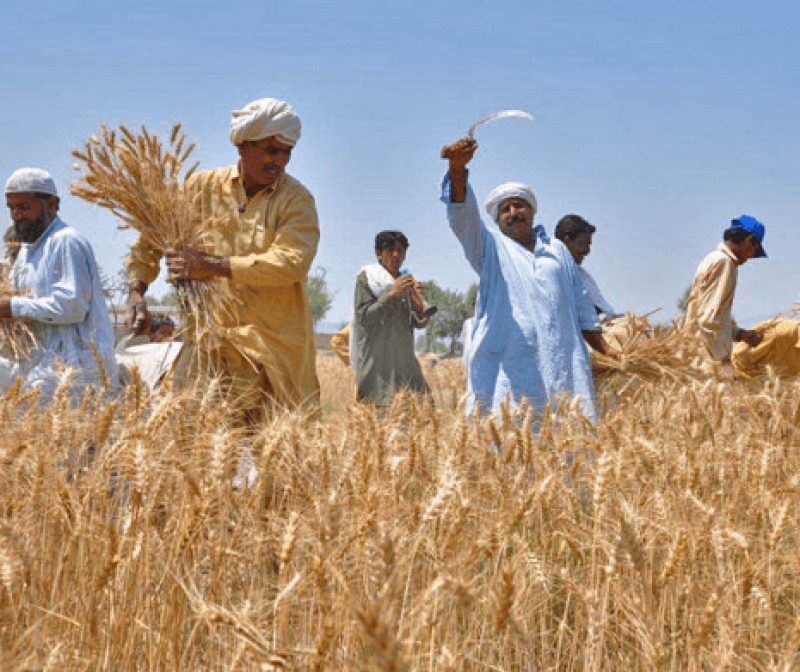
GMO crops could help Pakistan tap its agricultural ‘true potential’

pakistani crop
[Lahore, the capital city of the Pakistani province of Punjab and its] Chamber of Commerce and Industry (LCCI) has called to adopt modern technologies for agriculture sector to avoid post harvest losses and to enhance agri-production.

[Agriculture] continues to be the single largest and dominant driving force for growth as well as the main source of livelihood for 66% of Pakistan’s population. But it has always faced two major problems: first, productions per acre are lower than many countries. Secondly, around 40% of production is wasted in the form of post-harvest losses due to insufficient utilization of biotechnology.

[The LCCI office-bearers] would have to focus on genetically modified and hybrid crops to tap true potential of agricultural productivity in the country. While stressing the need for establishment of institutes both at provincial and federal levels for creating awareness among the farming community about Genetically Modified (GM) technology, they said that sustainability and improvement in crops yield are the major challenges to meet upcoming threats of increasing population and depleting water resources.

The LCCI office-bearers urged the government to patronize scientists working for the technology promotion and [new technological solutions] in the country.

The GLP aggregated and excerpted this article to reflect the diversity of news, opinion, and analysis. Read full, original post: LCCI for adopting new technologies for agriculture sector


{{ reviewsTotal }}{{ options.labels.singularReviewCountLabel }}
{{ reviewsTotal }}{{ options.labels.pluralReviewCountLabel }}
{{ options.labels.newReviewButton }}
{{ userData.canReview.message }}

Related Articles

Infographic: Global regulatory and health research agencies on whether glyphosate causes cancer

Infographic: Global regulatory and health research agencies on whether glyphosate causes cancer

Does glyphosate—the world's most heavily-used herbicide—pose serious harm to humans? Is it carcinogenic? Those issues are of both legal and ...

Most Popular

Screenshot-2026-05-04-at-12.54.32-PM
How Utah became the country’s supplement capital  — and a haven for unregulated, ineffective and fake products
Screenshot-2026-03-13-at-12.14.04-PM
The FDA wants to make many popular prescription drugs OTC—a great idea. Here’s why it’s unlikely to happen
Screenshot-2026-04-20-at-2.26.27-PM
Viewpoint — Food-fear world: The latest activist scientists campaign: Cancer-causing additives
Screenshot-PM-24
Viewpoint: The herbicide glyphosate isn’t perfect. Banning it would be far worse.
images
The never-ending GMO debate: Pros and cons
Screenshot-2026-04-03-at-11.15.51-AM
Paraben panic: How a flawed study, media hype, and chemophobia convinced the public of the danger of one of the safest classes of preservatives
Screenshot-2026-05-01-at-11.56.24-AM
‘Science moves forward when people are willing to think differently’: Memories of DNA maverick Craig Venter
Screenshot-2026-04-30-at-2.19.37-PM
5 myths about summer dehydration that could damage your health — or even kill you
bigstock opioids on chalkboard with rol
GLP podcast: 'Safe injection sites': enabling drug addiction or saving lives?
ChatGPT-Image-May-1-2026-02_20_13-PM
How RFK, Jr.’s false vaccine claims are holding up $600 million to fight diseases in poor countries
glp menu logo outlined

Get news on human & agricultural genetics and biotechnology delivered to your inbox.