How to prevent a ‘mistake’ with release of gene-edited mosquitoes? On-off switches

x Mosquito brazilrelease e

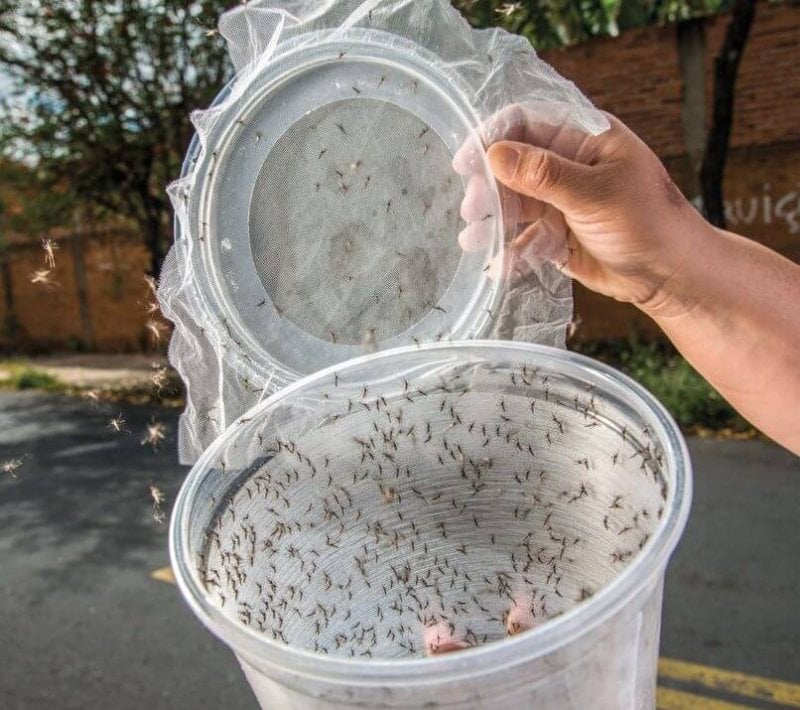
So, you’ve genetically engineered a malaria-resistant mosquito, now what? How many mosquitos would you need to replace the disease-carrying wild type? What is the most effective distribution pattern? How could you stop a premature release of the engineered mosquitos?

Releasing genetically engineered organisms into an environment without knowing the answers to these questions could cause irreversible damage to the ecosystem. But how do you answer these questions without field experiments?


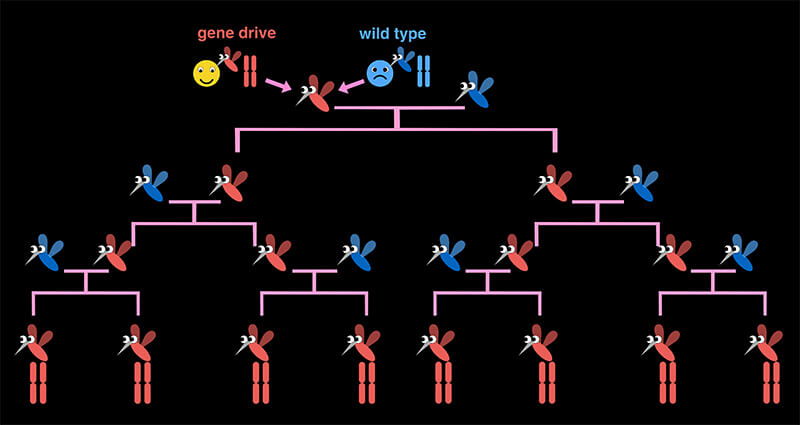
In the normal course of evolution, any specific trait has only a modest chance of being inherited by offspring. But, with the development of the CRISPR-Cas9 gene editing system, researchers can now design systems that increase the likelihood of inheritance of a desired trait to nearly 100 percent, even if that trait confers a selective disadvantage. These so-called gene drives could replace wild-type genes in short generations.

“We can, in effect, construct switches that initiate and terminate the gene drive wave,” said Hidenori Tanaka, first author of the paper…. “In one, carefully chosen regime, the spatial spreading of the wave starts or progresses only when the parameters of the inoculation exceed critical values that we can calculate.”

[Read the full study here]
Slides GeneDrive

The GLP aggregated and excerpted this blog/article to reflect the diversity of news, opinion, and analysis. Read full, original post: Safely releasing genetically modified genes into the wild

{{ reviewsTotal }}{{ options.labels.singularReviewCountLabel }}
{{ reviewsTotal }}{{ options.labels.pluralReviewCountLabel }}
{{ options.labels.noReviewsLabel }}
{{ options.labels.newReviewButton }}
{{ userData.canReview.message }}

Related Articles

Infographic: Global regulatory and health research agencies on whether glyphosate causes cancer

Infographic: Global regulatory and health research agencies on whether glyphosate causes cancer

Does glyphosate—the world's most heavily-used herbicide—pose serious harm to humans? Is it carcinogenic? Those issues are of both legal and ...

Most Popular

leeteam
How Kennedy and his family could pocket millions from Merck’s $50 million vaccine injury settlement that he oversaw
ChatGPT-Image-Jul-10-2026-12_21_03-PM
Viewpoint: Is there new evidence that the animal deworming drug ivermectin decreases the risk of Covid and cancer? Don’t waste your money.
Screenshot-2026-07-30-at-3.07.42-PM
Controversy over WNBA star Sophie Cunningham’s comment opposing trans females in women’s sports reinvigorates the culture wars
Screenshot-2026-07-30-at-2.30.35-PM
Climate scientists claim conservative activists are promoting ‘lies’ that Europe’s summer heatwaves are far from unusual
Screenshot-2026-07-09-at-1.09.25-PM
Anti-vaccine myths rattle health care
ChatGPT-Image-Mar-10-2026-01_39_01-PM
Viewpoint—“Miracle molecule” debunked: Why acemannan supplements don’t work
Picture1
Hiroshima at 81: America’s new nuclear bomb, a buried Iranian target, and a question no one wants to ask
ChatGPT Image Jul 29, 2026, 12_05_21 PM
AI-generated physicians promoting bogus cures and worthless supplements surge on social media
ChatGPT Image Jul 29, 2026, 05_50_04 PM
Fear, science, and the law: If talc powder is unlikely to cause cancer and J&J was winning in court, why did it pay more than $5.5 billion to settle?
ChatGPT Image Jul 29, 2026, 06_26_01 PM 2
Facts & Fallacies podcast: Organic food myths make a comeback on Instagram, with Dr. Kevin Folta
ChatGPT Image Jul 29, 2026, 10_14_27 PM
After muzzling RFK, Jr. over autism-vaccine conspiracy theories, Trump defies aides to push scares again
Screenshot 2026-07-22 at 1.38
Viewpoint: Are the U.S. and Europe headed towards a repudiation of agricultural biotechnology red tape?

Sorry. No data so far.

glp menu logo outlined

Get news on human & agricultural genetics and biotechnology delivered to your inbox.