What causes autism? It’s mostly genetic, study says

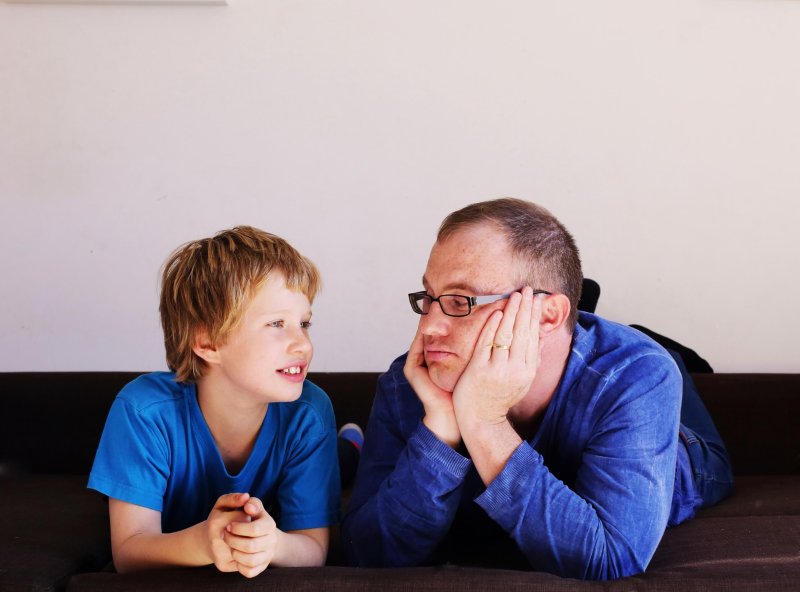
autism father son discussion

For a condition as complex as autism, it’s almost certain that both genes and environment play an important role. But teasing apart how much DNA contributes to the developmental condition and how much is due to environmental exposures remains a subject of much debate.

In a study published in JAMA, researchers say they have come up with the most accurate figure to date for the role that genes play in autism. Led by Sven Sandin, an assistant professor of psychiatry at the Icahn School of Medicine at Mount Sinai, the scientists re-analyzed existing data from all children born in Sweden between 1982 and 2006. The team had looked at the same data previously, focusing on pairs of siblings, both of whom were diagnosed with autism. But this time, they applied a different method for tracking the diagnosis.

[W]hen Sandin tracked autism diagnoses over time among the sibling pairs, he found that genetics likely accounts for around 83% of the disorder. That compares to nearly 90% reported in previous studies of twins only. Using the new model, environmental factors probably contribute around 17% to the risk of developing autism. “This is why it is important to have different study designs,” says Sandin.

The GLP aggregated and excerpted this blog/article to reflect the diversity of news, opinion, and analysis. Read full, original post: This Is How Much of Autism Is Genetic

{{ reviewsTotal }}{{ options.labels.singularReviewCountLabel }}
{{ reviewsTotal }}{{ options.labels.pluralReviewCountLabel }}
{{ options.labels.newReviewButton }}
{{ userData.canReview.message }}

Related Articles

Infographic: Global regulatory and health research agencies on whether glyphosate causes cancer

Infographic: Global regulatory and health research agencies on whether glyphosate causes cancer

Does glyphosate—the world's most heavily-used herbicide—pose serious harm to humans? Is it carcinogenic? Those issues are of both legal and ...

Most Popular

ChatGPT Image May 26, 2026, 08_42_17 AM (1)
Viewpoint: Greenpeace and poison: How environmental advocacy groups rely on compliant (and often ignorant) journalists to spread disinformation and spark litigation
Screenshot 2025-07-30 at 10.48
Can gene editing eliminate Down syndrome? Scientists have done it in lab-grown cells
Screenshot-2026-05-28-at-1.36.28-PM
Viewpoint: Can mRNA research survive the Trump administration?
Screenshot-2026-06-02-at-11.59.11-AM
Magnifica Humanitas: Pope’s encyclical broadside against AI naivete and overreach
Screenshot 2025-11-18 at 3.45
Viewpoint—GMOs and sustainability: Why buying organic foods is the least environmentally-sensitive food choice—without offering any health benefits
ChatGPT-Image-May-26-2026-07_51_21-AM-2
Viewpoint: There are more than 1,000 chemicals in a cup of coffee—including many substances that can cause cancer. Why isn’t it banned?
ChatGPT-Image-Jun-2-2026-11_39_58-AM
Viewpoint: Who is RFK, Jr.’s newly-appointed CDC senior counselor, Sara Brenner — Vaccine skeptic and self-proclaimed “MAHA mom”
Picture1
Sounds we can’t hear — the hidden planetary signals behind science, fear, and misinformation
ChatGPT Image May 28, 2026, 08_16_38 PM
Viewpoint: Why the EPA mismeasures cancer risk of chemicals and what should be done to fix it
Screenshot-2026-04-14-at-11.11.06-AM
‘Turbo cancer’ or mRNA cancer cure? Strategies to counter misinformation
glp menu logo outlined

Get news on human & agricultural genetics and biotechnology delivered to your inbox.