Livestock feedlots more sustainable than organic cattle grazing, research shows

Screen Shot at AM

[Editorโ€™s note: Dan Blaustein-Rejto is a food and agriculture analyst at the Breakthrough Institute.]

A new report provides further evidence that cattle grazing, even when purportedly low-impact practices are used, might not be carbon-neutral or reduce net greenhouse gas emissions…This report adds to our understanding by calculating that at a global scale, grazing systems cannot sequester more carbon than is produced over the life of the cattle. What it doesnโ€™t do, however, is consider how the environmental impacts of different production systems square up.

The new research, published by the Food Climate Research Network, finds that under the right conditions, best-practice cattle grazing can sequester more carbon in the soil than is emitted over the life cycle of the production system. But these cases are rare and cannot be scaled up across much of the worldโ€™s grazing land. This comes in stark contrast to the views of advocates like Allan Savory, who has claimed that so-called โ€œcarbon grazingโ€ could sequester not only all the carbon emitted by livestock, but all the carbon emitted across all sectors of the economy.

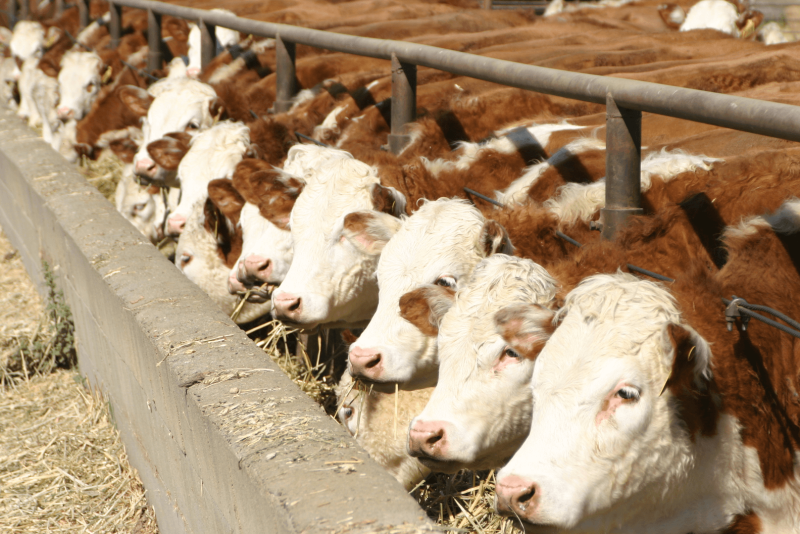
Given wide differences in feedlots and grazing across countries, itโ€™s almost inevitable that feedlots will be the climate-smart choice in some circumstances just as pasture will be in others.

The GLP aggregated and excerpted this article to reflect the diversity of news, opinion and analysis. Read full, original post: Might Feedlots Be the Sustainable Option?


{{ reviewsTotal }}{{ options.labels.singularReviewCountLabel }}
{{ reviewsTotal }}{{ options.labels.pluralReviewCountLabel }}
{{ options.labels.newReviewButton }}
{{ userData.canReview.message }}

Related Articles

Infographic: Global regulatory and health research agencies on whether glyphosate causes cancer

Infographic: Global regulatory and health research agencies on whether glyphosate causes cancer

Does glyphosateโ€”the world's most heavily-used herbicideโ€”pose serious harm to humans? Is it carcinogenic? Those issues are of both legal and ...

Most Popular

Screenshot-2026-03-13-at-12.14.04-PM
The FDA wants to make many popular prescription drugs OTCโ€”a great idea. Hereโ€™s why itโ€™s unlikely to happen
Screenshot-2026-05-04-at-12.54.32-PM
How Utah became the countryโ€™s supplement capitalย  โ€” and a haven for unregulated, ineffective and fake products
Screenshot-2026-04-20-at-2.26.27-PM
Viewpoint โ€” Food-fear world: The latest activist scientists campaign: Cancer-causing additives
Screenshot-PM-24
Viewpoint: The herbicide glyphosate isnโ€™t perfect. Banning it would be far worse.
images
The never-ending GMO debate: Pros and cons
Screenshot-2026-05-01-at-11.56.24-AM
โ€˜Science moves forward when people are willing to think differentlyโ€™: Memories of DNA maverick Craig Venter
Screenshot-2026-04-30-at-2.19.37-PM
5 myths about summer dehydration that could damage your health โ€” or even kill you
Screenshot-2026-04-03-at-11.15.51-AM
Paraben panic: How a flawed study, media hype, and chemophobia convinced the public of the danger of one of the safest classes of preservatives
79d03212-2508-45d0-b427-8e9743ff6432
Viewpoint: The Casey Means hustleโ€”Wellness woo opportunism dressed up as medical wisdom
bigstock opioids on chalkboard with rol
GLP podcast: 'Safe injection sites': enabling drug addiction or saving lives?
glp menu logo outlined

Get news on human & agricultural genetics and biotechnology delivered to your inbox.