‘Synthetic lethality’ targets cancer cells by damaging vulnerable DNA

Screen Shot at AM

By designing small molecules that can “turn off” kinase enzymes stuck in the “on” position, they have managed to ward off cancer’s attack. More recently, scientists have focused on ways to help the body’s own immune cells seek and destroy cancer cells.

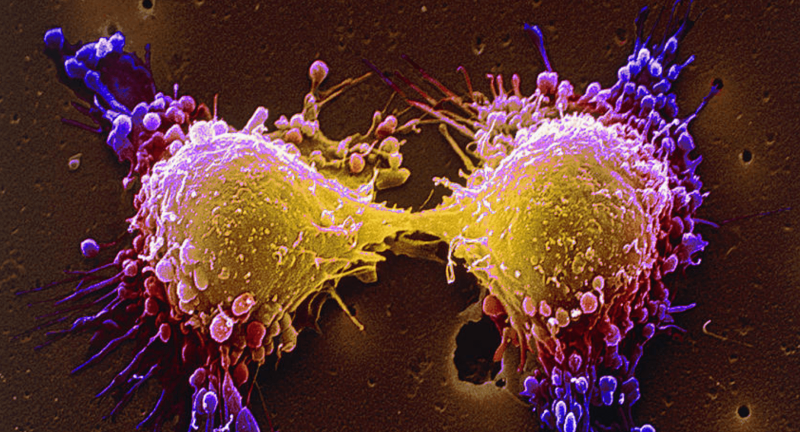
Enter the concept known as synthetic lethality. Researchers have long known that a cancer cell hobbling along with one broken gene is vulnerable. Knock out another key gene, they have discovered, and the cell will topple.

The notion of killing cancer cells by damaging their already compromised DNA should sound familiar. Chemotherapy agents do just that, but by using a sledgehammer to smash away at DNA. Because drugs that exploit synthetic lethality act with precision, they promise to be able to discriminate between healthy and diseased cells.

“In experiments, you have a perfectly happy cell, you remove one gene and challenge it with one stress, and it dies. You think, ‘Yeah, I’ve got a target now!’ ” says [structural biologist Lance] Pearl, whose lab is working on drugs against synthetic lethal targets. “But that’s not a tumor.”

“Right now, the field is okay at the cellular level. But finding drugs and making sure they actually work in a real tumor is where they need to go.”

The GLP aggregated and excerpted this blog/article to reflect the diversity of news, opinion, and analysis. Read full, original post: Driving cancer beyond the brink

{{ reviewsTotal }}{{ options.labels.singularReviewCountLabel }}
{{ reviewsTotal }}{{ options.labels.pluralReviewCountLabel }}
{{ options.labels.newReviewButton }}
{{ userData.canReview.message }}

Related Articles

Infographic: Global regulatory and health research agencies on whether glyphosate causes cancer

Infographic: Global regulatory and health research agencies on whether glyphosate causes cancer

Does glyphosate—the world's most heavily-used herbicide—pose serious harm to humans? Is it carcinogenic? Those issues are of both legal and ...

Most Popular

Screenshot 2026-05-06 at 2.56
Singularity crisis ahead? Can super babies save us from rogue AI geniuses?
Screenshot-2026-03-13-at-12.14.04-PM
The FDA wants to make many popular prescription drugs OTC—a great idea. Here’s why it’s unlikely to happen
Screenshot-2026-04-20-at-2.26.27-PM
Viewpoint — Food-fear world: The latest activist scientists campaign: Cancer-causing additives
Screenshot-2026-05-01-at-11.56.24-AM
‘Science moves forward when people are willing to think differently’: Memories of DNA maverick Craig Venter
images
The never-ending GMO debate: Pros and cons
Screenshot-2026-05-01-at-1.29.41-PM
Viewpoint: What happens when whole grains meet modern food manufacturing? Labels don’t tell the whole story.
Screenshot-PM-24
Viewpoint: The herbicide glyphosate isn’t perfect. Banning it would be far worse.
Screenshot-2026-04-03-at-11.15.51-AM
Paraben panic: How a flawed study, media hype, and chemophobia convinced the public of the danger of one of the safest classes of preservatives
Screenshot-2026-05-06-at-2.07.43-PM
Manufacturing a conspiracy: The timeline of how  the White House embraced the fringe claim that scientists are being mysteriously murdered
Screenshot-2026-04-30-at-2.19.37-PM
5 myths about summer dehydration that could damage your health — or even kill you
Screenshot-2026-04-12-135256
Bixonimania: The fake disease scam that AI swallowed whole
glp menu logo outlined

Get news on human & agricultural genetics and biotechnology delivered to your inbox.