Gene silencing could control disease, contamination in wheat and other crops

Screen Shot at AM
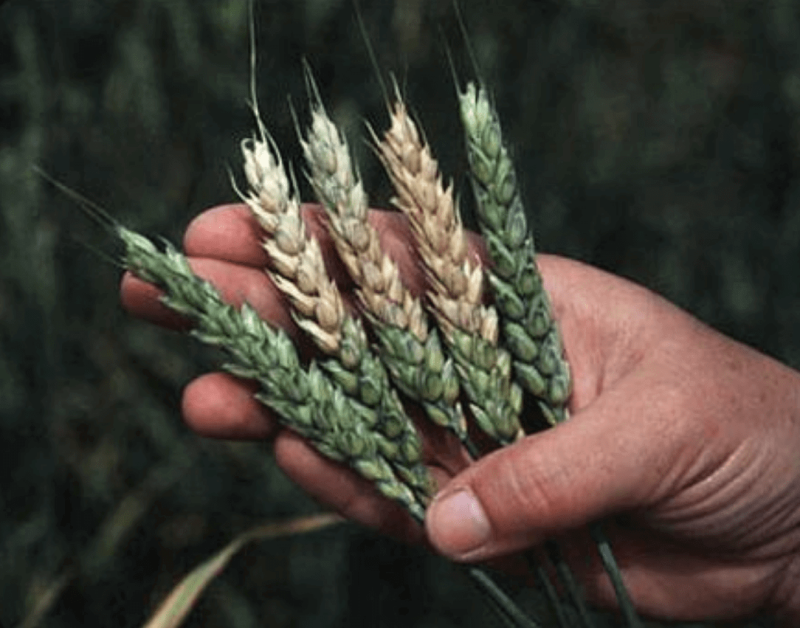
Wheat infected by Fusarium Head Blight.

Fusarium graminearum is a major fungal pathogen of cereals worldwide, causing seedling, stem base and floral diseases, including Fusarium Head Blight (FHB). In addition to yield and quality losses, FHB contaminates cereal grain with mycotoxins, including deoxynivalenol (DON), which are harmful to human, animal and ecosystem health. Currently, FHB control is only partially effective due to several intractable problems.

RNA interference (RNAi) is a natural mechanism that regulates gene expression. RNAi has been exploited in the development of new genomic tools, which allow the targeted silencing of genes of interest in many eukaryotes. Host-Induced Gene Silencing (HIGS) is a transgenic technology used to silence fungal genes in planta during attempted infection and thereby to reduce disease levels.

An alternative non-transgenic RNAi approach is spray-induced gene silencing (SIGS)….

The use of both SIGS and HIGS on a commercial scale appears possible in the near future. Similar HIGS-based approaches developed to control FHB in wheat may be developed and assessed for their efficacy to control other Fusarium incited diseases of other important crops, e.g. banana, tomato, lettuce and oil palm, or to control other problematic fungal diseases of wheat….

The GLP aggregated and excerpted this article to reflect the diversity of news, opinion and analysis. Read full, original post: RNAi as an emerging approach to control Fusarium Head Blight disease and mycotoxin contamination in cereals


{{ reviewsTotal }}{{ options.labels.singularReviewCountLabel }}
{{ reviewsTotal }}{{ options.labels.pluralReviewCountLabel }}
{{ options.labels.newReviewButton }}
{{ userData.canReview.message }}

Related Articles

Infographic: Global regulatory and health research agencies on whether glyphosate causes cancer

Infographic: Global regulatory and health research agencies on whether glyphosate causes cancer

Does glyphosate—the world's most heavily-used herbicide—pose serious harm to humans? Is it carcinogenic? Those issues are of both legal and ...

Most Popular

Screenshot 2026-05-06 at 2.56
Singularity crisis ahead? Can super babies save us from rogue AI geniuses?
Screenshot-2026-03-13-at-12.14.04-PM
The FDA wants to make many popular prescription drugs OTC—a great idea. Here’s why it’s unlikely to happen
Screenshot-2026-04-20-at-2.26.27-PM
Viewpoint — Food-fear world: The latest activist scientists campaign: Cancer-causing additives
Screenshot-2026-05-01-at-11.56.24-AM
‘Science moves forward when people are willing to think differently’: Memories of DNA maverick Craig Venter
Screenshot-PM-24
Viewpoint: The herbicide glyphosate isn’t perfect. Banning it would be far worse.
images
The never-ending GMO debate: Pros and cons
Screenshot-2026-04-30-at-2.19.37-PM
5 myths about summer dehydration that could damage your health — or even kill you
Screenshot-2026-04-03-at-11.15.51-AM
Paraben panic: How a flawed study, media hype, and chemophobia convinced the public of the danger of one of the safest classes of preservatives
Screenshot-2026-05-01-at-1.29.41-PM
Viewpoint: What happens when whole grains meet modern food manufacturing? Labels don’t tell the whole story.
Screenshot-2026-05-06-at-2.07.43-PM
Manufacturing a conspiracy: The timeline of how  the White House embraced the fringe claim that scientists are being mysteriously murdered
79d03212-2508-45d0-b427-8e9743ff6432
Viewpoint: The Casey Means hustle—Wellness woo opportunism dressed up as medical wisdom
glp menu logo outlined

Get news on human & agricultural genetics and biotechnology delivered to your inbox.