
Combatants prepping for next skirmish in battle over CRISPR patents

crispr

The long-running battle over US patents for CRISPR–Cas9 gene editing continues. On 25 October, the Broad Institute of Cambridge, Massachusetts, filed a fresh set of arguments with the US government to defend a key patent. That action helps to set the stage for a second round of oral arguments in the unusually vitriolic case, which observers expect to take place in early 2018.

At stake are intellectual-property rights to the use of CRISPR–Cas9 gene-editing tools in eukaryotes, organisms such as plants and animals. This would include applications of the technique to treat human genetic diseases — an approach that has recently entered cancer clinical trials in China, and is potentially the most lucrative application of gene editing.

[T]he University of California team argued that its patent — which explicitly describes the use of CRISPR–Cas9 gene editing only in non-eukaryotes such as bacteria — rendered applications in eukaryotic cells “obvious” and therefore unpatentable. The Broad countered that the University of California’s invention needed significant and non-obvious tweaks before it could be used in eukaryotes.
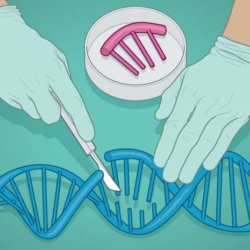


If that decision — which will be discussed during oral arguments in mid-January — becomes final, it will push the Broad’s patent date to a time after the institute’s team published its findings in a scientific article1. And that would invalidate the patent application altogether.

The GLP aggregated and excerpted this blog/article to reflect the diversity of news, opinion, and analysis. Read full, original post: Bitter CRISPR patent war intensifies

{{ reviewsTotal }}{{ options.labels.singularReviewCountLabel }}
{{ reviewsTotal }}{{ options.labels.pluralReviewCountLabel }}
{{ options.labels.newReviewButton }}
{{ userData.canReview.message }}

Related Articles

Infographic: Global regulatory and health research agencies on whether glyphosate causes cancer

Infographic: Global regulatory and health research agencies on whether glyphosate causes cancer

Does glyphosate—the world's most heavily-used herbicide—pose serious harm to humans? Is it carcinogenic? Those issues are of both legal and ...

Most Popular

Screenshot-2026-04-13-at-3.54.04-PM
AI disinformation stress test: Challenges and response strategies
ChatGPT-Image-Feb-16-2026-01_04_32-PM
Raw milk myth wake-up call
ChatGPT-Image-Apr-23-2026-09_20_20-PM
Kennedy’s CDC blocks publication of study that shows vaccines reduce hospitalizations by 50%, then misrepresents why
ChatGPT-Image-Apr-20-2026-11_17_18-AM-2
10,000 scientists gone: Trump’s cuts create an unprecedented brain drain
ChatGPT-Image-Apr-22-2026-04_31_20-PM
‘Irresponsible decision’? On mandatory military flu shots, Hegseth chooses ‘freedom’ over health
ChatGPT-Image-Mar-11-2026-11_58_46-AM
The Trump administration has run out more than 4,000 National Institutes of Health employees. Here are the consequences
images
The never-ending GMO debate: Pros and cons
Screenshot-2026-04-22-at-1.14.34-PM
Latest fevered, right-wing conspiracy: Fox, New York Post, and kooky GOP legislators push ‘Dead Scientists’ scare
Screenshot-2026-04-12-135256
Bixonimania: The fake disease scam that AI swallowed whole
glp menu logo outlined

Get news on human & agricultural genetics and biotechnology delivered to your inbox.