Will we learn anything from the brain of Las Vegas shooter Stephen Paddock?

vegas

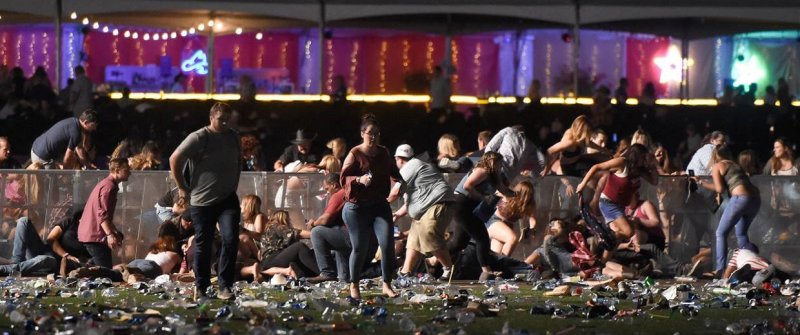
The brain that sat in the skull of the Las Vegas shooter [Stephen Paddock] as he planned out his attack, which killed 59 people and injured many more on October 1, was likely damaged when he shot himself in the mouth at the end of the ordeal. Still, it was shipped, at the direction of the Las Vegas coroner’s office, to doctor Hannes Vogel at Stanford for a neuropathological examination shortly thereafter.

While there is ongoing controversy when it comes to whether a mental aberrance could explain the shooter’s behavior—of which some may see this as a continuation—there is a longer history of these investigations at play.

One abnormality the team may be looking for, according to Karen Weidenheim, a neuropathologist at Montefiore medical center, is a spectrum of neurodegenerative diseases called tauopathies. These diseases are caused by a tangled buildup of plaques made of “tau” protein in the brain. The plaques can cause the fronto-temporal lobe to deteriorate, which can affect the ability to make decisions and  sometimes lead to abnormal and occasionally violent behavior.

“It’s not that you’re gonna find something that’s gonna solve the whole mystery,” Leestma said. “You’re probably not. You’re likely going to raise more questions than answers.”

The GLP aggregated and excerpted this blog/article to reflect the diversity of news, opinion, and analysis. Read full, original post: Las Vegas Shooting: Will Slicing Open Stephen Paddock’s Brain Explain Why He Gunned Down 59 People?


{{ reviewsTotal }}{{ options.labels.singularReviewCountLabel }}
{{ reviewsTotal }}{{ options.labels.pluralReviewCountLabel }}
{{ options.labels.newReviewButton }}
{{ userData.canReview.message }}

Related Articles

Infographic: Global regulatory and health research agencies on whether glyphosate causes cancer

Infographic: Global regulatory and health research agencies on whether glyphosate causes cancer

Does glyphosate—the world's most heavily-used herbicide—pose serious harm to humans? Is it carcinogenic? Those issues are of both legal and ...

Most Popular

Screenshot-2026-04-14-at-11.11.06-AM
‘Turbo cancer’ or mRNA cancer cure? Strategies to counter misinformation
ChatGPT Image May 28, 2026, 08_16_38 PM
Viewpoint: Why the EPA mismeasures cancer risk of chemicals and what should be done to fix it
ChatGPT-Image-May-22-2026-10_56_42-AM-2
‘It’s not super useful’: As wariness about AI grows, Trump proposes rollback of healthcare safeguards
fda_logo_decimated
Viewpoint: RFK, Jr.’s FDA is on a screaming downward path—and why it may never recover
edb7f6d7-2370-418f-9578-74e29678e35c
Facts & Fallacies Podcast: Nicotine vaping—public health miracle, or risk to children? Professor Cliff Douglas
ChatGPT-Image-May-22-2026-10_26_09-AM
Gutting the National Science Board: How the Trump-RFK, Jr. crusade is erasing the separation of science and state
ChatGPT-Image-May-28-2026-11_31_47-AM-2
Relying on your doctor or AI miracle cure, death and debilitation? Neurologist makes the wrong choice
Screenshot-2026-05-27-at-10.51.25-AM
Viewpoint: ‘Monsanto’ blues—Planned Netflix movie promises yet another round of anti-glyphosate disinformation
ChatGPT-Image-May-26-2026-11_51_01-AM
Viewpoint: RFK, Jr.’s ‘sadistic’ solution to autism, depression, and other ills looks a lot like prison camp
ChatGPT-Image-Mar-10-2026-01_39_01-PM
Viewpoint—“Miracle molecule” debunked: Why acemannan supplements don’t work
vax-misinformation-main
Facts & Fallacies Podcast: Limit free speech to blunt social media misinfo?
Picture1
The Orange Bowl without oranges: Can CRISPR save Florida citrus?

Sorry. No data so far.

glp menu logo outlined

Get news on human & agricultural genetics and biotechnology delivered to your inbox.