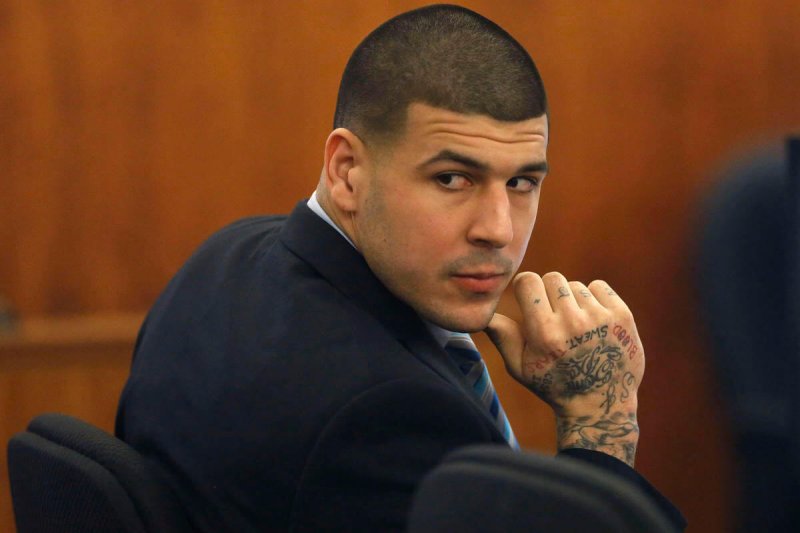
Brain autopsy of murderer Aaron Hernandez shows severe CTE damage

hernandez

For the first time since announcing former NFL star Aaron Hernandez’s CTE diagnosis in September, Boston University neuropathologist Dr. Ann McKee shared the findings from Hernandez’s brain autopsy on Thursday.

McKee and her team have examined more than 100 former NFL players’ brains for the neurodegenerative disease, formally named chronic traumatic encephalopathy, and found Hernandez’s case to be significant.

“This is the first case that we’ve seen that kind of damage in such a young individual,” she said, adding that the type of brain damage observed is usually seen in someone 20 years older.

Hernandez was 27 years old when he fatally hanged himself in prison in April. He was found to have had stage 3 CTE; stage 4 is the most severe.

McKee was careful to state that she couldn’t make a connection between his pathology (seen in the lab) and his behavior. “We can’t connect the dots,” she said. But she pointed out that the parts of his brain most affected by the disease included areas that controlled memory, judgment and emotion.

His family is pursuing a lawsuit against the NFL, alleging that it knew about and hid the dangers of head trauma.
The GLP aggregated and excerpted this blog/article to reflect the diversity of news, opinion, and analysis. Read full, original post: Aaron Hernandez suffered from worst CTE seen in someone his age
{{ reviewsTotal }}{{ options.labels.singularReviewCountLabel }}
{{ reviewsTotal }}{{ options.labels.pluralReviewCountLabel }}
{{ options.labels.newReviewButton }}
{{ userData.canReview.message }}

Related Articles

Infographic: Global regulatory and health research agencies on whether glyphosate causes cancer

Infographic: Global regulatory and health research agencies on whether glyphosate causes cancer

Does glyphosate—the world's most heavily-used herbicide—pose serious harm to humans? Is it carcinogenic? Those issues are of both legal and ...

Most Popular

Picture1
The FDA couldn’t find a vaccine safety crisis, so it buried its own research
Screenshot-2026-04-22-at-12.21.32-PM
Viewpoint: Why the retracted Monsanto glyphosate study doesn’t change the science—the world’s most popular herbicide is safe 
Screenshot-2026-05-19-at-11.23.34-AM
West-originated vaccine disinformation sparks murders of health care workers across Africa
Screenshot-2026-05-08-at-11.55.47-AM
Anti-vax activists falsely blame COVID vaccines for the rising U.S. cancer rate among younger people.
ChatGPT-Image-Apr-16-2026-02_56_53-PM
Financial incentives, over diagnosis, and weak oversight: Autism claims are driving up Medicare costs
ChatGPT-Image-May-7-2026-12_32_36-PM
Viewpoint: The state of U.S. vaccine policy? Dismal nationally, but some states are stepping up.
ChatGPT-Image-May-12-2026-11_27_01-AM-2
AI likely to improve health care, research shows—but not for blacks and ethnic minorities
modi visit sikkim
Viewpoint: Indian PM wants farmers to switch to 50% organic. It would take at least 10 years, likely won’t work, and isn’t more sustainable
Screenshot-2026-04-13-at-1.39.26-PM
Viewpoint: ‘Safer for children?’ Stonyfield yogurt under fire for deceptive organic marketing
ChatGPT-Image-May-18-2026-12_06_18-PM-2
Defying death: The immortality movement goes mainstream
glp menu logo outlined

Get news on human & agricultural genetics and biotechnology delivered to your inbox.