Science Moms hit back at anti-GMO group’s Monsanto ‘shill’ accusations

Science Moms

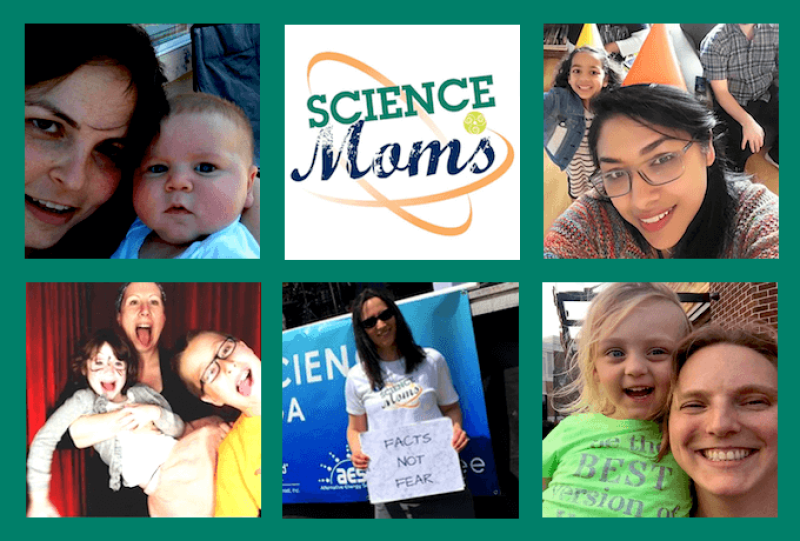
[Editor’s note: Alison Bernstein, Anastasia Bodnar, Jenny Splitter, Kavin Senapathy, Layla Katiraee, and Natalie Newell are part of a group called Science Moms that recently released a film highlighting the scientific consensus on GMOs.]

We were recently taken aback to discover that former Reuter’s reporter, Carey Gillam, who now works for the U.S. Right to Know, an organization funded by the Organic Consumer Association and other organic companies and advocacy groups, published a book in which our efforts are mentioned. In it, she states, with no evidence at hand and no citation to provide, that we have ties to Monsanto.

The truth is that the movie was crowdfunded and Natalie has generously put in hundreds of hours of her own time. The truth is that while all of us know folks who work in agricultural biotech, none of us are funded by such companies. The truth is that all of us have been critical of agricultural biotech at some point or another, and will continue to be critical (see hereherehere, or here). The truth is that we all believe in the relative safety of vaccines and genetically modified crops, and the looming perils of global warming.

These empty “shillcusations” are built on the idea that under no circumstances could a woman be inspired to take action of her own accord, or be driven by her own passion to see a project come to fruition using her own ingenuity and resourcefulness.

The GLP aggregated and excerpted this article to reflect the diversity of news, opinion and analysis. Read full, original post: On Shill Accusations and Misogyny

{{ reviewsTotal }}{{ options.labels.singularReviewCountLabel }}
{{ reviewsTotal }}{{ options.labels.pluralReviewCountLabel }}
{{ options.labels.newReviewButton }}
{{ userData.canReview.message }}

Related Articles

Infographic: Global regulatory and health research agencies on whether glyphosate causes cancer

Infographic: Global regulatory and health research agencies on whether glyphosate causes cancer

Does glyphosate—the world's most heavily-used herbicide—pose serious harm to humans? Is it carcinogenic? Those issues are of both legal and ...

Most Popular

Picture1
The Orange Bowl without oranges: Can CRISPR save Florida citrus?
global warming
‘Implausible’: Top climate scientists reject worst-case scenario—soaring temperatures and fast-rising sea levels
Screenshot 2026-05-22 at 11.31
‘Realistic and durable’: EPA proposes loosening restrictions on some PFAS ‘forever chemicals.’
ChatGPT Image May 26, 2026, 12_06_53 PM
Fake Ebola cure promoters already cashing in as disinformation videos flood social media
Screenshot-2026-04-22-at-12.21.32-PM
Viewpoint: Why the retracted Monsanto glyphosate study doesn’t change the science—the world’s most popular herbicide is safe 
Screenshot-2026-05-21-at-12.15.17-PM
UK gene-editing milestone: Livestock barley that increases ruminant value and reduces methane emissions is first-approved CRISPR crop
ChatGPT Image May 24, 2026, 03_16_36 PM
Here come the biohackers' Enhanced Games—The Olympics for athletes doping up on steroids, hormones and peptides. What’s wrong with that?
ChatGPT-Image-May-1-2026-11_42_59-AM-2
Viewpoint: NAD is the wellness grifters latest evidence-lite longevity fad. At least the mice are impressed.
glp menu logo outlined

Get news on human & agricultural genetics and biotechnology delivered to your inbox.