[Editor’s note: Cécile Philippe is an economist and Director-General of the Molinari Economic Institute.]
In France, a glyphosate ban for personal usage is planned from 1 January 2019 and the government may decide to ban it for all uses.
…
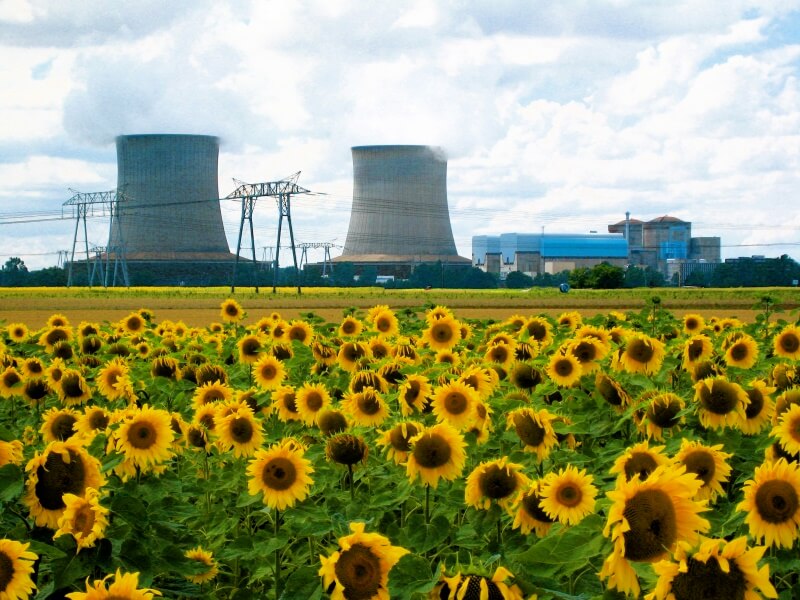
Like nuclear, is it possible and above all reasonable to remove glyphosate in such a short period of time?
…
[Environment Minister] Nicolas Hulot announced at the beginning of November that the objective of reducing the share of nuclear energy to 50% of electricity production would be postponed.
…
Undoubtedly, taking on the role of Minister forced Nicolas Hulot to take into account broader considerations.
Considerations like the absence of substitutes in the short term, the continued innovation and advancements in nuclear safety, and the impossibility of finding the perfect energy source.
It seems sensible to me that he adopts this same principle of realism when it comes to glyphosate. Because the questions that arise for glyphosate are the same as those that arise for nuclear, or for any other complex technology:
What advantages does the product in question provide and at what price? Can we do without it? Are there substitutes? Do they offer superior comparative advantages?
Using the CRISPR–Cas9 system, scientists can do much more than gene editing—they can boost gene transcription or use fluorescent proteins to paint and track a chromosome. In this Nature Video animation, several innovative uses for CRISPR are outlined and explained.
…
The CRISPR-Cas9 system has fundamentally changed the way scientists can edit genes. From turning gene expression on and off to fluorescently tagging of particular sequences, this animation explores some of the exciting possibilities of CRISPR.
The GLP aggregated and excerpted this blog/article to reflect the diversity of news, opinion, and analysis. Read full, original post:Using CRISPR to Do More Than Cut
Leftovers can be quite valuable. For instance, when soybean seed is crushed and the oil extracted, what’s left is called soybean meal. You’ll want to save this leftover.
Soybean meal contains high-quality protein. Globally, close to 98% of soybean meal produced is used in animal feed. The United Nations Food and Agriculture Organization calls it “the most important and preferred source of high-quality vegetable protein for animal feed.”
But soybean growers face a challenge. It has proved difficult to develop soybean varieties with both high protein levels and high yields. These two characteristics are negatively correlated: when soybean yields are high, protein levels tend to decrease, and vice-versa.
Plant breeder Brian Diers and colleagues addressed this problem in a new study. Their initial results suggest it might be possible to breed soybeans with higher protein concentration without significantly decreasing yields.
…
In this study, the researchers tested a gene that increases protein by breeding it into two different varieties of soybean. The results were promising. Plants of both varieties with the high protein gene had increased protein concentration and did not show a significant decrease in yields.
[Editor’s note: Read the full study (behind paywall)]
The GLP aggregated and excerpted this article to reflect the diversity of news, opinion and analysis. Read full, original post: High yield, protein with soybean gene
[Editor’s note: Alison Bernstein, Anastasia Bodnar, Jenny Splitter, Kavin Senapathy, Layla Katiraee, and Natalie Newell are part of a group called Science Moms that recently released a film highlighting the scientific consensus on GMOs.]
We were recently taken aback to discover that former Reuter’s reporter, Carey Gillam, who now works for the U.S. Right to Know, an organization funded by the Organic Consumer Association and other organic companies and advocacy groups, published a book in which our efforts are mentioned. In it, she states, with no evidence at hand and no citation to provide, that we have ties to Monsanto.
The truth is that the movie was crowdfunded and Natalie has generously put in hundreds of hours of her own time. The truth is that while all of us know folks who work in agricultural biotech, none of us are funded by such companies. The truth is that all of us have been critical of agricultural biotech at some point or another, and will continue to be critical (see here, here, here, or here). The truth is that we all believe in the relative safety of vaccines and genetically modified crops, and the looming perils of global warming.
These empty “shillcusations” are built on the idea that under no circumstances could a woman be inspired to take action of her own accord, or be driven by her own passion to see a project come to fruition using her own ingenuity and resourcefulness.
The GLP aggregated and excerpted this article to reflect the diversity of news, opinion and analysis. Read full, original post: On Shill Accusations and Misogyny
It takes something special to be an astronaut – an extraordinary combination of bravery, fitness, intelligence, lightning-fast decision-making and calmness under the most extreme pressure. It’s known as “the right stuff“.
…
[D]espite selecting the best of the best, humans are still poorly suited to life in space. We are products of 3.8 billion years of evolution in a comfy 1g oxygen-rich biosphere, protected by a magnetic bubble (the magnetosphere) from the harshness of the Universe. Away from the Earth, astronauts are bombarded by cosmic radiation and suffer nausea, muscle and bone loss, deteriorating eyesight and even weakened immune systems as a result of zero gravity.
…
But what if instead of putting the effort into adapting space to humans, we do as [ESA astronaut Luca] Parmitano suggests and adapt humans to space? “You can imagine designing a future space-faring human, that’s not shocking or surprising but something we could do,” says Parmitano. “Maybe we have to.”
…
The chances are when humans begin to leave the Earth in any significant numbers, we are going to have to adapt to a new environment. Instead of searching for Earth 2.0, we could instead breed Human 2.0. They might even have four hands and a tail.
Two hepatitis B virus vaccines are currently on the market. Earlier in November, however, the Food and Drug Administration licensed another hepatitis B vaccine. This new vaccine employs a unique strategy: fighting the hepatitis B virus with … bacterial DNA.
…
It’s identical to the two existing hepatitis B vaccines—which have been available since the 1990s—in that it contains 20 micrograms of a protein that is located on the surface of the virus. But unlike these other hepatitis B vaccines, the new vaccine also contains 3 milligrams of repeated linkages of cytosine and guanine—a molecular pattern unique to bacterial DNA called CpG oligonucleotides. It’s the first time this immune-boosting product has been used in a vaccine.
…
The FDA licensed this novel hepatitis B vaccine for people older than 18 years of age in certain high-risk groups like household contacts of someone who is infected, injection drug users, healthcare workers, or people with HIV, diabetes, or chronic lung or kidney diseases.
…
Ironically, the best way to address the problems with the hepatitis B vaccine—as well as with any strategy necessitating the induction of long-lasting, specific immunity—might be to solicit the help of a part of our immune system that is designed to respond to something entirely different.
[Editor’s note: Dr. Charles Dinerstein is a retired vascular surgeon.]
In a nod to science, Newsweek reported that there might be genetic underpinnings to obesity. So kudos for hopping on the science bandwagon and for a moment, not writing clickbait. But why not share the actual science instead of dumbing it down to “Regardless of how much you eat, your weight may be out of your hands?” For the scientifically literate, wishing to learn more, here is what researcher Vann Bennett found. A deficiency in the ANK2 gene, which codes for chemical activity on cell membranes, has been shown to cause obesity in mice. By extension, similar deficiencies in humans are felt to be responsible for their obesity as well.
…
An unfortunate side effect of this increased absorption of glucose in adipose tissue is that it makes more robust and numerous adipose cells.
…
Weight gain is more than calories in versus calories out. Our metabolism is more complex than that – having developed over millions of years. And there are clearly more genes involved in obesity than ANK2. There is a polygenic component that real science has been studying for only a little while. Newsweek should have more respect for their readers and simplify the science and not its message.
Many pundits predict it’s just a matter of time till DNA pips magnetic tape as the ultimate way to store data. It’s compact, efficient and resilient. After all, it has been tweaked over billions of years into the perfect repository for genetic information. It will never become obsolete, because as long as there is life on Earth, we will be interested in decoding DNA. “Nature has optimised the format,” says Twist Bioscience’s chief technology officer Bill Peck.
…
The entire human genome, a code of three billion DNA base pairs, or in data speak, 3,000 megabytes, fits into a package that is invisible to the naked eye – the cell’s nucleus. A gram of DNA — the size of a drop of water on your fingertip — can store at least the equivalent of 233 computer hard drives weighing more than 150 kilograms. To store the all the genetic information in a human body — 150 zettabytes — on tape or hard drives, you’d need a facility covering thousands, if not millions of square feet.
…
It’s not far-fetched to imagine all-in-one DNA data systems, in which the binary data are fed in at one end, synthesised into DNA and stored, then extracted, sequenced and sent out the other end as binary data once again.
The GLP aggregated and excerpted this blog/article to reflect the diversity of news, opinion, and analysis. Read full, original post: How DNA will solve our data storage problem
Alison Van Eenennaam is one of agriculture’s leading voices of reason and persuasion in support of good science in food production.
The personable and articulate cattle geneticist from the University of California-Davis can talk about genetic engineering of animals or GMO corn and soybeans, and make nearly everyone believe and trust her. Such a trait is sorely lacking in many of our industry experts.
She spoke at the Cattle Industry Convention about the future of genetically engineered (GE) animals.
…
Van Eenennaam says the newest wave of animal genetic engineering involves not a gene transfer process, but rather a technique that is often called knock-out technology. A single gene is modified (or knocked out) to change how an animal performs and what it passes to offspring. It might add extra muscling, make cows hornless, or help pigs resist disease.
While it’s controversial to some, Van Eenennaam questions whether gene editing is really the same as GMO, where a gene from one species is transferred to another.
“It’s estimated we lose about 20% of animal production to disease. What if these new technologies can change that and maybe provide an alternative to antibiotics?” she asks.
The state of Odisha (formerly Orissa) in southeast India is perhaps not the first place you’d expect to find a clinical trial for a next-generation drug with the potential to save half a billion lives.
…
[T]he Odisha study’s recent results point to a non-antibiotic, affordable treatment that can reduce newborn deaths caused by sepsis by an astonishing 40 percent.
This treatment is a concoction of live, “helpful” bacteria (called probiotics) and a plant-derived sugar (called a prebiotic) that serves as a nutrient source for these bacteria to feed upon. For this study, a team of Indian and American researchers used this synbiotic formulation to treat newborns, and found that the treatment lowered the occurrence of a variety of illnesses: three kinds of sepsis, diarrhea, and infections of the umbilical stump.
While reductions in these diseases were expected, even the researchers were surprised to find that feeding live bacteria to infants also reduced their chance of acquiring pneumonia.
…
The Odisha study stands out, however, for two reasons. It is the first study to report such positive results in full-term newborns. This expands the patient range for probiotics well beyond premature births to a much larger proportion of the global population. More importantly, it serves as a model for future studies into diseases that especially burden low-income countries and regions.
Following a multi-year slump, the Philippine cotton industry is anticipating a renaissance through the help of an innovative, science-based crop that farmers began planting this month.
With the introduction of the Bt cotton variety, revival of the local cotton industry is very likely, according to Edison Riñen, regional director of the Philippine Fiber Industry Development Authority (PhilFIDA). The country currently imports all of the cotton required by the local textile industry.
Bt cotton has been genetically engineered to resist the dreaded bollworm (Heliothis armigera), a destructive pest that is partly responsible for the decline of the country’s cotton industry. The crop technology largely replaces the need to control the bollworm through applications of synthetic chemical pesticides, which cause harm to human health and the environment, Riñen said.
The Bt variety is being cultivated in experimental areas as PhilFIDA works on securing approvals for commercial release of the seeds. This year, 26 farmers in Ilocos Norte and a growing number of farmers in Pangasinan are expected to plant Bt cotton, Riñen said.
[Editor’s note: Rajeev Varshney is Research Program Director for Genetic Gains, at the International Crops Research Institute for the Semi-Arid Tropics (ICRISAT) based in Hyderabad, India. He has a PhD in Agricultural Botany (Molecular Biology) from Chaudhary Charan Singh University, India.]
I feel there are a range of biotechnological approaches, including both traditional ones like selective breeding and fermentation techniques, and modern ones such as genomics, molecular breeding and genetic engineering, that can contribute towards achieving food and nutrition security.
Rajeev Varshney
…
[I]n some cases, the available options for improving crops are only genetically modified (GM) crops. For instance, in the case of insect resistance in chickpea, pigeon pea, brinjal [eggplant] and cotton, we need to embrace GM technologies, as enough amount of natural variation is not present for resistance. We have already seen the success of Bt cotton in our country, as India from being an importer a few years ago has now become a major exporter (Status Paper of Indian Cotton—National Food Security Mission, 2017). The other potential GM crop to help the farming community is GM mustard.
…
We have to bear in mind that any technology has seen reluctance in acceptance when initially introduced, but the entire world today has already seen the impact of technology in day-to-day life. Similar is the case with biotechnology crops as well. Given the current situation of feeding the world we need to produce more with limited available natural resources (land, water etc).
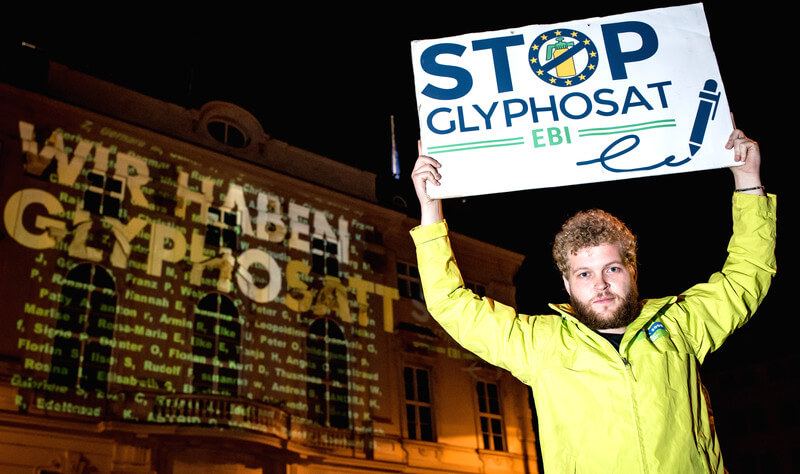
The European Union voted on Monday [Nov. 27] to extend its authorization for the world’s best-selling herbicide for an abbreviated period of five years, with France and Germany splitting over the move.
President Emmanuel Macron of France said after the decision was announced that he had asked government officials to draw up a plan for banning the herbicide, glyphosate, in his country within three years. He also posted a message on Twitter with the hashtag #MakeOurPlanetGreatAgain. France led the opposition to allowing the use of glyphosate, the main ingredient in Monsanto’s Roundup and in weed killers made by other companies.
Germany, which had abstained in a previous round of voting on the issue, appeared to help sway the outcome of the vote. Although Angela Merkel, the chancellor, has been unable to form a coalition government after the country’s recent election, Germany’s caretaker government swung its support in favor of the weed killer.
This week we celebrate a hollow victory. The European Union renewed its authorisation of glyphosate for five years. The science was clearer than clear – the herbicide is one of the safest substances on the market. All but one research or regulatory agency gave glyphosate an unequivocal approval (and that one, IARC, was seriously conflicted and corrupted). For 40 years farmers have relied on glyphosate (off-patent, inexpensive and effective), giving them the means now to develop sustainable farming with no-till and complex cover cropping. Glyphosate is indeed the herbicide of the century and the very thought of banning it seems absurd.
So why couldn’t the European Commission renew glyphosate for 15 years as originally planned? As the science was clear, then the regulatory risk assessment process should have been simple. But it was never about the science, facts or data. It was never about the benefits to farmers, the environment and consumers. It was about something much larger.
The European Commission was dragged through regulatory hell for 30 months on this dossier for many reasons and it had better clean up its process. While glyphosate may have been a regulatory watershed, it has become a benchmark for the zealots to push harder on the coming policy dossiers. The Commission survived this Age of Stupid exercise, just barely, but the activists have a larger strategy in place and this process has pushed them closer to their goal.
What did the zealots really want?
Destroy the EU regulatory risk assessment process
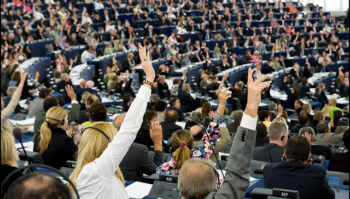
The EU regulatory risk assessment process is meant to be evidence-based. It relies on a gathering of all available research data and scientific advice to allow for a clear decision based on science (usually via committees). Where data is insufficient, the industries involved with the substance or technology need to provide or produce further data. If a new drone technology is developed, for example, in order for the manufacturers to put the product on the market, they would need to provide the relevant European Commission research agency with the required data to properly advise the European Commission on how to manage the risks. If there is insufficient data or the evidence is questionable, the risk assessment agency may reject the authorisation and advise for precaution.
In the case of the risk assessment process for chemicals and pesticides, producers need to regularly provide data and produce evidence to keep existing substances on the market and mountains of research (in many cases, over 10,000 pages of data requirements) to register new substances. The burden of proof is on companies to prove that the product is safe. Industry follows GLP – good laboratory practice – a series of quality practices to ensure that all research is reproducible, consistent and uniform. The role of the regulator is to ensure the data provided is correct, consistent and without data gaps. The research cost burden is put on industry – in most cases they have the best scientists and the most advanced technology – as they stand to benefit from the introduction of their innovations.
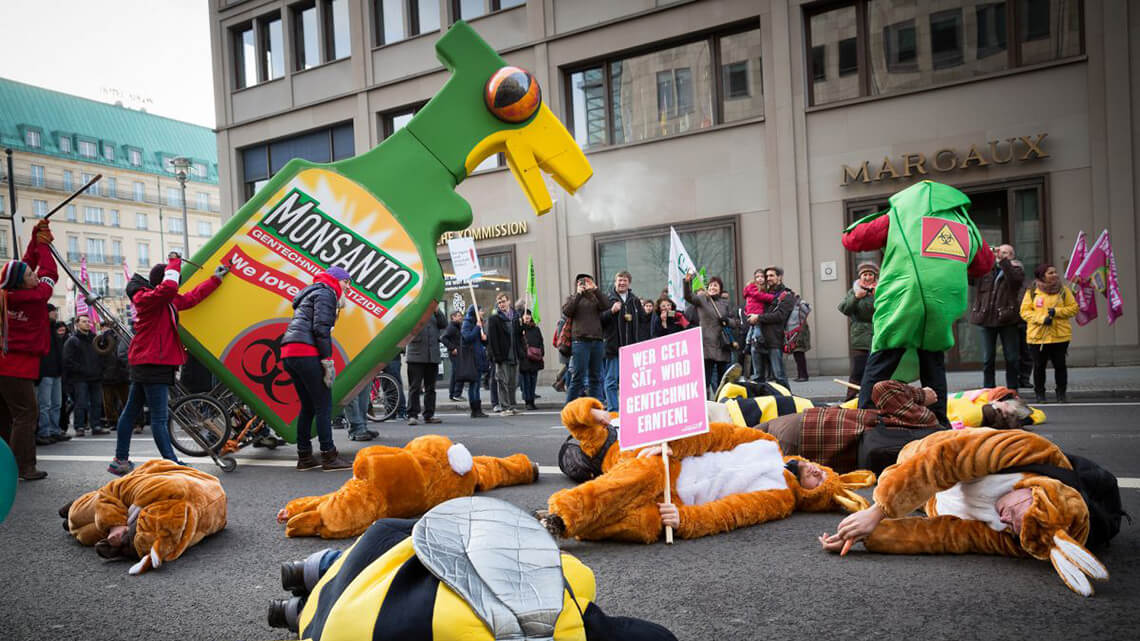
With glyphosate, the activists claim that the forty years of data provided by industry and the 3300 studies could not be trusted, quite simply because there was one company involved, Monsanto, which has become the source of their irrational rage. In the Age of Stupid, that seemed to be enough to want to scrap the entire European risk assessment system. I can’t believe, in an intelligence-based society, I actually wrote this paragraph.
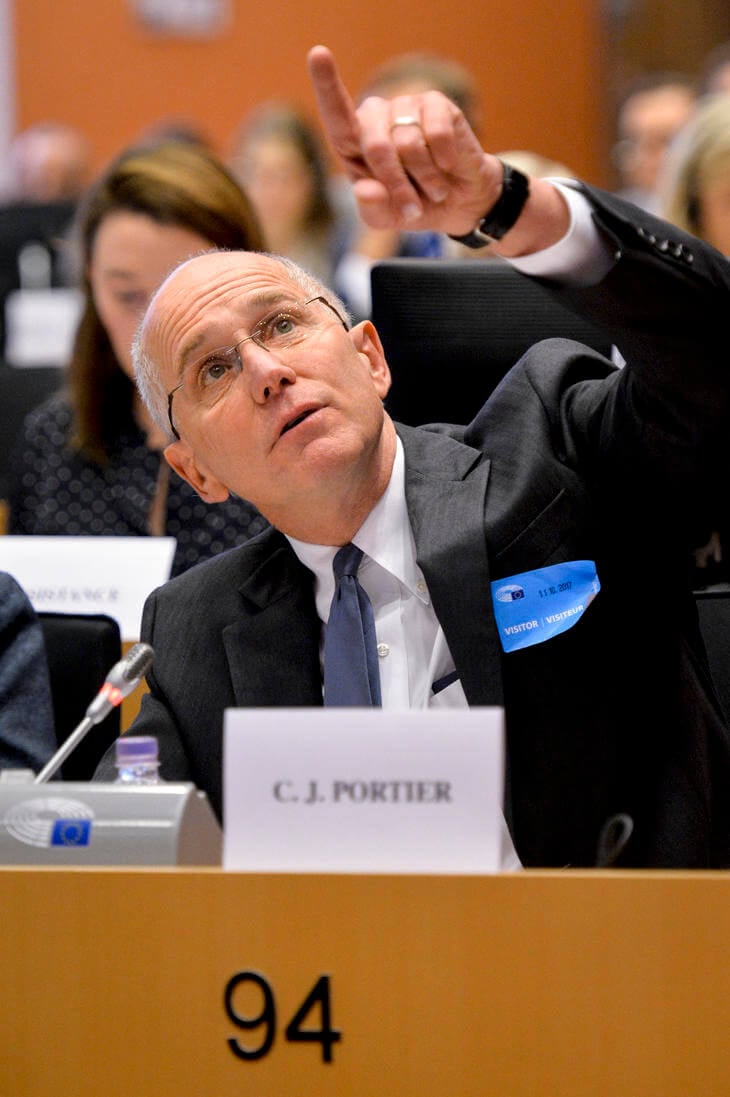
This absolutely ridiculous argument has been propagated by anti-industry opportunists like Martin Pigeon, Marie-Monique Robin and Carey Gillam who all share an unhealthy obsession against Monsanto. What’s outrageous is that the scientist Pigeon and Gillam cooperated with, Christopher Portier, was secretly being paid by law firms who would profit nicely from lawsuits against Monsanto should this triad of trepidation succeed in trashing the European risk assessment process. That they knew about the conflicting interests of the law firms to create doubt and anti-Monsanto sentiment, and continued to work with these non-transparent predatory lawyers, speaks volumes about their lack of moral character.
If they had succeeded in destroying the EU regulatory risk assessment process, what would these zealots have proposed instead?
Institutionalize a citizen-science risk assessment process
Activists like Pigeon call for the present risk assessment process to be reformed by excluding all industry research. This is in line with IARC’s monograph policy that pretends to reject considering non-published data, but this irrational distrust of industry creates severe limits on data and evidence. How would this lack of expertise be addressed?
I hear groups like CEO, PAN and Friends of the Earth often talking about expanding publicly-funded research. This is naive since the taxpayer should not have to pay for the costs to guarantee their safety. So I then hear claims that industry should pay the regulatory agencies to conduct the research. Of course if industry is paying for the punch-bowl, they should have a say on which scientists should be involved in these studies. Well, that’s where we are now and I suspect Saint Martin would have a hard time accepting that.
What these eco-fundamentalist groups want, ultimately, is an increased role for citizen science (crowd-sourced or community-led science). While there is nothing wrong with the public being involved in the scientific process, having citizens and non-experts leading the research is somewhat troubling to those wanting evidence-based policy decisions. Citizen science is what Jackie McGlade, the disgraced former head of the European Environment Agency, now the chief scientist (???) at UNEP, is arguing for. But what is citizen science about?
Smartphone technology may allow apps for amateur bird watchers to better record sightings but such cases of citizen science is random and anecdotal … hardly the quality to base responsible regulations on given the calibre of today’s research technology. There is no “good laboratory practice” with volunteers of amateur activists testing water or crowd-sourcing data and samples for groups subject to bias and crowd-led campaigns.
Citizen science assumes the rejection of the superior knowledge of the expert. They feel experts are biased either by funding or a post-modern dependence on some paradigm which may not be certain (and thus not valid). So for these new-age enlightened campaigners, the expert’s contribution to such debates is not worth very much. When you hear people moaning about today’s decision to renew glyphosate, many of them are saying this was undemocratic, and the people, the citizens, want the herbicide banned. So in a democracy, the people know more than the toxicologists, chemists, plant-biologists and agronomists on the safety of glyphosate.
This is literally insane! Would we reject the pilot or the aviation mechanic and trust a randomly chosen volunteer to fly my airplane simply because he or she has no affiliation with an airline? Would we let a democratically-selected activist operate on my liver? Yet environmentalists and naturopaths are demanding the citizens’ voice take the lead on agriculture, food production and pharmaceutical decisions. How did they get so jaded?
Indeed, even the leading scientist for the anti-glyphosate “people’s movement”, Christopher Portier, a statistician, admitted he knew nothing about glyphosate before attending the IARC expert panel that started this whole sordid affair. Who needs experts today when everyone has PhDs from Google University? Chris could figure out how to link glyphosate to cancer during that week in Lyon, and spend the next two years being the activists’ darling in the campaign to screw Monsanto, science, farmers and consumers. And hey Chris, the money was good!
So in the zealots’ warped world, citizen science, as the base of a new European regulatory risk assessment process, will see activist campaigners heading EU advisory panels with a select group of organic hobby farmers randomly counting bees or earthworms while industry research is excluded and university toxicologists and plant biologists sidelined. This is pure madness. The activists’ objective is to ban all agri-technology so they really don’t care about the consequences. Only in the Age of Stupid.
With glyphosate, despite the obvious evidence of the experts, despite the environmental benefits, despite the overwhelming value to farmers compared to alternatives, these activist zealots came within a hair’s breadth of achieving their goal to discredit research and undermine the European risk assessment process. They used relentless social media fear campaigns, victim-mongering, personal bully attacks on scientists and science communicators, open fabrication, innuendo and deception. And these little liars will do it again and again until they achieve this goal.
A perfect storm of interests
Clearly the activists had the perfect storm with glyphosate. So many other interests collided over the last two years, with new trans-Atlantic partnerships of vile opportunists and silos of slime forming into armies of intolerance, including:
Anti-GMO American carpetbaggers salivating at removing the chief motivation for farmers to benefit from Roundup-Ready maize and soy by manipulating the European precautionary handicap.
American class-action lawyers seeking to exploit the EU’s hazard-based regulatory approach to create a confusion over the safety of public health exposure to profit from lawsuits against industry.
Anti-industry activist groups from both sides of the Atlantic have united flush with funds from the burgeoning organic food industry lobby seeking to incapacitate conventional farming and create market-friendly conditions for their unsustainable agricultural production process.
An alarming scientific ignorance at the heart of the European Commission. Many of the activist groups involved in pushing their anti-evidence agenda were involved in removing the post of EU Chief Scientific Adviser just three years ago.
Agroecologists have been pining to return Europe to a pre-industrial Malthusian paradise, and banning the use of agri-technology was their first important step. Having their lunatics in charge of the European risk assessment process would have been the icing on the cake! Not just yet.
These zealots will live to fight again, stronger, emboldened and convinced of their righteousness. The present European Commission will be unable to resist their next wave of emotional manipulation and deliberate deception.
This week I will be in Germany to speak at a conference on endocrine disrupting chemicals. There will be zealots in the room. I do not plan to hold back any punches.
The battle continues.
David Zaruk—the Risk-Monger—has been an EU risk and science communications specialist since 2000, active in EU policy events from REACH and SCALE to the Pesticides Directive. Follow him on twitter @zaruk
Some scientists call it the “final frontier” of our DNA—even though it lies at the center of every X-shaped chromosome in nearly every one of our cells. It’s called the centromere, and it plays a crucial role in the everyday cell division that keeps us healthy. Which also makes it a key suspect in birth defects, cancers and other diseases that arise from cell division problems. Now, a new technique may force this mysterious stretch of DNA to give up its secrets at last. Already, the first test of the approach has yielded clues about the role of centromeres in Down syndrome, which arises when a child inherits an extra copy of chromosome 21.
…
In the new paper, [Rafael] Contreras-Galindo, [David] Markovitz, active emeritus U-M professor Mark Kaplan, M.D., and a team of collaborators report results from their comparison of centromeres from individuals with and without Down syndrome. They show a strong link between the condition and instabilities found on chromosome 21––both in the centromere and in the stretches of DNA that flank it, called pericentromeres. Unstable centromeres and pericentromeres could help explain why people with Down syndrome inherit an extra copy of that chromosome, although much work remains to test this hypothesis.
Eager to speed development of revolutionary treatments, the Food and Drug Administration recently announced that it would expedite approval of experimental gene therapies. But the regulatory process may not be the biggest obstacle here.
Biotech companies have exciting plans to introduce treatments that may be transformative, sometimes curing genetic diseases with a single treatment. And the firms are itching to test their products.
But they are struggling to obtain a critical component of the therapy: the disabled viruses used to slip good genes into cells that lack them.
This delivery system lies at the heart of many forms of gene therapy; without the disabled viruses, there is no treatment. But manufacturing them is costly and onerous.
…
The result is a logjam. Firms exploring new gene therapies may wait for years in line for bespoke viruses, said Dr. Jim Wilson, director of the gene therapy program at the University of Pennsylvania’s Perelman School of Medicine.
…
Other gene therapy companies are not always able to afford the manufacturing costs or find a manufacturer. Some have taken to buying slots in virus production queues years in advance — like buying a nonrefundable airline ticket long before your vacation and hoping you can get away when the time comes.
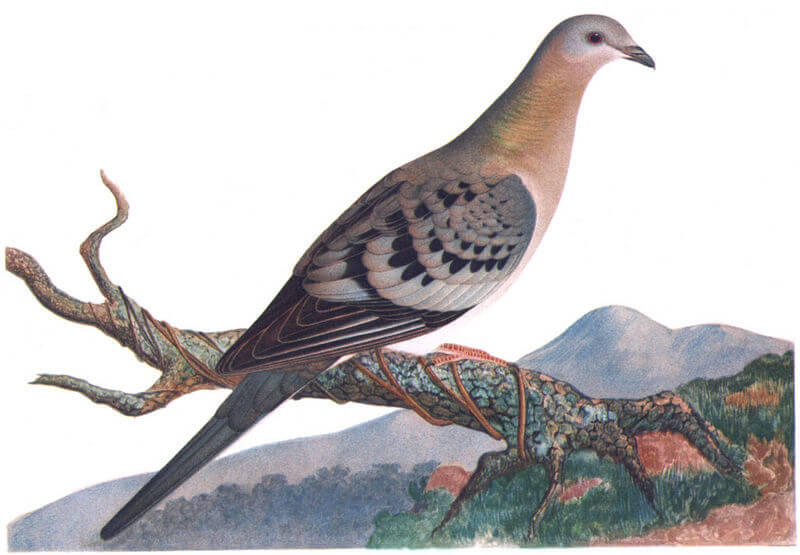
Passenger pigeons were once the most abundant bird in North America, and quite possibly the world.
…
In a matter of decades, the continent’s most common bird has been completely wiped out, down to the last individual. “It’s always astounded me how something could have that large a population and entirely disappear,” says Beth Shapiro from the University of California, Santa Cruz. “Why didn’t tiny populations survive somewhere in refugia? I mean, we are pretty good at murdering things, but how did we kill every one of them?”
These questions have been debated for decades. But Shapiro and her colleagues Gemma Murray and André Soares have found some new twists to the old answers.
…
[W]hy did this superspecies die out? Shapiro thinks it’s because the bird specifically evolved to live in mega-flocks, and developed adaptations that became costly when their numbers suddenly shrank at human hands.
…
The fact is that “human persecution was relentless right up until the very end,” [researcher Ben Novak] says. “The rarer the birds became, harvesting efforts only grew more intense. Whatever maladaptive trade-offs may have existed for the passenger pigeon, their decline was simply too rapid for these trade-offs to show symptoms.”
Scott Prentice, executive director of BioChecked, has been in the food certification business since 2010. However, he’s made the most waves with a new certification: Whether food and beverage products contain any residue of the controversial herbicide glyphosate.
BioChecked, based in Sarasota, Florida, launched its non-glyphosate certification program in January.
The Detox Project also issues a non-glyphosate certification, which it began in May.
…
These two organizations issuing non-glyphosate certifications have tapped into a movement driven by increasing consumer awareness of toxic chemicals and a desire for safer foods and beverages. The new symbols jockey for space among the crowded seals and symbols found on packaging today. They certify that foods, beverages or single ingredients have tested at the lowest possible threshold for the herbicide.
It took just 72 hours for me to lose my sight entirely, and for my hands and feet to feel like they were encased in ice. Just before my blindness hit, I had been laid up with an unknown virus that had left me suffering severe headaches and sweats. My body’s immune system had gone haywire, responding to the virus by attacking my own nerves, causing my loss of sight and mobility – you could say I had been struck down by biological friendly fire.
Going blind was devastating. I hadn’t just lost my primary sense – I had lost my livelihood too. As a television producer, my vision was my job, so I was desperate to see again. After a few weeks, I regained some movement and normal sensation in my legs and feet, but my vision was another matter entirely.
The morning my sight finally started to return, I opened my eyes to a strange, supernatural view. At first I could only make out subtle light shifts, everything was just a swirling grey fog with no perceptible shapes. I was momentarily elated that the world was no longer a suffocating black cloak wrapped around my head – but I realised quickly that I did not recognise anything around me. Over time, black lines started to appear, crudely constructing my visual landscape. These lines delineated windows and doorframes, but little else. Slowly the grey mist dissolved into a brown muddy haze that obscured anything more than a few feet away. Colour eluded me, and my family, padding softly around me at home, were hollow ghosts, skeletal figures with no solidity or humanness. Nothing looked like it should, and my children’s faces hovered agonisingly somewhere behind an opaque screen. I often had no idea where I was, and much of the time my heart was beating wildly in my chest. I wondered over and over if I would ever feel normal again.
As I recovered at home, colour started slowly creeping back into my life, whispering around corners. This was a very perplexing time, for often I only felt I was seeing a colour but was unable to identify it. I would stare endlessly at trees and lamp-posts, desperate to match the colour I believed was there with the strange sensory experience I was having. Bright primary colours were the first I could identify with any conviction. Red led the way, followed by blues and yellows – but cloudy and faded. I struggled enormously with greens, greys and any pale or muted colours. This was not the vibrant rainbow world I was used to.
Even though my visual world was still predominantly black and white, it felt like colours were talking to me – not literally, but as if my senses were communicating in ways I didn’t understand. Attempting to explain my new relationship with colour only provoked confused silences around me. It made no sense to my family, as they all had fully functioning sensory systems. And when I described it to the neurologists treating me, I was told that nobody knew what was causing this visual disturbance, but that perhaps my sensory system had become cross-wired.
I still had some channels of information transmitting the colours around me to my brain, but I was receiving only part of the message. My lifelong emotional associations with colours were still intact, even if my sight was not. I tried to use language to help myself recover. “You are green,” I would tell the grass. I believed the more I stimulated my brain by observing the world around me and reminding myself what colour was, the more the damaged circuitry in my brain would reconnect and bring my normal vision back online. I found the more I did this, the more it worked.
I began documenting my recovery daily and started using an audio recorder. I also experimented further with using language, when looking at an object whose colour I didn’t know. First of all I would stare hard and guess what colour I felt it might be. Then, if I was wrong, my husband Ed would tell me the correct colour. If I looked back at the object again and repeated that colour out loud myself, I would often temporarily see it, albeit muted. On one occasion I was able to see a row of different-coloured cable ties holding a gate together by repeating the colours Ed told me were there. Without hearing each colour expressed verbally, I had been unable to see them at all.
It was in this way that my home and neighbourhood became my own personal vision laboratory. My experiences were so outlandish that there were times when I couldn’t believe my eyes. Yet my eyes were undamaged – all of these strange occurrences were happening inside my brain.
My doctors told me I had experienced a rare form of monophasic neuromyelitis optica spectrum disorder, a condition that’s estimated to affect just one in 100,000 people in Europe. One of my primary symptoms had been optic neuritis, inflammation of the optic nerves, which caused my blindness. This inflammation was down to my immune system’s attack on its own body, and similarly led to sensory loss in my hands and feet. It also eventually led to my unusual and curious form of what I now know as synaesthesia – and to my desire to find out more about this condition.
The condition was first reported over 200 years ago by an Austrian doctor named Georg Sachs, describing his own experience. In 1812 he documented in great detail what colours he associated with certain numbers and letters. During the 19th century it came to be accepted that some people experienced these colour associations, but there was debate over whether this was a condition of the brain or eye. We now know it is entirely neurological – of the brain – as even the thought of, say, a number can elicit its associated colour for a synaesthete. It’s not uncommon for a synaesthete struggling to recall a phone number to ‘see’ their associated colours before they recall the number itself.
One woman I met, Janet [not her real name], is what is known as a grapheme–colour synaesthete, as colours appear in her mind’s eye that correlate to individual letters or numbers (graphemes). Janet sees each letter of the alphabet as a particular colour, and for her each letter has a different personality – some sad, others jolly.
Janet offered me a vivid and authentic insight into how, to her surprise, she discovered that she sees the world differently to others. A university administrator, she had been unaware that anything was unusual until her early 40s (roughly the same age I lost my sight). One wintry afternoon in the office, Janet was discussing the arrival of a colleague’s baby. They were talking and laughing about having children, when she mentioned that choosing a name for a baby was so hard, particularly if your spouse chose a name that had a colour you didn’t like. The next thing she knew the room went silent, until one of her friends asked her what she meant.
As Janet explained that she saw individual letters as colours, her colleagues shot puzzled glances at each other. She baffled them further when she told them that the first letter of a word could even put a tint over the rest of the word. Something so obvious and woven into her life was, she found, an anomaly to everyone else. At the time, little was known about her condition, but eventually she found a name for it: synaesthesia.
Janet is a classic synaesthete, having been born with it and never knowing anything different. And while we’ve had many conversations about our shared experiences, I’ve discovered that my version of synaesthesia is much less common, and has quite a different personality.
My illness had been a terrifying ordeal. At the worst of it I had been unable to walk at all, but, a few months on, I was able to wobble unsteadily down the road using a stick.
One afternoon, I hobbled around the streets of south-east London on the arm of my husband. Taking small, tentative steps I forced my rubbery legs to move.
As Ed and I slowly trundled along the road we came across a row of recycling bins. With my burgeoning vision still very distorted I could barely identify the swirling shapes in the distance as bins, but I could identify their colour as blue.
The moment I became aware of the nearest bin, I stumbled forward on my own. Fixating on the lid, I could see what I can only describe as a firework display. I knew I was registering the colour blue, but it was spitting and fizzing like an erratic sparkler. The entire surface of the bin was an unstable, frothing mass. Mesmerised, I limped right up to the bin and reached out my right hand. I’m still not sure why I felt compelled to touch the bin, but I did. Feeling the hard plastic, I spoke the word “blue” out loud. The sparkling stopped immediately, and the bin became a flat, rather lifeless blue. Cautiously I stepped back, but to my astonishment, the blue fizzing started up again. I turned around to Ed, my jaw agape, unsure how to explain what had just happened.
We might have been able to put this down as a one-off hallucination (I was having lots of those as my vision returned) but it wasn’t. I found I could repeat the exercise and the bin would alternate between flat blue or erratic sparkling blue depending on whether I touched it or not.
I started hunting out other objects that might fizz and sparkle – but I quickly learned they had to be blue, and located in front of me. Reds and greens were sometimes flashing up interchangeably (which was baffling), but no other colour responded in this luminescent and explosive way. Blue gates, parking signs and even people’s coats took on a new fascination for me. The moment I looked at them those blues started glittering and erupting. For a time any bright blue object on the horizon would fizz and spit erratically with what was becoming a familiar glow. Through my touch, the effervescence would calm, become stable and inert, and when I stood back from it, the fizzing would light up again.
My walking companions often watched, mildly embarrassed, as I fumbled my way down strangers’ driveways to touch their front doors and softly whisper “blue” to objects in their gardens.
I came to call this brief time during my recovery my “blue period”. I was seeing something that, as far as I knew, nobody else had ever experienced. It became a deeply personal and emotional journey, and those blue sparks offered me a glimmer of hope that my visual system was repairing itself – albeit in a strange and unique way.
There is no absolute explanation for my blue period, other than that my brain had suffered a huge trauma and was continually adapting to stimuli around me. After a year of recovery I had restored my mobility and had sufficient sight to get by. My life resumed, and I was determined to tell my story – even if it meant typing in 28-point font. I reinvented myself as Patient H69and launched a blog that would later become a book. And my fear about losing my sight was replaced by an unquenchable curiosity that drove me to seek out doctors, scientists and synaesthetes to understand what was happening to my brain. I accumulated hours and hours of recordings on my Dictaphone.
Acquired synaesthesia, as it is known, develops temporarily during a person’s lifetime, often provoked by hallucinogenic drugs like LSD or magic mushrooms, brain injury or, as in my case, sight loss. Researchers investigating nine cases of acquired auditory–visual synaesthesia, in people with optic neuritis, found that different sounds produced some kind of ‘seeing’ sensation such as simple flashes of white light and colourful flame-like hallucinations or wavy lines.
In my case, I had likely experienced two forms of acquired synaesthesia: one connecting colour and touch, and one connecting colour and spoken language. It is clear, however, that mine was an unusual case. In classic forms of colour synaesthesia there is no intelligible link between a certain stimulus (such as one of Janet’s letters) and the colour sensation it provokes. But for me, colour words were helping me see those same colours.
And while touch was stimulating a response for me, this was about stabilising the colour that was already there – not creating one.
The more I learned, the more questions I had. Had I unwittingly harnessed some kind of unconscious synaesthetic intuitions to boost my recovery? Had these coloured feelings helped me see again? Had synaesthesia helped anyone else to see too?
After I had recovered sufficiently, I was put in touch with Giles Hamilton-Fletcher, a researcher at Sussex University who specialises in synaesthesia and blindness. He is also a part of the UK Synaesthesia Association, a volunteer-run charity that connects synaesthetes, researchers and the media, with the aim of better understanding this extraordinary condition.
Giles invited me to the 2017 Open Senses Symposium at the University of London. There, shouting over the din of delegates, he handed me a piece of red fabric and a pair of headphones, explaining that these were part of a sensory substitution device (SSD), a technology that allows information from one sense, usually vision, to be re-routed through another sense. These clever devices can be used by people with visual impairments to produce some semblance of vision. Pointing at the red fabric, Giles explained that a sensor would translate its colour into an intuitive sound. I experimented moving the fabric around under the sensor, resulting in a high-pitched synthesised sound from the headphones. As I inched the fabric closer up towards the sensor, the sound became more staccato, offering me not just an auditory representation of the colour but awareness of where it was in space.
An SSD like this one converts a visual signal to a sound, which the brain can then learn to convert back into vision. Giles is interested in the relationship between this kind of sensory substitution and synaesthesia. After all, translating one sense into another is what synaesthesia is, in a nutshell. Because of this, SSDs are one of the first technologies to meaningfully demonstrate just what synaesthesia – or at least one kind of it – might feel like to those who have never had it.
Giles and his colleagues are investigating the practical applications of these devices, which are opening up new possibilities for people with permanent blindness.
Daniel Hajas is a physics undergraduate at Sussex and has been blind since he was 16. He first heard about Giles and the SSDs when Giles was looking for blind students to test the devices. Daniel found that one called the Creole could help him access vast swathes of visual, colour-coded data, and open a door back to colour that he had previously thought shut.
In physics, a crucially important image is the cosmic microwave background radiation map, a kind of speckled blue orb, sprinkled with patches of yellow, and red streaks. This colour map signifies the location and intensity of cosmic radiation in the universe resulting from the Big Bang.
Daniel can’t see it. But, using the Creole, he can hear it.
The Creole works as a stylus with a sensor at the end and a tablet connected to a laptop. On the laptop screen is the radiation map, and by placing the stylus somewhere on the tablet, Daniel can make the Creole produce sound that corresponds to the colour of the equivalent part of the map.
As he moves the stylus, there are erratic beeps and a low droning sound reminiscent of the dialing tone of old telephones. With occasional pauses to register the sound, he can accurately identify the colours – even nuanced shades. For instance, by blending two of the seven main sounds associated with each colour, he can recognise the colour purple. In the same way we would mix paint, Daniel can hear purple as a blend of red and blue sounds. By employing the principles of synaesthesia, Daniel is hearing the colours he needs to see.
Associations between sound and colour are not limited to synaesthetes but exist unconsciously in everyone. Studies by the Sussex researchers have revealed that the brain likes to ‘marry up’ certain visual phenomena with specific sounds. For example, playing notes on a piano, as the notes ascend in pitch, we expect any accompanying visuals to get progressively lighter in colour, spikier in shape, and higher in space. Some of these links even exist in blind people’s brains – and harnessing such intuitions and expectations can provide a gateway into the world of vision.
Giles and his colleagues have shown that SSDs that exploit these synaesthetic intuitions are much easier for people to learn to use. If you build these associations into devices – higher-pitched notes to signify brighter colours, for instance – it can increase the speeds at which people match these colours and sounds up. This way, the SSDs synchronise what we feel should be there with what is.
In our own ways, both Daniel and I learned to exploit an unconscious relationship with colour in a way that benefited us. Our stories are different, but you might say synaesthesia has opened both our eyes.
Several years on, I still have profound colour loss and some visual disturbances. I still think about my blue period – those strange weeks when the world burst into blue flames. While at times it was eerie inhabiting a twilight visual world, there was something magical about it. Few have seen anything like what I have seen. Most synaesthetes are born with the ability, but I have the unique perspective of having experienced a time before, during and after it, which makes the colour I see now all the more poignant.
I am certainly more consciously aware of colour now. I suppose in a way it still speaks to me. My brief time as a synaesthete showed me an innate association that I believe I unthinkingly tapped to boost my recovery. The extent to which my newly found synaesthesia helped my recovery is likely to remain shrouded in mystery, both to me and, for now, to science. However, I can’t shake the feeling that my synaesthesia acted like a magician, pulling back the curtain on the visual world. My brain knew what to do – it was showing me the colours I needed to see, even when the world went dark.
Vanessa Potter spent 16 years as an award winning broadcast producer working within the London advertising industry. Her website isPatient H69.







 The EU regulatory risk assessment process is meant to be evidence-based. It relies on a gathering of all available research data and scientific advice to allow for a clear decision based on science (usually via committees). Where data is insufficient, the industries involved with the substance or technology need to provide or produce further data. If a new drone technology is developed, for example, in order for the manufacturers to put the product on the market, they would need to provide the relevant European Commission research agency with the required data to properly advise the European Commission on how to manage the risks. If there is insufficient data or the evidence is questionable, the risk assessment agency may reject the authorisation and advise for precaution.