Hulu acquires exclusive rights to stream Neil deGrasse Tyson-narrated GMO film ‘Food Evolution’

hulu

Hulu has acquired the exclusive US [Video-on-Demand] rights to Food Evolution from Academy Award-nominated director Scott Hamilton Kennedy. The highly polarizing film is narrated by science communicator Neil deGrasse Tyson. The film [premiered] on Hulu on Sept. 21.

The doc is significant for a couple of reasons. First, it is one of the most controversial and contentious docs on the food industry because it delves into the positive side of GMOs on sustaining the human food supply, and second, it received a rare 100% Rotten Tomatoes rating.

The film tells the story of GMOs, from Hawaiian papaya groves — where experimentation with GMOs and the pesticides they involve has been deemed a disaster to school children in the area by other documentaries like Island Earth — to the cornfields of Iowa and banana farms in Uganda.

The doc has been condemned by organic growers and called “a corporate propaganda film” as it was funded by Institute of Food Technologists….The filmmakers have defended their funding while critics say they are propagating “Monsanto science.”

[Read Kevin Folta’s review of the film here]

The GLP aggregated and excerpted this article to reflect the diversity of news, opinion and analysis. Read full, original post: Hulu Acquires ‘Food Evolution,’ Acclaimed, Highly Controversial Doc

Neanderthal population estimate increases tenfold

Page

Some gene-based estimates put the Neanderthals’ effective population at a measly 1,000; others claim they hovered at a few thousand at most (one study, for example, calculated that there were effectively fewer than 3,500 females). Two hypotheses might account for these results: that the population was indeed that low, even at its peak, or that the population was perhaps larger but had been decreasing for a very long time. In either case, the Neanderthals were always on the decline; their extinction seemed to have been foretold from the beginning.

“If there were really only 1,000 Neanderthals in the whole world,” Rogers said, “it’s hard to believe there would be such a rich fossil record.” But genetic evidence is exactly what [anthropologist Alan] Rogers and his colleagues have now cited to support their claim that the Neanderthals effectively numbered in the tens of thousands. They made their argument in a study published [July] in the Proceedings of the National Academy of Sciences.

The increase in genetic diversity that Rogers and his colleagues found corresponds to a roughly tenfold increase in effective population size. Although there is no way of knowing how many more Neanderthal individuals that number may represent, it could go a long way toward meeting the estimates from the fossil data.

The GLP aggregated and excerpted this blog/article to reflect the diversity of news, opinion, and analysis. Read full, original post: Genetics Spills Secrets From Neanderthals’ Lost History

Viewpoint: EU court’s finding that GMOs are safe contrasts with public’s ‘unfounded prejudice’

BRC

[Editor’s note: Roberto Defez is a molecular microbiologist at the Institute of Bioscience and BioResources, Italian National Research Council. Dennis Eriksson is a researcher at the Department of Plant Breeding, Swedish University of Agricultural Sciences.]

Albert Einstein said, “It is harder to crack prejudice than an atom.” A persistent prejudice in the EU is that against GMOs. An EU court judgment has restated that fears are unfounded, but will Europe take the opportunity to become a science-based society?

[Editor’s note: Background on EU court judgment here]

We should be suspicious of something unknown, but we now have so many analyses, restrictions, evaluations and experience on the use of GMOs as food and feed (or for medical care) that we can handle the GMOs using the actual EU laws.

The [Court of Justice of the European Union] judgment has now presented a great opportunity to start recovering a rational, science-based approach. The technology to produce GMOs is already old and mainstream. Emerging genome editing technology adds to the diversity of the breeder´s toolbox and provides easy, rapid, precise and powerful means to reduce pesticide inputs as well as help plants to face climate changes.

With a strong research community, Europe has the opportunity to guide the change instead of only importing and paying for the final products. Companies have learned a lot from the GMO lesson. Scientists are ready. Farmers like Giorgio Fidenato too. Let’s break the prejudice.

The GLP aggregated and excerpted this article to reflect the diversity of news, opinion and analysis. Read full, original post: EU and GMOs: The case for a knowledge-based society

Hive coup? Why queen bees are sometimes killed by workers

queen

[Editor’s note: James Gilbert is a lecturer in zoology at the University of Hull.]

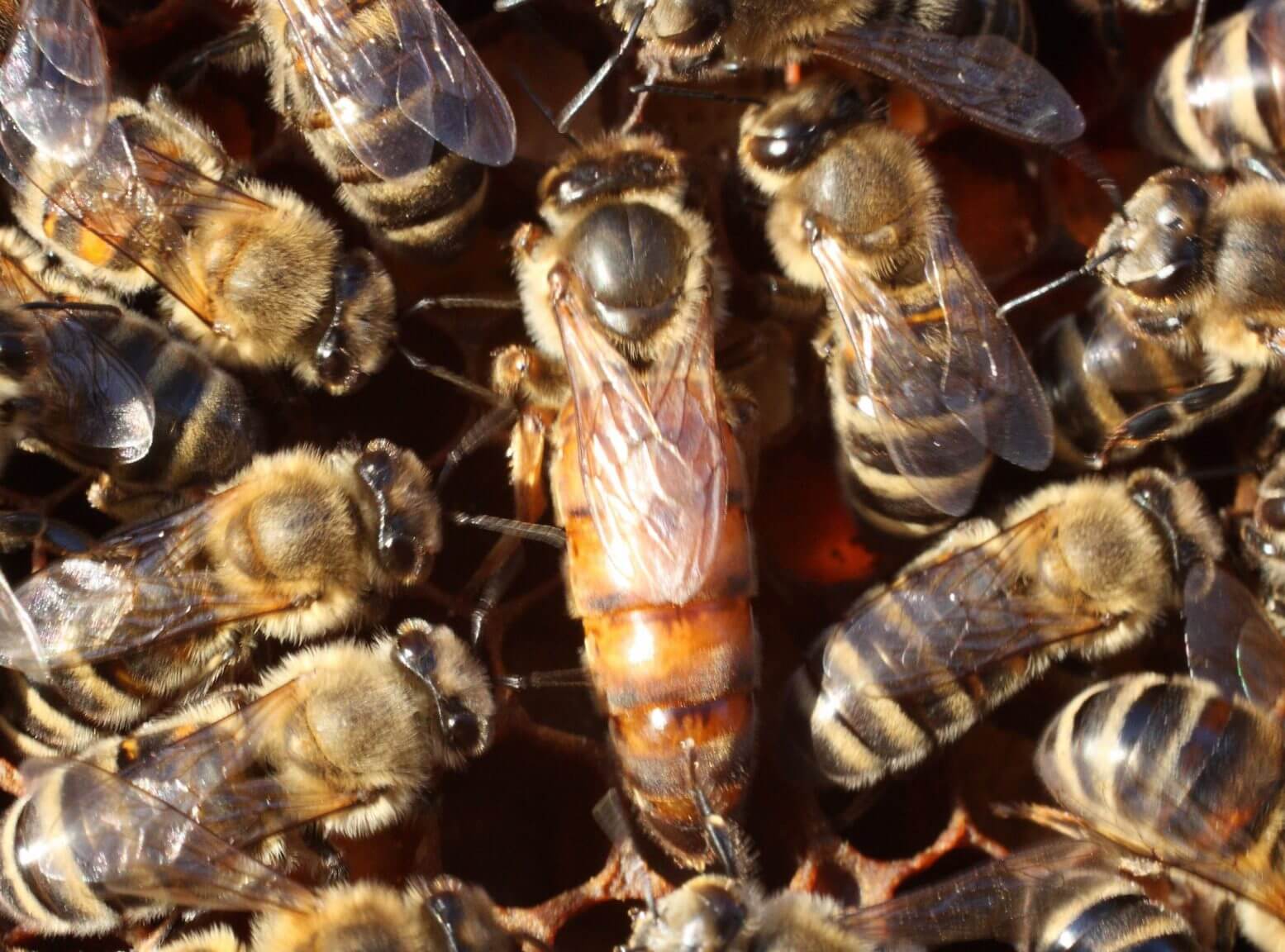
A new study has shown that some bee workers are queenslayers who will rise up and kill their queen if she produces the wrong sort of male offspring. The throne can then be seized by one of her daughters, who will produce the right kind of male heirs – ensuring the survival of the bloodline. Why would bees favour some queens over others based on their sons?

If by random chance the queen has mated with a male that carries a [complementary sex determination] allele identical to hers, then half her diploid offspring will only have one kind of CSD allele and become male instead of female, effectively halving the workforce of the new generation.

If the queen is producing hungry, lazy, sterile males, then killing her allows one of her daughters to become a new queen, producing genuinely reproductive male heirs. The workers can then help the new queen perpetuate their collective genetic legacy.

How do the workers detect sterile males? The researchers showed that, to workers, normal haploid males and sterile diploid males smell different. The two distinct smells develop a short while after the males emerge. How long afterwards, do you suppose? About 10 days – precisely the point at which the queens in the experiment began “mysteriously” dying off. The smoking gun.

The GLP aggregated and excerpted this blog/article to reflect the diversity of news, opinion, and analysis. Read full, original post: A game of drones: why some bees kill their queens

Upchuck factor: Alcoholism targeted with novel gene therapy

beers

The intense nausea that follows drinking alcohol for people with a certain gene variant may become the basis for a gene therapy to prevent alcohol use disorder, the new medicalized term for alcoholism. It would work much like the drug Antabuse, used for more than half a century, but on a less fleeting basis.

Cells break down ethanol, the type of alcohol in beverages, in two steps, each controlled by an enzyme. First ADH (alcohol dehydrogenase) breaks down ethanol into acetaldehyde. Then ALDH2 (aldehyde dehydrogenase 2) breaks down the acetaldehyde into acetic acid, also known as vinegar.

But if that second enzyme isn’t working well, acetaldehyde builds up, and nausea ensues. Because throwing up is so unpleasant, individuals who tend to upchuck after drinking avoid alcohol.

More than a third of people of East Asian ancestry (Japanese, Chinese, and Koreans) are likely to get sick after drinking, thanks to a variant of the ALDH2 gene that disables the enzyme. The reaction to the building acetaldehyde is swift: red face, nausea, vomiting, racing heart, dizziness, weakness, headache and anxiety. Known in those countries as the Asian flush reaction, the wretched response is also associated with increased risk of esophageal cancer.

asianAbout 540 million people worldwide have the alcohol flushing reaction – about 8 percent of the population. And people who have it know it – no fancy diagnostics necessary.

A virus delivers ALDH2

Jude Samulski at the University of North Carolina Gene Therapy Center and Anamaria Sanchez of the University of Chile and their colleagues deleted a bit of the ALDH2 gene that encodes a small hairpin (sh) RNA – a short segment that loops out and can be snipped off with an enzyme, like cutting out a loop that forms in tangled thread when sewing a hem. Removing the hairpin blocks production of the ALDH2 enzyme, and the barfogenic acetaldehyde mounts, more so with more drinks. The work is available online and will be published in an October issue of Human Gene Therapy.

The researchers delivered the doctored dysfunctional ALDH2 genes in a standard gene therapy viral vector, AAV2, into human embryonic kidney (HEK-293) cells and into human liver cancer (HepG2) cells, inspired by other investigators who had shown that similar strategies elevate acetaldehyde in rats. Sure enough, a few days later, when alcohol is dumped on the human cells, acetaldehyde levels jump, from 30 to 50 percent, depending upon the alcohol dose.

Gene therapy, the investigators conclude, could be a “useful tool for the treatment of alcoholism.” But so far it’s just in disembodied cells.

It isn’t clear where the gene therapy might be delivered – viruses have “tropisms,” or favored body parts, and AAV2 beelines for cells in the eye, the kidney, and the central nervous system. The viruses hover outside cell nuclei as circles called episomes, rather than joining our chromosomes, and as a result can be diluted away as cells divide. But nerve cells don’t divide, and in fact AAV2 has been delivered intravenously in several gene therapy trials for inherited brain diseases.

Meanwhile, other genetic approaches have shown limitations. Gene silencing using nucleotides similar to those in DNA would have to be delivered continuously, which might not be safe. Long antisense molecules have the dreaded off-target effects. And an antibody meant to act like an anti-cocaine vaccine, also delivered in AAV, had effects in mice. Until the new study, gene therapy to counter an addiction hasn’t been tried in anything human.

New kid on the block

A gene therapy approach to preventing the drinking of alcohol because of an aversion to hurling most closely resembles the mechanism of the drug Antabuse (disulfiram), available since 1951 as a daily pill taken typically for weeks or months. (I had one monumental event following drinking in college and can attest that it’s possible not to wish to repeat the experience of the aftermath ever.) Taking Antabuse and then drinking recapitulates the Asian flush response.

Other drugs to squelch alcohol use disorder work in different ways. The monthly injection naltrexone (Vivitrol and Revia), approved by the FDA in 2006, blocks endorphin receptors and thereby reduces craving. But it doesn’t induce vomiting. And Acamprosate (Campral), a thrice-daily pill, is vaguely described as “neuromodulatory.”

A new entrant may be an anti-inflammatory drug used in Japan to treat asthma, Ibudilast. In a new study, 24 participants who reported drinking daily for at least three weeks each month were given either the drug at increasing dosage for six days, then waited two  weeks, then had placebo for six  days, or they had the placebo first and the drug last. On the sixth day, participants got an intravenous dose of alcohol. After the regimen, they described how they felt. The drug reportedly lowered craving, but the numbers and timeframes seemed on the short side to me. FDA is fast-tracking study of the drug to treat progressive MS.

Meanwhile, a quick look at ClinicalTrials.gov lists 283 treatments in the works for alcohol use disorder: a few old drugs like Depakote, a few familiar approaches like antioxidants and deep brain stimulation. But most listings are behavioral, including a bunch of phone apps and the obvious and futile, like counseling college freshmen not to drink.

binge xOne can imagine a shot of the gene therapy being given at orientation to prevent binge-drinking. I mention this because in the summer of 2010, an unbelievably boneheaded program, Bring Your Genes to Cal, at the University of California, Berkeley, attempted to encourage incoming freshmen to take a handful of genetic tests, including one for ALDH2. Lacking the gene variant might have encouraged drinking. Fortunately it never got off the ground.

Proof-of-concept

Gene therapy to keep people from drinking is not very high on my list of conditions that DNA delivery might combat.

But Terence R. Flotte, of the University of Massachusetts Medical School, writes in an editorial accompanying the article in Human Gene Therapy that the “initial proof-of-concept for a gene therapy prevention or treatment of alcoholism … could conceivably reproduce the biological basis for resistance to alcoholism seen in those harboring the less functional ALDH2 allele. Perhaps such an approach might be the key to using the immense power of gene therapy to stem the rising tide of alcohol-related substance use disorder morbidity and mortality in the United States.”

Can anyone suggest a drug name?

Ricki Lewis has a PhD in genetics and is a genetics counselor, science writer and author of Human Genetics: The Basics. Follow her at her website or Twitter @rickilewis.

UK science advisor: Agricultural pesticides important, but better regulations needed to limit environmental impacts

e

The assumption by regulators around the world that it is safe to use pesticides at industrial scales across landscapes is false, according to a chief scientific adviser to the UK government.

“The current assumption underlying pesticide regulation – that chemicals that pass a battery of tests in the laboratory or in field trials are environmentally benign when they are used at industrial scales – is false,” state [two] scientists in their article published in the journal Science. Ian Boyd is chief scientific adviser to the UK’s Department of Environment, Food and Rural Affairs, where [Alice Milner] also works on secondment, but their criticism reflects their own views.

“The effects of dosing whole landscapes with chemicals have been largely ignored by regulatory systems,” the scientists said.… They contrast this situation with pharmaceuticals, for which there is a system of rigorous global monitoring after a drug is approved in case adverse effects emerge.

“Vigilance on the scale that is required for medicines does not exist to assess the effects of pesticides in the environment,” they said. They cite the UK as an example of one of the most developed regulatory systems: “Yet it has no systematic monitoring of pesticide residues in the environment. There is no consideration of safe pesticide limits at landscape scales.”

The GLP aggregated and excerpted this article to reflect the diversity of news, opinion and analysis. Read full, original post: Assumed safety of pesticide use is false, says top government scientist

Farmers hope gene editing can provide boost to stagnating wheat yields

wheat farmer

[Rick Seimer], the president of Siemer Milling in Teutopolis, Ill., has seen the recent data showing the fewest number of planted wheat acres in U.S. history. On top of that, this year’s harvest was the lowest since 2002.

Nationwide, wheat producers this year are on track to plant the fewest acres since the U.S. Agriculture Department began keeping records in 1919.

According to the USDA, genetic improvements for wheat have been slow since the grain has a complex genetic makeup and the return on such investment is lower than that of corn and soy. As a result, there is no commercially grown genetically modified wheat in the United States.

But the milling company president said that a different technique, genetic editing, is on the rise and could help boost wheat back to its glory days.

“Genetic editing looks like it may really take the breeding world by storm and be much easier to use and productive than even genetic modification,” said Siemer. “It’s advancing very rapidly.”

The GLP aggregated and excerpted this article to reflect the diversity of news, opinion and analysis. Read full, original post: ‘Genetic editing’ seen as key for increased wheat yields

Air pollution, while abating in most places, poses ‘greatest threat to public health?’

Benxi Steel Industries e

Even with vast improvements in air quality since the ’70s, people haven’t stopped dying from the air they breathe. An analysis published in 2013 from researchers at MIT estimated that about 200,000 premature deaths occur each year in the United States because of fine particulate air pollution. A study published in January in Environmental Health Perspectives reported that daily deaths over a decade in metropolitan Boston peaked on days when concentrations of three common air pollutants were at their highest.

Researchers are now finding that more than the lungs are at risk, as dirty air may in fact be an accomplice to some of the greatest threats to public health, including diabetes, obesity and even dementia.

[S]cientists identified 1,828 people in Denmark with Parkinson’s diagnosed between 1996 and 2009, and compared them with about the same number of randomly selected healthy people. Those exposed to the highest levels of air pollution had the greatest risk of developing the disease. The data, the researchers wrote, “raise concern given the increase in vulnerable aging populations.”

If science bears out the connection between pollution and brain health, or pollution and metabolism, environmental advocates and businesses may have even more reason to push for cleaner air.

The GLP aggregated and excerpted this blog/article to reflect the diversity of news, opinion, and analysis. Read full, original post: The list of diseases linked to air pollution is growing

Bible and the brain: How did ancient Israelites ‘hear’ God?

bible

James Kugel has been spent his entire scholarly career studying the Bible, but some very basic questions about it still obsess him. What was it about the minds of ancient Israelites that allowed them to hear and see God directly—or at least, to believe that they did? Were the biblical prophets literally hearing voices and seeing visions, understanding themselves to be transmitting God’s own exact words? If so, why did such direct encounters with God become rarer over time?

Kugel uses biblical research to show that ancient people had a “sense of self” that was fundamentally different from the one modern Westerners have—and that this enabled them to experience and interpret prophecy differently than we do. Then he uses scientific research to show that we shouldn’t assume their view was wrong. If anything, our modern Western notion of the bounded, individual self is the anomaly. […] Kugel cites several studies showing that even now, many healthy people hear voices—as much as 15 percent of the general population.

“These results,” Kugel concludes, “would suggest that a society’s ‘givens’ have a lot to do with how voice hearing is interpreted”—cultural conditioning impacts whether a phenomenon like prophecy will be celebrated or pathologized.

The GLP aggregated and excerpted this blog/article to reflect the diversity of news, opinion, and analysis. Read full, original post: Reading the Bible Through Neuroscience

Mini ‘brains’ aid study of dementia and mental illness

mini
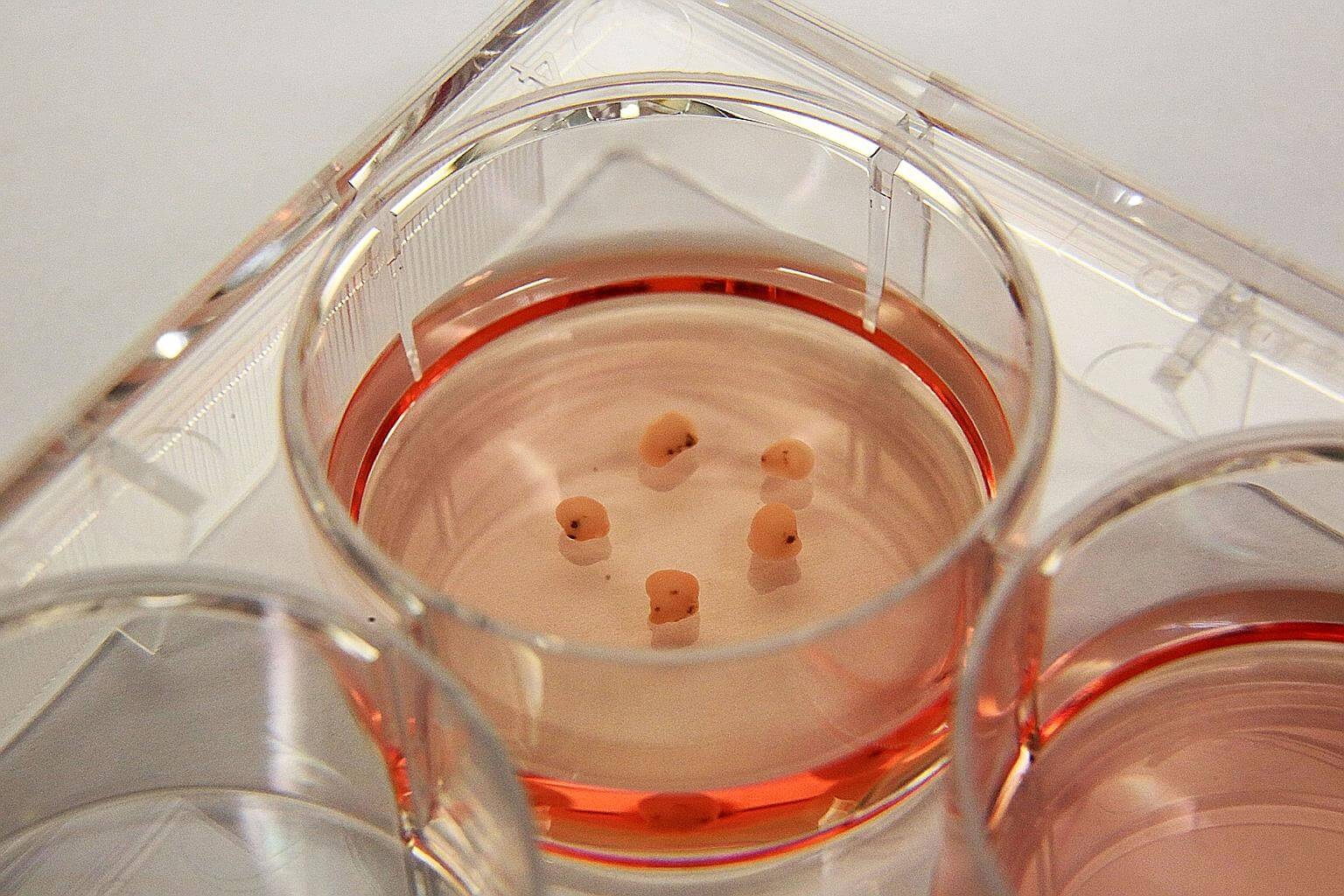
[A] brain organoid begins as a single skin cell taken from an adult. With the right biochemical prodding, that cell can be turned into an induced pluripotent stem cell (the kind that can mature into one of several types of cells) and then into a neuron. This makes it possible to do things that were impossible before. Now scientists can directly see how networks of living human brain cells develop and function, and how they’re affected by various drug compounds or genetic modifications. And because these mini-brains can be grown from a specific person’s cells, organoids could serve as unprecedentedly accurate models for a wide range of diseases.

This is just the beginning, says [researcher Madeline] Lancaster. Researchers such as Rudolph Jaenisch at MIT and Guo-li Ming at Johns Hopkins are beginning to use brain organoids to investigate autism, schizophrenia, and epilepsy. What makes cerebral organoids particularly useful is that their growth mirrors aspects of human brain development. The cells divide, take on the characteristics of, say, the cerebellum, cluster together in layers, and start to look like the discrete three-dimensional structures of a brain. If something goes wrong along the way—which is observable as the organoids grow—scientists can look for potential causes, mechanisms, and even drug treatments.


The GLP aggregated and excerpted this blog/article to reflect the diversity of news, opinion, and analysis. Read full, original post: Brain Organoids – A new method for growing human brain cells could unlock the mysteries of dementia, mental illness, and other neurological disorders.

Genetic cancer screenings based on family history may not go far enough

GeneMutation b ddab f b c e e

Simultaneous sequencing of tumor DNA and normal tissue for a broad panel of cancer-related genes may detect more potentially clinically significant heritable mutations than a targeted approach based on current clinical guidelines, according to a study published by researchers at Memorial Sloan Kettering Cancer Center (MSK).

The study by Kenneth Offit, M.D., chief of the Clinical Genetics Service and Robert and Kate Niehaus Chair in Inherited Cancer Genomics at MSK, found that more than half of inherited cancer gene mutations in people with advanced cancer were not detected using traditional methods based on family history.

Those results suggest that current guidelines for genetic testing based on family history may not detect all clinically actionable genetic mutations, the MSK researchers concluded.…

The researchers analyzed DNA samples from 1040 patients, finding that 182 (17.5%) had mutations indicating cancer susceptibility. Of these 182 patients, 101 (55%) would not have had these mutations detected using traditional guidelines based on family history, age, and tumor type.

“We found that tumor-normal sequencing facilitated personalized therapies and prevention by simultaneously detecting inherited markers of cancer risk and identifying tumor-specific genetic targets for treatments,” added pathologist Diana Mandelker, M.D., Ph.D.

[Read the full study (behind paywall)]

The GLP aggregated and excerpted this blog/article to reflect the diversity of news, opinion, and analysis. Read full, original post: Study Shows Universal Sequencing Detects More Cancer Mutations

Oxitec to produce one billion Zika-fighting mosquito eggs each week

oxitec

Plans to produce one billion mosquito eggs in the UK every week have been announced by a company working to combat insect transmitted disease.

Oxitec has developed genetically-altered male mosquitoes which have been used in Brazil and Panama.

The company’s mosquitoes are designed to produce offspring that will not survive into adulthood so the population declines.

The unit making the eggs will be built in Abingdon, Oxfordshire [in the UK].

The mosquito created is a version of the Aedes aegypti mosquito, which is known to carry Zika, chikungunya and yellow fever.

Once released in the wild it seeks out female mosquitoes to mate with.

When used in trials in Brazil the mosquito reduced the wild population of the Aedes aegypti mosquito by 90%, the firm said.

The Zika virus outbreak in 2015 led Brazil to declare a national emergency and was linked to severe birth defects.

The GLP aggregated and excerpted this blog/article to reflect the diversity of news, opinion, and analysis. Read full, original post: Plan for UK-based mosquito ‘factory’ announced

Second Green Revolution: Stress-tolerant rice varieties increase crop yields, food security

fe aa f cf b df b cc

According to [International Rice Research Institute (IRRI)], the global rice demand is estimated to increase from 439 million tons in 2010 to 555 million tons in 2035. In Africa, where the population growth rate is high, there is an exponentially increasing demand for rice.

“We are now integrating tolerances of abiotic factors into modern varieties and bringing them to the areas that missed the first green revolution.” [IRRI’s Dr. Abdelgagi Ismail] says, “This is what we are referring to as the second green revolution.”…

Unlike the first Green Revolution, which used a single miracle variety to produce an exorbitant amount of rice, the second Green Revolution involves tailoring seeds to thrive in particular environments (drought, submergence, salinity, iron toxicity, heat and cold). IRRI’s research has made it clear that it is possible to double the productivity in these areas, and they hope to increase its nutritional value too.

“I am optimistic that with sufficient investment in research, science will help us solve all hurdles and sustain our food supply, and agriculture is the only source of food.” Ismail says, “The concept of the second Green Revolution is a good example, besides investing more into areas and resources that are not yet sufficiently exploited.”

The GLP aggregated and excerpted this article to reflect the diversity of news, opinion and analysis. Read full, original post: Of Rice and Men: Cultivating the Next Green Revolution

Calculating odds of destroying humanity with genetic engineering

eboa

How likely is it that humanity will destroy itself? Various scientists have studied this probability, and the basic calculation is straightforward. The key parameters are the number of people capable of destroying the planet and the likelihood that they will do so.

[A] new technology is posing a global threat. This is the ability to engineer organisms that can kill large numbers of people—perhaps almost everyone—in a global pandemic. Until recently, the development of bioweapons has required the kind of large-scale investment that only nation states can bring to bear. That has allowed this work to be carefully monitored on an international scale. Consequently, the use of bioweapons has been largely controlled by international agreement.

The results are sobering. If there is a one in 100 chance that somebody with the technology will release it, and there are a few hundred individuals like this, then our civilization is doomed on a timescale of 100 years or so. If there are 100,000 individuals with this technology, then the probability of them releasing it needs to be less than one in 109 for our civilization to last 1,000 years. […] You have been warned.

The GLP aggregated and excerpted this blog/article to reflect the diversity of news, opinion, and analysis. Read full, original post: Genetic Engineering Holds the Power to Save Humanity or Kill It

David Gorski: Rigvir ‘virotherapy’ another unproven alternative medicine cancer therapy

Screen Shot at AM

[Editor’s note: Dr. David Gorski, MD, PhD, FACS is a surgical oncologist at the Barbara Ann Karmanos Cancer Institute.]

[Cancer treatment Rigvir] is included on the [Latvian] health ministry’s list of reimbursable medicines, meaning public as well as private money is spent on it. Yet as [news magazine] De Facto revealed, in January three professional medical organizations, including the Latvian Oncology Association, wrote to the Health Ministry expressing concern that research and publications used to establish the credentials of Rigvir treatment were of poor quality and scientifically questionable: for example in one study supposedly comparing the outcomes for two groups of patients, one group used Rigvir and the other did not, with the Rigvir patients doing considerably better than the control group. However, the Rigvir patients also used chemotherapy, while the control group did not, which should have rendered the findings highly dubious.

“A letter by some social group saying they don’t like something – it’s just not helpful. Show us data that this medicine does not work for your patients. We don’t have anything to react to at the moment,” said Health Minister Anda Čakša.

What we have in Rigvir is yet another example of alternative medicine co-opting an interesting treatment from history that had been largely abandoned, resurrecting it, and riding it to profits. […] Never mind that there is such a paucity of evidence that it actually works. Cancer patients, beware.

The GLP aggregated and excerpted this blog/article to reflect the diversity of news, opinion, and analysis. Read full, original post: Rigvir: Another unproven and dubious cancer therapy to be avoided


Food Evolution movie changing people’s minds about GMOs in Australia

r w h fmax

Food for thought and central to [Food Evolution’s] central theme of changing peoples’ minds and choosing facts over emotional logic is the use of a well-known quote attributed to Mark Twain, in the introduction, ‘It’s easier to fool people than to convince them that they have been fooled’.

[Movie director Scott Hamilton Kennedy] said a key lesson he took away from making the film was about the power of confirmation bias, or the way anti-GM proponents ignored scientific evidence in order to maintain their opposing views.

“The extent of peoples’ confirmation bias and seeing the world the way they want to see it – and seeing it from within our bubbles as we tend to say in this day and age – it’s just so strong,” [he told the Australian National University audience].

“I learned about confirmation bias in the making of the film and it was very revealing to look at my own confirmation bias and really see it in others.

“Facts don’t persuade as they say, but it’s amazing how you can present somebody with evidence that goes counter to their world view and even if it’s supported by, as we know with GMO, thousands of scientific organisations, that doesn’t mean they’ll change their mind.

The GLP aggregated and excerpted this article to reflect the diversity of news, opinion and analysis. Read full, original post: When was the last time you changed your mind on GMs?

Kenya’s leading scientists urge government to approve GMO corn

Screen Shot at PM

[Kenya’s] leading scientists have written to the National Biosafety Authority (NBA) seeking permission to release the first ever Genetically Modified (GM) maize variety.

“The TELA maize that will be commercialized in Kenya and any other country must go through regulatory and biosafety systems in the target countries. This is to ensure its safety as human food. As with any new technology on the market, consumer education is essential to enlighten the farmers as well as consumers,” said [Gospel Omanya, Senior Manager of Deployment at the African Agricultural Technology Foundation].

Omanya believes the GM maize variety, known worldwide as Bt maize, will help farmers in Kenya increase their yield by reducing damage caused by stem borer insect pests.

According to the Agricultural Sector Development Strategy, Kenyans depend on maize for their daily food and are too often threatened by hunger due to a number of constraints including voracious pests.

Stem borers are known to reduce maize yield by an average of 13 percent or 400,000 tonnes, equivalent to the yearly amount of maize imported by Kenya, amounting to 70 million U.S dollars.

The GLP aggregated and excerpted this article to reflect the diversity of news, opinion and analysis. Read full, original post: Feature: Kenyan farmers mull large-scale cultivation of genetically modified maize

Alzheimer’s ‘brain health’ quiz likely to scare more than help

brain

There is a memorable episode in the now-classic sitcom Scrubs in which the conniving Dr. Kelso unveils a plan to peddle useless “full body scans” as a new revenue stream for the perpetually cash-strapped Sacred Heart Hospital. The irascible but ultimately patient-protecting Dr. Cox objects loudly. “I think showing perfectly healthy people every harmless imperfection in their body just to scare them into taking invasive and often pointless tests is an unholy sin,” he says. Undeterred, Kelso launches an advertising campaign that promotes the scans in a tear-jerking television commercial and a billboard screaming “YOU may already be DYING.”

Alarmist medical advertising is pretty funny on television, but it can be far more troubling in real life. Although I’ve never been alerted to impending death, I recently received an advertisement from my own trusted health care provider warning that I may have Alzheimer’s disease, although I have no known symptoms and no complaints.

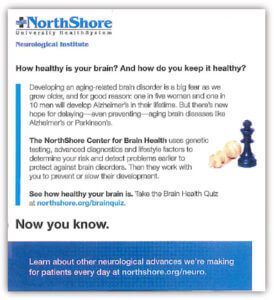
As long-time patients at NorthShore University Health System, which is affiliated with the University of Chicago, my wife and I received two solicitations from its Center for Brain Health touting the development of “ways to slow brain aging and even prevent the onset of Alzheimer’s.” According to the ads, which arrived in both postcard and email form, there is “new hope for delaying — even preventing — aging brain diseases” through “genetic testing, advanced diagnostics, and lifestyle factors.”

undarkThe first step, the ads urged, is to “determine your risk” by taking the online “Brain Health Quiz.”

The ads came by postcard and email. They encouraged me to take the Center’s “Brain Health Quiz.”

The test has 23 yes-or-no questions about health and lifestyle. Some of them seem obvious (Is there a family history of Alzheimer’s? Have you had a stroke?), and some are much less intuitive (Did you complete less than 12 years of school? Does your diet include white bread every day?).

A final question asks, “Are you worried about your brain health?”

I took the test multiple times, checking only a few factors each time, and I always got the same result, in bright red letters: “Based on your answers, you may have an increased risk,” followed by instructions for arranging a consultation “with a brain health expert.” I once answered “No” to every single question except the last one, indicating only that I worried about my brain health. Nonetheless, I was still evidently facing an “increased risk” of brain disease and therefore in need of consultation. (Selecting “No” for all questions, including the final one about worrying, is apparently the only combination that generates an alternate response from the quiz: “Looks like you have a healthy brain.”)

This struck me as problematic at best. The American Medical Association’s Code of Ethics prohibits advertising that is “misleading” or creates “unjustified medical expectations,” and it requires claims to be “factually supportable.” The Brain Health Quiz, as I discovered, is almost guaranteed to generate a 100 percent hit rate, even for people without any of the objective risk factors. It purports to be making individualized assessments through meaningful screening, but it ends up pushing consultations for nearly everyone. After all, why take the quiz if you aren’t already concerned?
adshorDr. John Swartzberg, an emeritus professor of medicine and public health at the University of California, Berkeley, had the same reaction. Although he believed that patients would receive good advice at the Center, he called the ad deceptive and definitely “skating on the edge.” Dr. Jon Merz, who teaches bioethics and law at the University of Pennsylvania, shared a similar observation. “The quiz is misleading at best,” he said, “and worry in itself should not be a risk factor for dementia.”

The director of the Center for Brain Health, Dr. Demetrius Maraganore, did not agree when I sent him a long email outlining my unease about the quiz. Virtually everyone is told they are at risk, I pointed out, based only on the anxiety generated by the advertisement itself. I asked if he approved the quiz before it was distributed, and whether he authorized its use to obtain patients for the Center’s practice.

“In regards to the Brain Health Quiz,” Maraganore replied, “all of the items listed, if answered ‘yes,’ represent the potential for cognitive impairment or other aging brain disorders.  Hence one ‘yes’ triggers the prompt to contact Center for Brain Health for more information, as the risk stratification is very complex and multi-factorial.”

I showed Maraganore’s answer to Dr. David Orentlicher, a professor of medical ethics and health law at the University of Nevada Las Vegas, who called the quiz “a dubious practice” because “screening a low-risk population with diagnostic testing leads to many more false-positive test results than true positive results.” Thus, he explained, “the Center will be subjecting many patients to unnecessary testing that could lead to further unnecessary testing, not to mention unwarranted anxiety.”

So who is going to pay for all that testing? According to the Center’s FAQ, “The initial office visit and routine laboratory assessments are typically covered by insurance (preventive health). Other services may be covered depending on your plan.” That is probably reassuring to most potential patients, unless they realize that unnecessary testing drives rising insurance premiums across the board. In any case, it turns out that many of the Center’s services may not be covered, including “elective brain imaging,” but no worries because the Center “will always inform you of potential out-of-pocket costs before moving forward.”

The U.S. Preventive Services Task Force, an independent, volunteer panel of national experts that makes best-practice recommendations for clinical services such as disease screening, has found “inadequate direct evidence on the benefits of screening for cognitive impairment,” even among older adults, and therefore does not currently recommend routine testing, much less brain imaging. The Alzheimer’s Association website recommends check-ups for those with any of “Ten Warning Signs,” none of which overlap with the Brain Health Quiz (nor do they mention simply worrying about the disease).

Patients at the Center for Brain Health, however, are asked to return for annual evaluations. According to the FAQ, “A regular review of your changing risk factors over time and close surveillance of your brain’s health and the effects of your treatments are an important part of maintaining healthy cognitive function throughout your life.”

I asked Maraganore whether the repeated visits were part of a clinical study — which would have implications for patient consent, Institutional Review Board authorization, and recruitment methods — but he did not answer directly. He did send me an article about the Center, which says “we are biobanking DNAs from consenting subjects, genotyping the samples for 1 million genomic markers, and associating the genotypes with electronically captured clinical data.”

The fictional Sacred Heart Hospital eventually stopped pitching full body scans, but NorthShore University Health is standing by its ad.

I don’t doubt the importance of the Center’s research mission, or the caring intentions of Maraganore and his colleagues, but subsequent consent to biobanking does not excuse using the Brain Health Quiz to solicit patients in the first place. If the Center is conducting a research study, the subjects should be enlisted openly, not recruited by overstressing risk factors and inducing anxiety. Nor should they have to pay, with or without insurance, for visits and brain scans when an underlying purpose is to build up the researchers’ data bank.

The fictional Sacred Heart Hospital eventually stopped pitching full body scans, but NorthShore University Health is standing by its ad. Maraganore told me that the Brain Health Quiz was “vetted” by a community advisory board that includes “healthcare providers, civic leaders, representatives from the Alzheimer’s Association, and even a faculty professor from Northwestern with a PhD in public health.” He also said that the quiz is used as a “survey when patients check in to the Center for Brain Health, as a patient-entered questionnaire during the clinical evaluation process.”

There is a world of difference, however, between using a questionnaire to take the histories of actual patients and using an anxiety-provoking quiz to drum up business from new ones, so I wanted to ask the community advisory board members whether they realized that they were approving advertising material rather than an in-house survey. The Center for Brain Health, however, did not respond to my request for their names.

My wife and I are in our late 60s, so we are naturally concerned about Alzheimer’s and related diseases. We therefore expect to get objective information from our medical providers, even in marketing material. The physicians at the Center for Brain Health are experts in cognitive impairment research, but their quiz is the wrong way to round up patients. If they put their minds to it, a bunch of brainy people can surely come up with something a lot less sketchy.

Steven Lubet is the Edna B. and Ednyfed H. Williams Memorial Professor of Law at Northwestern University’s Pritzker School of Law.

This story originally appeared at Undark Magazine under the headline Is a Dubious ‘Brain Health Quiz’ Stoking Alzheimer’s Anxiety to Lure Patients? It has been republished here with permission.

Lab-grown fried chicken? ‘Alternative’ meat company adds poultry options

fried

In April, Memphis Meats [offered] taste samplings of fried chicken and Duck a l’Orange, both made by growing animal cells from samples collected from live poultry without having to slaughter it. It was described as “the world’s first chicken and duck produced without the animal.”

[Uma Valeti, cardiologist, co-founder and CEO of Memphis Meats] described the breakthrough as “the future,” saying that it represents a crucial step toward a world where our meat is produced by growing it from cells. He predicts his company’s products will be on the market by 2021.

Some refer this approach to meat production as “cellular agriculture.” The process would need to be approved by the U.S. Food and Drug Administration and the USDA.

The meat and poultry industry is the largest segment of U.S. Agriculture. Total meat and poultry production in 2012 reached more than 93 billion pounds, according to the North American Meat Institute.

Kay Johnson Smith, CEO of the Animal Agriculture Alliance, said the group supports consumer choice so people can purchase food that meets their values and budgets.

“Given the forecasts that food production will need to double by 2050, lab-grown meat is simply an additional way to help meet that demand,” she said.

The GLP aggregated and excerpted this article to reflect the diversity of news, opinion and analysis. Read full, original post: Lab-made meat, poultry get big funding boost from big food