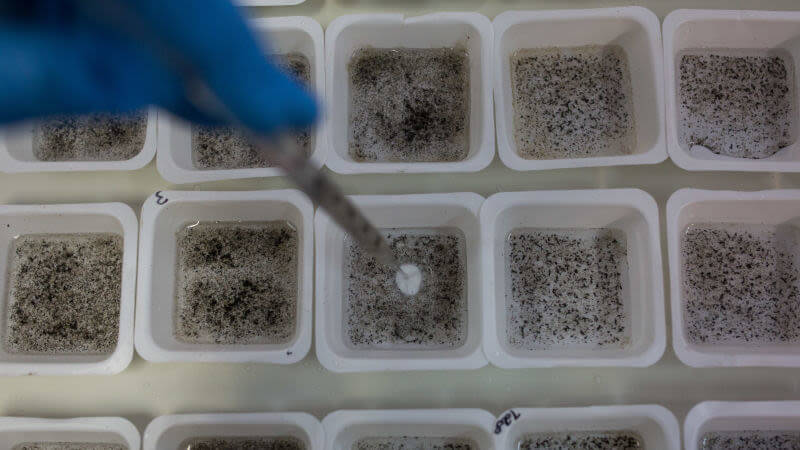
Researchers at UC San Francisco have developed a new genetic model of autism, using neurons created in the lab from patients’ own skin cells. Their experiments suggest that abnormalities in the electrical firing of neurons may lead to behavioral and developmental symptoms in autism, while differences in neuron size and shape result in abnormalities in brain size that often accompany the disorder.
…
The researchers obtained skin cells from patients who carried one or the other of the mutations, which they first turned into stem cells and then into brain cells. Neurons with the deletion had significantly larger cell bodies with more and longer branches coming off the cell, while neurons with the duplication had smaller cell bodies and shorter branches. The scientists think that these differences in cell size are behind the differences in overall brain size seen in patients, with deletions corresponding to larger neurons and therefore larger brains, and duplications resulting in smaller neurons and smaller brains.
….
“Our results suggest that the anatomical symptoms seen in autism may have different origins than the behavioral symptoms, even though they’re caused by the same mutation,” said Aditi Deshpande, PhD, a postdoctoral researcher in the Weiss laboratory and first author on the paper.
Current consumer research indicates that consumers say they will pay a higher price for food with certain attributes. It has already been proven by the marketplace that shoppers will pay a higher price for organic food products, even when most have no idea what that really means. Surveys suggest that consumers say they will pay more for ethically produced foods, even they have no idea what that means. With this as a background, I feel it will not be long before consumers will be willing to pay more for genetically engineered foods.
Now, this may seem a bit of a stretch given the current consumer resistance to food items labeled with GMO. For the most part, the biotechnology in food products today benefits the producer and the processor and not the consumer. All that is about to change.
Coming very soon are food products with benefits consumers want, made possible by biotechnology, for example, peanuts that do not cause allergic reactions. This has already been accomplished. Also in the pipeline, wheat without gluten. Then there are apples that do not turn brown in your kid’s lunchbox. Next will be foods fortified with healthy attributes and, perhaps, chocolate, soda, donuts, and beer that don’t make you fat.
If you’re between 55 and 75 years old, you may want to try playing 3D platform games like Super Mario 64 to stave off mild cognitive impairment and perhaps even prevent Alzheimer’s disease.
That’s the finding of a new Canadian study by Université de Montréal psychology professors Gregory West, Sylvie Belleville and Isabelle Peretz.
…
The research team recruited 33 people, ages 55 to 75, who were randomly assigned to three separate groups. Participants were instructed to play Super Mario 64 for 30 minutes a day, five days a week, take piano lessons (for the first time in their life) with the same frequency and in the same sequence, or not perform any particular task.
…
According to the MRI test results, only the participants in the video-game cohort saw increases in gray matter volume in the hippocampus and cerebellum. Their short-term memory also improved.
The tests also revealed gray matter increases in the dorsolateral prefrontal cortex and cerebellum of the participants who took piano lessons, whereas some degree of atrophy was noted in all three areas of the brain among those in the passive control group.
…
“3-D video games engage the hippocampus into creating a cognitive map, or a mental representation, of the virtual environment that the brain is exploring,” said West. “Several studies suggest stimulation of the hippocampus increases both functional activity and gray matter within this region.”
A new optical illusion has been discovered, and it’s really quite striking. The strange effect is called the ‘curvature blindness’ illusion, and it’s described in a new paper from psychologist Kohske Takahashi of Chukyo University, Japan.
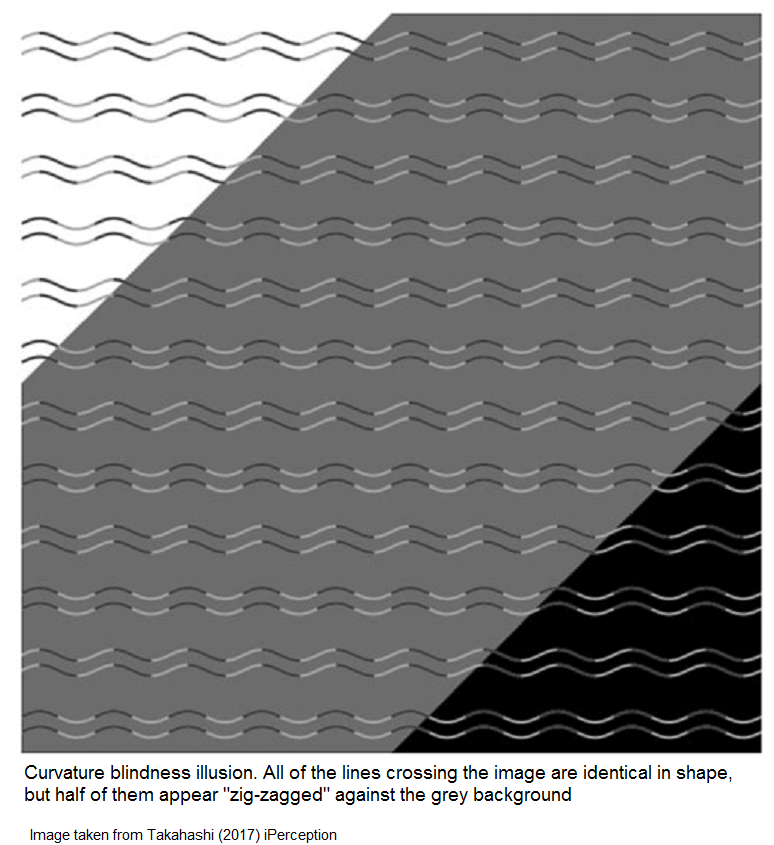
A series of wavy horizontal lines are shown. All of the lines have exactly the same shape – a sine curve. However, half of the lines appear to have a much more triangular, “zig-zag” shape, when they are superimposed on a grey background. This “zig-zag” appearance is an illusion.
…
So what’s going on here? Takahashi proposes that the brain’s visual system may default to seeing corners when there ambiguity over whether a line is a smooth curve or not:
The underlying mechanisms for the gentle curve perception and those of obtuse corner perception are competing with each other in an imbalanced way and the percepts of corner might be dominant in the visual system
…
Takahashi notes that the illusion involves a sense of depth: the “zig-zag” lines look a bit like a surface, or wall, going into and out of the page, and the changing color of the wavy line suggests shadows. However, further experiments revealed that depth perception is not the driving force behind the effect.
After an afternoon drizzle, Ephraim Muhereza carefully scouts his three-acre banana plantation in Gayaza, Wakiso district, plucking male buds from trees. This will stop his plants from catching the notorious banana bacterial wilt, which has destroyed many farms in Uganda.
“We have been told that to reduce the spread of the wilt. We have to cut them so that bees that visit them don’t spread the disease,” he says.
But the introduction of a law in October could solve the problem for Muhereza and his fellow farmers. After five years of deadlock, parliament passed the national biotechnology and biosafety bill, paving the way for the cultivation of genetically modified crops in Uganda.
Trials for a GM banana variety, which is resistant to wilt and contains vitamin A, have been ongoing since 2004 in an effort to improve production. The law will mean this crop can be released to the public.
…
Scientists say the GM banana will fight vitamin A deficiency. In Uganda, on average, 30% of people do not get enough of this vitamin, [Priver Namanya Bwesigye, a plant biotechnologist at the National Agricultural Research Organisation] says: the World Health Organization classifies the situation as grave if 15% of the population is deficient.
Should we believe the USA Todayheadline, “Drinking four cups of coffee daily lowers risk of death”? And what should we make of, “Mouthwash May Trigger Diabetes. . .”? Should we really eat more, not less, fat? These sorts of conclusions, supposedly from “scientific studies,” seem to vary from month to month, leading to ever-shifting “expert” recommendations. However, most of their admonitions are based on dubious “research” that lacks a valid scientific basis and should be relegated to the realm of folklore and anecdotes.
Flawed, misleading research is costly to society because much of it is the result of poorly spent government funding, and it often gives rise to unwise regulation. One remedy would be greater statistical literacy that would enable the public––and their elected leaders––to reject “junk” science.
Statistics is a mathematical tool used in many scientific disciplines to analyze data. It is intended to provide a result that will reveal something about the data that otherwise is not obvious, which we will refer to as a “finding” or a “claim.” Before undertaking an analysis, a researcher formulates a hypothesis ––which is his best guess for what he expects to happen.
A “p-value” is a term used in statistics to indicate whether the finding confirms the result that the researcher was expecting. An essential part of this process is that before undertaking the analysis, the researcher must formulate a hypothesis that he expects the analysis would tend to prove or disprove based on the p-value. The lower the p-value, the greater the confidence that the finding is valid.
Usually a “strawman” hypothesis is advanced, for example that treatments A and B are equally effective.The two treatments are then compared, and any p-value less than 0.05 (p<.05) is, by convention, usually considered “statistically significant” and tends to disprove the strawman hypothesis that the effects of the treatments are the same. The alternative hypothesis, A is different from B (for example, aspirin is better than a sugar pill, to relieve a headache) is now accepted.
However, and this is a key point––a p-value less than 0.05 (p<.05) can occur by chance, which is known as a false positive. The standard scientific approach to identifying a false positive is to attempt to replicate the possibly false positive result. If the original results don’t replicate, it is assumed that they were false––and we’re left with the original “strawman” hypothesis that there is no difference between A and B.
But things can get complicated, because the p-value analysis can be manipulated so that it appears to support a false claim. For example, a scientist can look at a lot of questions, which is known as “data dredging,” and formulate a hypothesis after the analysis is done, which is known as HARKing, Hypothesis After the Result is Known. Together these violate the fundamental scientific principle that a scientist must start with a hypothesis, not concoct one after the data set has undergone analysis.
A simple coin-toss example illustrates the point. Say a scientist is analyzing 61 flips of a coin, and at some point there are five successive heads in a row. Seeing this result, the scientist formulates a hypothesis that this result, unexpected taken in isolation, seems to prove the coin is unfair. The perception of unfairness of the coin can be bolstered by not revealing that there were 56 other tosses of the coin in the sequence.
The claim is, of course, a false positive because on the next set of 61 coin tosses it is unlikely that there would be five successive heads at the same place in the new sequence. In Table 1 we present ten 61-toss sequences. The sequences were computer generated using a fair 50:50 coin. We have marked where there are runs of five or more heads one after the other.
In all but three of the sequences, there is a run of at least five heads. Thus, a sequence of five heads has a probability of 0.55=0.03125 (i.e., less than 0.05) of occurring. Note that there are 57 opportunities in a sequence of 61 tosses for five consecutive heads to occur. We can conclude that although a sequence of five consecutive heads is relatively rare taken alone, it is not rare to see at least one sequence of five heads in 61 tosses of a coin.
Table 1. Given are 10 sequences of 61 coin flips each, 1= heads and 0=tails. Note that 5 consecutive heads occur (0.5)5=0.03125 rarely, ~3% of the time, but with 61 flips, are found in 7 of the 10 sequences, with 61 flips. In none of the 10 sequences do the runs of 5 heads appear at the same place in the sequence.
Now, let us consider a food consumption experiment. We simulate the results of a food frequency questionnaire, or FFQ, with 61 different foods and their possible health effects. In such an experiment, a very large number of people are asked how much of these 61 foods they typically eat. Later, the people answer a heath questionnaire containing questions about whether they have experienced high blood pressure, gastric reflux, a history of pancreatic cancer, etc.
The first such study did, in fact, inquire about 61 foods. There were many health effects collected in the later survey. For this simulation, in order to illustrate the fallacy of such studies, we will have 10 health effects, which are numbered: HE 1…HE 10.
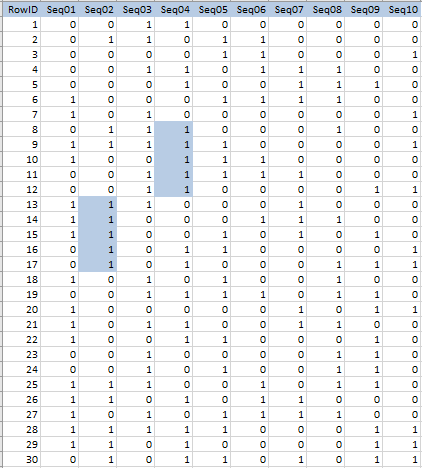
The kind of question of interest to investigators might be, “Does eating an orange every day reduce cholesterol?” Thus, there are 61 x 10 questions at issue and they can be arranged in a 61 by 10 table (Table 2). It is usual to declare “statistical significance” if the p-value for any of these 610 questions has a p-value <0.05, and we can use a computer to simulate statistical significance.
In Table 2, we have placed a “1” where the simulated p-value was less than or equal to 0.05 and a “0” in any cell where the simulated p-value was greater than 0.05. Each column in the table represents a separate health effect. Note that in this simulation each column (health effect) has a significant p-value. What are the chances of at least one statistically significant––but not real–– correlation in a 61-food experiment with only one health effect examined? It turns out that the probability is very high––about 0.95, where 1.00 means that it happens every time.
Of course, looking at more health effects increases the chances of a statistically significant result somewhere in the study. With 61 foods and 10 health effects the chance of a nominally significant result by chance alonea statistically false positive, “fake” result––is essentially assured. We appear to be viewing a false-positive-generating machine.
Table 2. There are 61 foods, rows, and 10 health effects, columns. A “1” indicates statistical significance, p<0.05, and a “0” indicates no nominal statistical effect. Each “1” is a statistical false positive. For each “1” a paper could be written about a finding that would not be expected to replicate.
But surely the difference between asking one question (one food and one health effect) and asking 610 questions is well-known to researchers. Well, yes, but asking lots of questions and doing weak statistical testing is part of what is wrong with the self-reinforcing publish/grants business model. Just ask a lot of questions, get false-positives, and make a plausible story for the food causing a health effect with a p-value less than 0.05: HARKing.
The first published Food Frequency Questionnaire (FFQ) came out of the Harvard School of Public Health and had 61 questions. For any health effect, asking 61 questions gives about a 95% chance of getting a statistically significant result – which may or not be “real”–– for each health effect. Thus, the critical point is: Beware of any study that asks too many questions!
But for many FFQs, 61 questions were not enough. More recent versions ask even more. A paper in 2008 used a FFQ with 131 questions, which were asked at two different time points, giving a total of 262 questions. They reported an association between women eating breakfast cereal and increased odds of having a boy baby. (For the record, the sex of a zygote is determined by whether the male’s sperm contributes an X or Y chromosome.) A U.S. government survey uses a FFQ with 139 questions, and a recent paper that appeared in the journal Heart and used a FFQ with 192 food questions found a decrease in atrial fibrillation associated with chocolate consumption.
“Data dredging” and HARKing that yields false-positive results can also be applied to laboratory animal experiments, as explained here by Dr. Josh Bloom, a chemist at the American Council on Science and Health. Those phenomena apply as well to clinical studies. Consider this caveat from an article in JAMA, which critiqued an article about a medical device to prevent stroke during the replacement of the aortic valve via a catheter:
Statistically comparing a large number of outcomes using the usual significance threshold of .05 is likely to be misleading because there is a high risk of falsely concluding that a significant effect is present when none exists. If 17 comparisons are made when there is no true treatment effect, each comparison has a 5% chance of falsely concluding that an observed difference exists, leading to a 58% chance of falsely concluding at least 1 difference exists.
Spurious FFQ studies are published constantly. The inventor of the FFQ has to his credit (?) more than 1,700 papers. The original FFQ paper is cited over 3,300 times. It appears that virtually none of the researchers using FFQs correct their analysis for the statistical phenomena discussed here, and the authors of FFQ papers are remarkably creative in providing plausible rationales for the “associations” they discover––in other words, HARKing.
This situation creates a kind of self-licking ice cream cone: Researchers have been thriving by churning out this dubious research since the early 1990s, and inasmuch as most of the work on Food Frequency Questionnaires is government funded––by the National Cancer Institute, among other federal entities––it’s ripping off taxpayers as well as misleading them. Curiously, editors and peer-reviewers of research articles have not recognized and ended this statistical malpractice, so it will fall to government funding agencies to cut off support for studies with flawed design, and to universities to stop rewarding the publication of bad research. We are not optimistic.
Dr. S. Stanley Young is a statistician who has worked at pharmaceutical companies and the National Institute of Statistical Sciences on questions of applied statistics. He is a member of the EPA’s Clean Air Science Advisory Committee.
Henry I. Miller, a physician and molecular biologist, is the Robert Wesson Fellow in Scientific Philosophy and Public Policy at Stanford University’s Hoover Institution. He was the founding director of the FDA’s Office of Biotechnology. Follow him on Twitter @henryimiller.
The Missouri Department of Agriculture has extended its restrictions on dicamba herbicides to products manufactured by Monsanto and DuPont. The new rules are part of the state’s effort to curb crop damage for farmers who don’t use genetically modified soybeans.
In the 2018 growing season, farmers in several counties in Missouri’s bootheel region will not be allowed to spray Monsanto’s XtendiMax and DuPont’s FeXapan on dicamba-tolerant soybean and cotton after June 1. In the rest of the state, farmers cannot apply either product after July 15. Pesticide applicators can only spray XtendiMax and FeXapan between 7:30 a.m. and 5:30 p.m., submit daily forms to the department before every application and complete training with the University of Missouri Extension. The same rules were imposed on BASF’s dicamba product Engenia in mid-November.
…
State regulators and growers associations are trying to support farmers who use the herbicide on dicamba-resistant crops while also protecting farmers who don’t use dicamba-resistant seeds.
Dicamba becomes a gas in hot weather and can drift for miles and damage sensitive crops. The chemical ruined approximately 325,000 acres of soybeans in Missouri during this year’s growing season, according to plant scientists at the University of Missouri-Columbia.
Scientists in the US looked at the whole genomes of around 1000 homosexual men and 1200 heterosexual men, finding several stretches of DNA where there were more differences between the groups than would be expected by chance. But the researchers caution their results are “best described as speculative”.
The authors of the study, published in Scientific Reports, were looking for differences in single letters of DNA between the groups of homosexual and heterosexual men. The two regions of the genome with the most differences were near genes whose roles might be linked to sexual orientation.
One gene is linked to the development of a brain region which can differ in men depending on their sexual orientation while the other gene is linked to thyroid function, which has previously been linked to male homosexuality, according to the authors.
“It is well established from twin and family studies that sexual orientation is partly heritable – that is, that whether someone is straight or bisexual or gay depends partly on their genetic makeup,” [said] Dr Brendan Zietsch.
“Because there are so many bits of DNA (millions) that vary among people, finding the relevant bits is like finding a needle in a haystack,” continued Zietsch.
…
According to [Dr. Nina] McCarthy, with any genome-wide association study “it’s really important to appreciate that association does not imply causation”.
During a panel discussion I was once asked, if I could change one thing about agriculture in Canada what would it be? My answer, I would remove labels. I would get rid of the arbitrary distinction that separates “organic” from “conventional” so we can instead focus on the bottom line: sustainability.
Because ultimately that’s why I do what I do. I’ve been an environmentalist for as long as I can remember. From saving the ozone layer to protecting the rainforests, I’ve been passionate about reducing our carbon footprint and protecting the environment since I was a small child. Which is, in part, how I ended up as a geneticist.
I could write a whole book on why I am excited about the role genetics can play in saving the environment. And it’s part of why I really hate labels. Let’s look at what could go on an organic label, for example. According to the USDA, “Organic is a labeling term for food or other agricultural products that have been produced using cultural, biological, and mechanical practices that support the cycling of on-farm resources, promote ecological balance, and conserve biodiversity in accordance with the USDA organic regulations.”
Promote ecological balance and conserve biodiversity? Where do I sign?! The problem comes at the end of that sentence; “in accordance with USDA organic regulations”.
USDA organic regulations go on to describe organic standards plus the List of Allowed and Prohibited Substances – they are mostly natural, but with dozens of exemptions for synthetic versions. It explicitly excludes the use of so-called “genetically modified organisms”. For a scientist, that is a big issue. The List is entirely founded on a logical fallacy (Appeal to Nature); exempts synthetic stuff they really like even if it’s not organic; creates a false dichotomy that leaves people with the misperception that there are only two choices; and ignores a full spectrum of choices that lie between two apparent extremes (organic versus conventional).
We scientists are trying to promote ecological balance and conserve biodiversity while feeding a growing population projected to reach 9.7 billion people by 2050. The planet isn’t getting any bigger and most of the land that’s suitable for farming is already being farmed, so we can make poor quality land better by optimizing plants for those climates, and continue to get more yield out of our existing agricultural land using fewer inputs.
New plant breeding methods can help us meet this challenge. They allow us to develop crops that can deliver essential nutrients to chronically malnourished populations, with applications like Golden Rice or biofortified sweet potatoes; address plant diseases that threaten food security in the developing world such as wilt-resistant bananas and virus-resistant cassava; improve resilience with drought-tolerant cultivars of staple crops; and reduce post-harvest waste through non-browning apples and longer-lasting lettuce. I could go on but I think you get the picture…
Modern breeding methods reduce our reliance on inputs like water, fertilizers, and pesticides, and help us feed more people from our existing agricultural lands. As such, they promote ecological balance and help conserve biodiversity and should be absolutely consistent with the principles of organic production. We need all the tools in the toolbox; it seems nonsensical to throw certain tools out of the window because they don’t fit a set of criteria solely developed to describe a labelling standard about a process.
Technology and progress are why Canada’s agricultural soils are now a net sink for carbon and why our biodiversity index has shown steady and consistent improvements since being implemented in 1981. These improvements are the direct result of innovation in agriculture and should be embraced by all farmers. Yet the organic label prohibits their adoption. It makes no sense.
We need to all be pulling in the same direction to maximize yield while minimizing environmental impact. Labels create a false dichotomy that leaves the public thinking that they have to pick between two opposing philosophies. It’s a lose-lose situation, and the biggest loser will be the environment that we are leaving for future generations. So let’s do away with the labels and focus on finding the best tools for the job.
Maria Trainer, Ph.D., is Managing Director, Science and Regulatory Affairs at CropLife Canada, the trade association representing plant biotechnology companies, and a member of the American Council on Science and Health Board of Scientific Advisors. Follow her on Twitter @mariaat
This article was originally published at the American Council on Science and Health’s website as “Why I Hate Labels” and has been republished here with permission from the author.
[A recent study] shows how genetically modified soil micro-organisms can help restore nutrients in the soil to increase crop yield.
…
[R]esearchers have used the diazotroph Azotobacter chroococcum, which is commonly found in neutral or basic soils. To improve the nitrogen-fixing ability of the bacterium the scientists modified the genes involved in the nitrogen-fixing mechanism of the bacteria. Knocking out a part of the negative regulatory gene nifL while simultaneously expressing the gene nifA, a positive regulatory gene.
Conducting experiments with wheat inoculated in the modified bacteria, in pots as well as the field, the researchers observed that the yield increased by almost 60% compared to the control crops. When urea was introduced to the soil, as it would be through fertilizers in a field, the researchers displayed that the inoculated wheat used ~85kg less urea than the usual ~257 kg urea per hectare. Additionally, there was no negative impact seen on the other soil microbiota due to the presence of the genetically modified Azotobacter chroococcum.
In India, wheat is cultivated in ~27 million hectares. Using these bacteria as biofertilizer, millions of rupees can be saved by cutting down on urea consumption, while the detrimental environmental effects of synthetic fertilizers can also be reduced.
Researchers from Caltech have developed an inexpensive, facile technique for creating very large self-assembling DNA origami structures with customisable patterns. The work, published in Nature [December 6], is the first time that DNA origami has been used to build such large structures and provides other researchers with a relatively simple method for creating their own. The team demonstrated the success of their technique by using it to recreate Leonardo da Vinci’s iconic Mona Lisa painting.
DNA origami was a technique that was originally developed in 2006 and involves combining one long strand of DNA with many smaller one, to fold the complex into a predetermined shape. The smaller DNA fragments, known as staples, bind to specific regions of the long strand, as determined by Watson and Crick DNA binding pairs, and pull the long strand into a specific conformation. This single structure is known as a DNA origami ‘tile.’ Each tile is very small, but multiple tiles can be bound together into a larger structure like a mosaic.
…
“Other researchers have previously worked on attaching diverse molecules such as polymers, proteins, and nanoparticles to much smaller DNA canvases for the purpose of building electronic circuits with tiny features, fabricating advanced materials, or studying the interactions between chemicals or biomolecules,” said [researcher Philip] Petersen. “Our work gives them an even larger canvas to draw upon.”
Read full, original post: Reproducing Works of Art with DNA Origami
A therapeutic technique to transplant blood-forming (hematopoietic) stem cells directly into the brain could herald a revolution in our approach to treating central nervous system diseases and neurodegenerative disorders.
…
The team’s findings are groundbreaking because, until now, it was thought that HSCs — from a healthy, matched donor or a patient’s own genetically-corrected cells — needed to be transplanted indirectly, through an intravenous line to the bloodstream.
…
[I]n children with lysosomal storage disorders, caused by enzyme imbalances that result in a dangerous build-up of lipids, carbohydrates or other materials in the body’s cells, time is of the essence to stop the disease’s progression.
…
“It can take up to a year for the genetically-engineered cell lineage to proliferate, spread and produce therapeutic effects in the brain — oftentimes, patients don’t have the luxury of time to wait,” [Researcher Alessandra] Biffi adds.
Biffi and her team wanted to find a faster — and more direct — way to transplant therapeutic HSCs into the brain.
In a mouse model of lysosomal storage disorders, Biffi’s team transplanted HSCs — which they had genetically engineered to correct the enzyme imbalance — directly into the brain. They found the direct approach jumpstarted the therapeutic benefits much faster than intravenous infusion alone. They call their method, which infuses the cells into fluid-filled cavities in the brain called ventricles, “intracerebroventricular” delivery.
[Editor’s note: Pedro Vigneau is president of the Argentine Association of Producers in Direct Sowing (Aapresid), a farmers organization in Argentina.]
Those of us involved in farming know, better than most, the impact that climate change will have on our society. Therefore, we are more conscious of these effects than most.
…
In order to practice Conservation Agriculture, and achieve the environmental and climatic benefits it entails, we eliminate all plowing of our fields. In order to clear weeds from the field, we require the limited use of effective and efficient herbicides, in particular, glyphosate.
The current discussion on glyphosate in Europe seems, however, to be in complete contradiction to the efforts of the EU in terms of climate change. Why would a group of countries so determined to meet the Paris Agreement targets, take away an essential tool for their farmers to play their part in achieving this? If glyphosate is banned, every farmer practicing Conservation Agriculture, or reduced tillage, will be forced to return to deep plowing of the soil, releasing millions of tonnes of CO2 into the atmosphere and producing greater emissions by driving tractors and plows through fields repeatedly.
It is astounding that it is often the same people that wish to see action on climate change, that are calling for a ban on glyphosate.
…
I hope that the governments across the EU wake up and realize that banning glyphosate will be like shooting themselves in the foot.
Global crop yields are increasingly vulnerable to changing climate and air quality. To combat future environmental threats and increased population growth, scientists are seeking new ways to engineer plants that can withstand harsh and unpredictable environments, and produce more food.
The genetic engineering of crops is not a new concept—for millennia, farmers attempted to cross plant varieties to improve flavor and yield.
…
Daniel Rodríguez-Leal, a 2016 Pew Latin American fellow working with Zachary Lippman at Cold Spring Harbor Laboratory, is harnessing the power of genome editing to improve crops. Reported in the September issue of the journal Cell, Rodríguez-Leal utilized the CRISPR genome-editing technology to manipulate sequences within the promotor of genes that are important to yield. Promoters are regions of DNA adjacent to a gene, which can act like a dimmer switch to control when, where, and at what level these genes get activated during plant development.
By making small changes to these regions, Rodríguez-Leal was able to rapidly generate a myriad of variants important to the overall yield of tomatoes: plant architecture and shape, and fruit size. The team discovered that by using CRISPR to modify the promoters instead of the genes, they were able to fine-tune the output of yield genes.
Most physicians order what [cardiologist Allan Sniderman] considers the wrong test to gauge heart disease risk: a standard cholesterol readout, which may indicate levels of low-density lipoprotein (LDL) or non-high density lipoprotein (non-HDL) cholesterol. What they should request instead, Sniderman argues, is an inexpensive assay for a blood protein known as apolipoprotein B (apoB).
ApoB indicates the number of cholesterol-laden particles circulating in the blood—a truer indicator of the threat to our arteries than absolute cholesterol levels, some researchers believe.
…
But plenty of scientists disagree. “Many lines of evidence say there’s not a lot more predictive power of apoB over LDL cholesterol,” says cholesterol researcher Scott Grundy of the University of Texas Southwestern Medical Center in Dallas.
…
[A]poB advocates admit that LDL cholesterol’s track record is pretty good. About 85% of the time, it provides an accurate indication of a patient’s likelihood of developing cardiovascular disease, [genetic epidemiologist and cardiologist Brian] Ference says. But that means it’s wrong 15% of the time, he adds.
…
[I]f future guidelines start to emphasize apoB’s diagnostic value and drug companies begin to target it, Ference thinks physicians will eventually pay heed to the protein. “The argument is that LDL cholesterol is good enough,” he says. “But as we move toward more personalized medicine, it’s not.”
As a young girl, Tepsy Eve Ntseoane never thought she’d grow up to be a farmer, let alone an advocate for agricultural biotechnology.
…
In her first year, Ntseoane yielded around one ton per hectare. The second year was about the same. Thinking that she must have done something wrong, she nearly abandoned maize altogether in favor of raising chickens.
Tepsy Eve Ntseoane
…
It was around then that she was introduced to AfricaBio, a stakeholders’ association promoting the use of biotechnology in agriculture. Ntseoane initially had her doubts about growing GMO crops on her land.
“At first I was resistant due to some of the negative stories about biotechnology that are out there, like hearing that some people develop cancer and stuff,” she said.
After being persuaded to plant biotech seeds on one hectare of land, that resistance quickly faded away.
“Guess what? I saw the results and since then I’ve never turned back and I’m now a firm believer in biotechnology,” Ntseoane said, adding that her current yields of seven tons per hectare have changed her life by providing the needed income to expand into beef cattle management.
As for those safety concerns, Ntseona said she’s “a living testimony” to the “myth” that biotech seeds pose a threat.
For some, a new cutting-edge technology called gene drive is the silver bullet able to wipe out invasive species decimating island wildlife, and eradicate the malaria-bearing mosquitoes that killed nearly half a million people last year, mostly in Africa.
Others fear that the genetic engineering process is a one-way ticket to ecological mayhem, or suspect health and conservation aims are masking industrial and military objectives.
Advocates and critics [are facing off] in an obscure working group under the Convention on Biological Diversity, a 1992 UN treaty forged as a bulkhead against the gathering pace of extinction on our planet.
…
That both sides of the gene drive debate may have valid arguments shows just how little is still known about this technology, or what might happen if it is ever released into the natural world.
One side, however, clearly has more resources.
A handful of backers — including the US military’s Defense Advanced Research Projects Agency (DARPA) and the Bill and Melinda Gates Foundation — have poured several hundred million dollars into gene drive research in the past two years.
…
Today, [gene drive creator Kevin] Esvelt says he was mistaken to raise the hopes of conservationists, and that unbridled gene drive is too dangerous to be used for that purpose. “You should never build and release a self-propagating drive system — or really any kind of system — that is capable of definitely spreading beyond the target population,” he said.
Read full, original post: Genetic tool that can doom a species under UN review
EU countries are poised to vote on a proposal to introduce tougher restrictions on three neonicotinoids in the coming days.
Member states will meet at the European Commission on 12-13 December to propose an extension of the ban to all outdoor crops.
The Standing Committee on Plants, Animals, Food and Feed (Scopaff) will discuss the proposals, and Member States may be asked to vote.
Four years ago the EU restricted use of three neonicotinoids in the spring and on flowering crops, but this could now go even further.
France has already stated that it will go ahead with a neonicotinoid ban, which is set to go into effect in 2018.
And in a surprising turn, the UK government has overturned its previous convictions on neonicotinoids and now say an outright ban is needed due to their supposed harm to pollinators.
…
If proposals are approved by a majority of EU member states, a complete ban could be in place this year. The European Commission has cited a risk to bees as one of the reasons for the ban proposal.
However, the National Farmers’ Union (NFU) said farmers across the country have already suffered heavy losses through oilseed rape crop damage following restrictions to the availability of neonicotinoids.
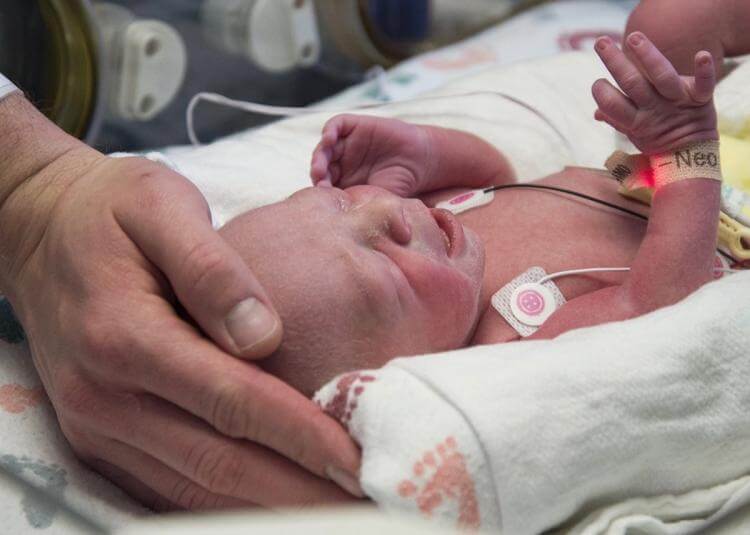
For the first time in the United States, a woman who had a uterus transplant has given birth.
The mother, who was born without a uterus, received the transplant from a living donor last year at Baylor University Medical Center in Dallas, and had a baby boy there last month…
Since 2014, eight other babies have been born to women who had uterus transplants, all in Sweden, at the Sahlgrenska University Hospital in Gothenburg.
A new frontier, uterus transplants are seen as a source of hope for women who cannot give birth because they were born without a uterus or had to have it removed because of cancer, other illness or complications from childbirth. Researchers estimate that in the United States, 50,000 women might be candidates.
The transplants are meant to be temporary, left in place just long enough for a woman to have one or two children, and then removed so she can stop taking the immune-suppressing drugs needed to prevent organ rejection.
…
The transplants are now experimental, with much of the cost covered by research funds. But they are expensive, and if they become part of medical practice, will probably cost hundreds of thousands of dollars. It is not clear that insurers will pay, and [Dr. Giuliano Testa, principal investigator of the research project] acknowledged that many women who want the surgery will not be able to afford it.