CRISPR used to make bigger tomatoes without editing genes

tomatothumb x

Global crop yields are increasingly vulnerable to changing climate and air quality. To combat future environmental threats and increased population growth, scientists are seeking new ways to engineer plants that can withstand harsh and unpredictable environments, and produce more food.

The genetic engineering of crops is not a new concept—for millennia, farmers attempted to cross plant varieties to improve flavor and yield.

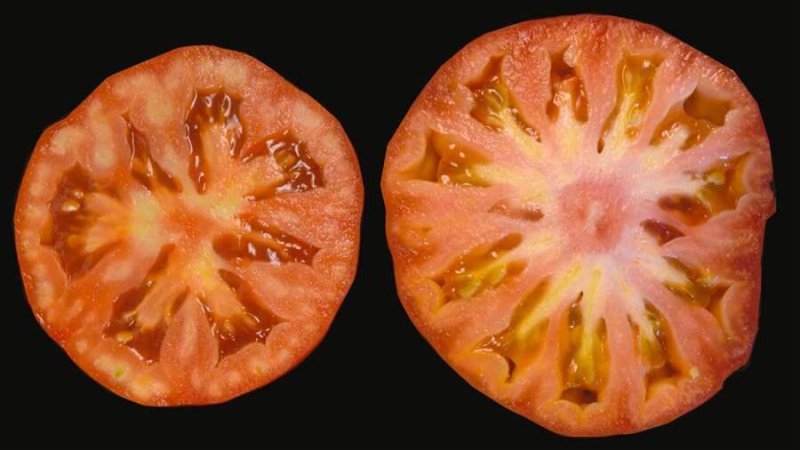
Daniel Rodríguez-Leal, a 2016 Pew Latin American fellow working with Zachary Lippman at Cold Spring Harbor Laboratory, is harnessing the power of genome editing to improve crops. Reported in the September issue of the journal Cell, Rodríguez-Leal utilized the CRISPR genome-editing technology to manipulate sequences within the promotor of genes that are important to yield. Promoters are regions of DNA adjacent to a gene, which can act like a dimmer switch to control when, where, and at what level these genes get activated during plant development.


By making small changes to these regions, Rodríguez-Leal was able to rapidly generate a myriad of variants important to the overall yield of tomatoes: plant architecture and shape, and fruit size. The team discovered that by using CRISPR to modify the promoters instead of the genes, they were able to fine-tune the output of yield genes.

Read full, original post: Genome Editing Could Stimulate Crop Yields

{{ reviewsTotal }}{{ options.labels.singularReviewCountLabel }}
{{ reviewsTotal }}{{ options.labels.pluralReviewCountLabel }}
{{ options.labels.newReviewButton }}
{{ userData.canReview.message }}

Related Articles

Infographic: Global regulatory and health research agencies on whether glyphosate causes cancer

Infographic: Global regulatory and health research agencies on whether glyphosate causes cancer

Does glyphosate—the world's most heavily-used herbicide—pose serious harm to humans? Is it carcinogenic? Those issues are of both legal and ...

Most Popular

Screenshot-2026-04-22-at-12.21.32-PM
Viewpoint: Why the retracted Monsanto glyphosate study doesn’t change the science—the world’s most popular herbicide is safe 
Picture1
The FDA couldn’t find a vaccine safety crisis, so it buried its own research
ChatGPT-Image-May-1-2026-11_42_59-AM-2
Viewpoint: NAD is the wellness grifters latest evidence-lite longevity fad. At least the mice are impressed.
ChatGPT-Image-Apr-16-2026-02_56_53-PM
Financial incentives, over diagnosis, and weak oversight: Autism claims are driving up Medicare costs
global warming
‘Implausible’: Top climate scientists reject worst-case scenario—soaring temperatures and fast-rising sea levels
ChatGPT-Image-May-12-2026-11_27_01-AM-2
AI likely to improve health care, research shows—but not for blacks and ethnic minorities
ChatGPT-Image-May-7-2026-01_23_27-PM-2
Viewpoint: Will AI democratize personalized cancer treatment or fuel medical misinformation?

Sorry. No data so far.

glp menu logo outlined

Get news on human & agricultural genetics and biotechnology delivered to your inbox.