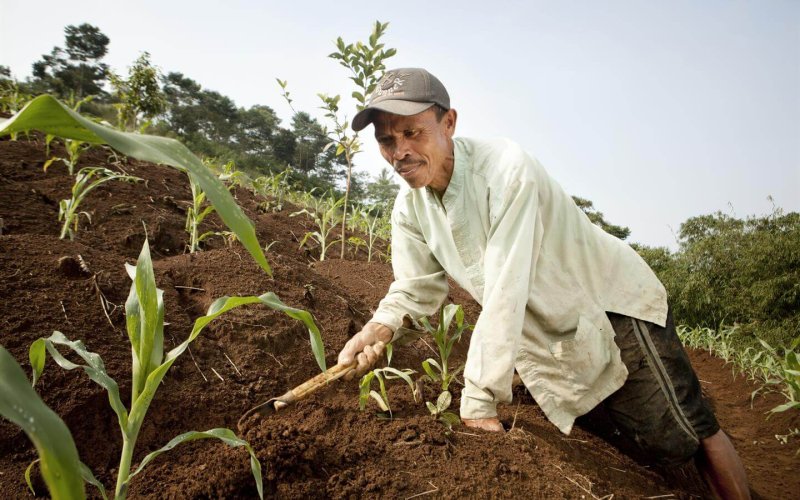
How Asian consumers and farmers are tiptoeing into using GMO crops

ci

High costs, back-breaking work and unpredictable yields compelled Rosalie Ellasus to give up on corn farming….

But Rosalie changed her mind after the Philippine government allowed companies to release biotechnology corn seed. Scientifically, such a material is known as a genetically modified organism (GMO) or transgenic organism.

Transgenic corn has been genetically engineered to be resistant to pests, herbicides and even drought. With the biotechnology, farming becomes enjoyable and lucrative for farmers like Rosalie because it requires less tillage, pest control and fertilizers.

And most of all, the variety is high yielding.

“If we don’t monitor our land well, we can only get around 3.5 metric tons of corn per hectare with conventional farming but I can get 7.8 metric tons per ha with BT corn,” she said.

Since 2002, the Philippines has embraced the BT products, especially BT corn. Filipino farmers have been growing transgenic corn on more than 800,000 ha of farmland.

Unlike the Philippines, the Indonesian government is also reluctant to consider GMO in its plans to boost agricultural products but, ironically, the country has been a GM product importer for two decades.

The good news is that some GM crops, including more disease-resistant potatoes that the ministry experimentally cultivates, have a good chance of passing the tests.

Read full, original post: GMO in times of shrinking land (behind paywall)

{{ reviewsTotal }}{{ options.labels.singularReviewCountLabel }}
{{ reviewsTotal }}{{ options.labels.pluralReviewCountLabel }}
{{ options.labels.newReviewButton }}
{{ userData.canReview.message }}

Related Articles

Infographic: Global regulatory and health research agencies on whether glyphosate causes cancer

Infographic: Global regulatory and health research agencies on whether glyphosate causes cancer

Does glyphosate—the world's most heavily-used herbicide—pose serious harm to humans? Is it carcinogenic? Those issues are of both legal and ...

Most Popular

ChatGPT-Image-Jul-8-2026-12_32_48-PM
Viewpoint: SCOTUS strikes a blow against junk science in Bayer glyphosate case. Will it deter mass tort litigators?
ChatGPT-Image-Jul-7-2026-01_57_55-PM
Viewpoint: Europe’s rejection of air conditioning is the poster child for misunderstanding how to mitigate the impact of climate change
ChatGPT-Image-Mar-10-2026-01_39_01-PM
Viewpoint—“Miracle molecule” debunked: Why acemannan supplements don’t work
Screen-Shot-at-PM-pe-vra-kipgaprbdo-vd-ms-jpule-n-jqqaxf-l-e
Viewpoint: Will new breeding techniques help make European agriculture more competitive?
Screenshot-2026-07-08-at-2.14.27-PM
Belief in unproven dietary regimes, vitamins, and crank therapies is putting patients’ health in danger and increasing the risk of getting cancer
Screenshot-2026-07-08-at-11.25.14-AM
AI being mobilized to target misinformation about vaccines–on AI
ChatGPT-Image-Jul-10-2026-09_12_58-AM
X rolls out direct messages to users who interact with misinformation
ChatGPT-Image-Jun-25-2026-12_23_17-PM
No, Bill Gates did not secretly engineer ticks to promote veganism
ChatGPT-Image-Jul-1-2026-03_33_49-PM
‘Alternative’ cancer treatments that could kill you
ChatGPT-Image-Jul-7-2026-12_01_35-PM
Viewpoint: 21 worthless wellness trends inspired by RFK, Jr.’s ill-informed MAHA followers that can harm or even kill you.
ChatGPT-Image-Jun-30-2026-10_27_31-AM
Viewpoint: Europe clears the way for gene-edited crops — but fear-driven restrictions still slow their full potential
ChatGPT-Image-Jul-1-2026-12_37_08-PM
Viewpoint: Trump poised to politicize all U.S.-supported science research
DtAieAIkCZy-uchn-oqg
Viewpoint: In the science misinformed grifter game plan, the organic-food-is-healthier myth might be the worst.
glp menu logo outlined

Get news on human & agricultural genetics and biotechnology delivered to your inbox.