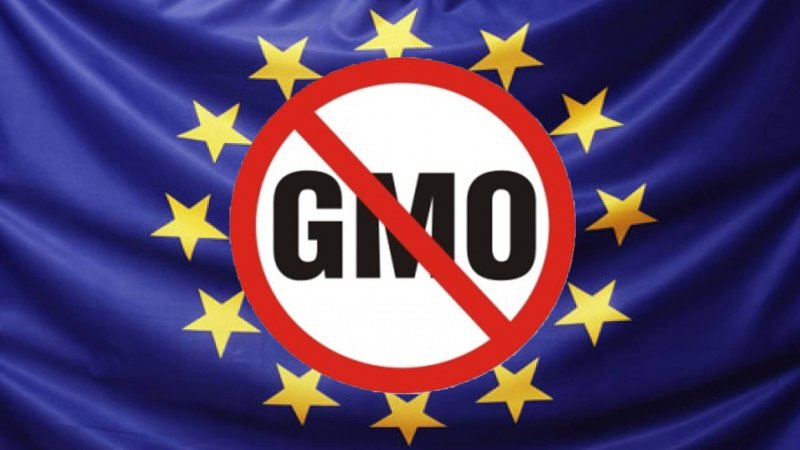
Viewpoint: How the EU’s protectionist anti-GMO trade policy hurts US farmers

maxresdefault

Editor’s note: Bernard Goldstein, MD is a professor emeritus and dean emeritus at the University of Pittsburgh Graduate School of Public Health.

President Trump’s trip to Davos has continued a long tradition of American presidents complaining about unfair barriers to American trade. He certainly is correct about the European Union’s (EU) misuse of an otherwise good public health principle, known as the Precautionary Principle, to ban American agricultural produce.

The precautionary principle, in essence, says look before you leap and consider uncertainty. It is “enshrined” in EU founding documents. But much to the distress of the rest of the world, the lack of a rigorous definition allows it to be flexibly applied to protect European agriculture.

GMO grain, in which the U.S. has long had a leadership role, was … banned by the EU based on the precautionary principle. After … being unable to demonstrate any health risk, the EU retreated from another World Trade Organization defeat by developing a complex and convoluted process preventing the U.S. and other non-EU farmers from significant EU market penetration while allowing EU farmers time to catch up.

An expert review by the World Health Organization and the UN Food and Agricultural Organization found that the EU’s more stringent standard was without significant health benefits.

Read full, original post: The EU’s distortion of public health unfairly hurts US agricultural produce


{{ reviewsTotal }}{{ options.labels.singularReviewCountLabel }}
{{ reviewsTotal }}{{ options.labels.pluralReviewCountLabel }}
{{ options.labels.newReviewButton }}
{{ userData.canReview.message }}

Related Articles

Infographic: Global regulatory and health research agencies on whether glyphosate causes cancer

Infographic: Global regulatory and health research agencies on whether glyphosate causes cancer

Does glyphosate—the world's most heavily-used herbicide—pose serious harm to humans? Is it carcinogenic? Those issues are of both legal and ...

Most Popular

Picture1
The FDA couldn’t find a vaccine safety crisis, so it buried its own research
Screenshot-2026-04-22-at-12.21.32-PM
Viewpoint: Why the retracted Monsanto glyphosate study doesn’t change the science—the world’s most popular herbicide is safe 
ChatGPT-Image-May-7-2026-12_32_36-PM
Viewpoint: The state of U.S. vaccine policy? Dismal nationally, but some states are stepping up.
placebo
Viewpoint — Alternative medicine and the placebo effect: Selling a reassuring illusion of health
_20250221_nib_rfk_trump
Viewpoint: 'Crisis of public trust': Autism support community shocked RFK continues to peddle false claims about the danger of vaccines
ChatGPT-Image-May-18-2026-01_45_05-PM-2
Newest hantavirus conspiracy: Online disinformation turns outbreak into latest ivermectin grift
ChatGPT-Image-May-18-2026-12_06_18-PM-2
Defying death: The immortality movement goes mainstream
Screenshot-2026-04-13-at-1.39.26-PM
Viewpoint: ‘Safer for children?’ Stonyfield yogurt under fire for deceptive organic marketing
Screenshot-2026-04-22-at-10.46.29-AM
Viewpoint: How to counter science disinformation? Science journalist offers 12 practical tips
glp menu logo outlined

Get news on human & agricultural genetics and biotechnology delivered to your inbox.