Federal judge halts California’s plan to require cancer warning label on glyphosate products

b ff a

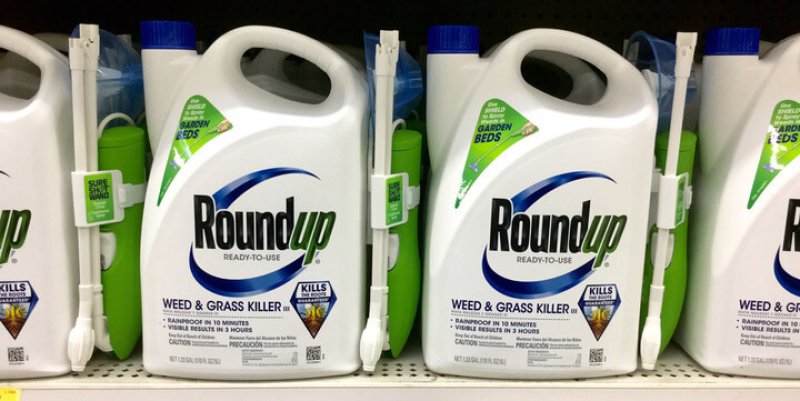
A federal judge on Monday halted California’s plan to require Monsanto to place warning labels on its Roundup products, saying scientists haven’t shown a clear connection between glyphosate and cancer.

U.S. District Judge William Shubb sided with the St. Louis-based chemical giant in its First Amendment lawsuit, ruling that warning labels, which would have been required as of July, could confuse and mislead customers.

“The required warning for glyphosate does not appear to be factually accurate and uncontroversial because it conveys the message that glyphosate’s carcinogenicity is an undisputed fact, when almost all other regulators have concluded that there is insufficient evidence that it causes cancer,” the ruling issued late Monday states.

California’s decision to list glyphosate under Proposition 65 was spurred by the International Agency for Research on Cancer’s 2015 conclusion that the chemical was a “probable” human carcinogen.

But Shubb said the state regulator overly-relied on the IARC and ignored studies from the U.S. Environmental Protection Agency and the World Health Organization among others that conclude there is “insufficient evidence” that the active ingredient in Monsanto’s popular weed killer causes cancer.

While he froze the warning label requirement, Shubb said California can continue listing glyphosate as a chemical known to cause cancer in its health and safety codes.

Read full, original post: Judge: Monsanto Not Required to Place Warning Labels on Products

{{ reviewsTotal }}{{ options.labels.singularReviewCountLabel }}
{{ reviewsTotal }}{{ options.labels.pluralReviewCountLabel }}
{{ options.labels.newReviewButton }}
{{ userData.canReview.message }}

Related Articles

Infographic: Global regulatory and health research agencies on whether glyphosate causes cancer

Infographic: Global regulatory and health research agencies on whether glyphosate causes cancer

Does glyphosate—the world's most heavily-used herbicide—pose serious harm to humans? Is it carcinogenic? Those issues are of both legal and ...

Most Popular

Screenshot-2026-05-01-at-11.56.24-AM
‘Science moves forward when people are willing to think differently’: Memories of DNA maverick Craig Venter
Screenshot-2026-04-03-at-11.15.51-AM
Paraben panic: How a flawed study, media hype, and chemophobia convinced the public of the danger of one of the safest classes of preservatives
79d03212-2508-45d0-b427-8e9743ff6432
Viewpoint: The Casey Means hustle—Wellness woo opportunism dressed up as medical wisdom
ChatGPT-Image-Apr-30-2026-12_21_05-PM-2
The tech billionaires behind the immortality movement
Screenshot-PM-24
Viewpoint: The herbicide glyphosate isn’t perfect. Banning it would be far worse.
ChatGPT-Image-Mar-27-2026-11_27_05-AM
The myths of “process”: What science says about the “dangers’ of synthetic products and ultra-processed foods
ChatGPT-Image-Mar-10-2026-01_39_01-PM
Viewpoint—“Miracle molecule” debunked: Why acemannan supplements don’t work
Drinking lots of water can help reduce the effects of aging
Nanoplastics in drinking water: MAHA activists forge science-based bipartisan coalition 
ChatGPT-Image-May-1-2026-03_16_32-PM
Viewpoint: How ‘health care guru’ Joe Rogan circumvented the FDA’s skepticism on psychedelics
ChatGPT-Image-Mar-3-2026-01_17_14-PM
MAHA wellness influencers deride proven anxiety medications, tout lifestyle fixes
ChatGPT Image Apr 30, 2026, 01_11_41 PM
Trump’s America First health aid cuts: Retrenchment has already hit global malaria, HIV, TB, and polio programs
ChatGPT-Image-Apr-30-2026-05_00_48-PM
Wellness grifter physician turned wellness influencer out as surgeon general nominee
glp menu logo outlined

Get news on human & agricultural genetics and biotechnology delivered to your inbox.