Viewpoint: US funding for IARC cancer agency should be frozen until changes are made

IARC x

Question: When is a carcinogen not necessarily a carcinogen?

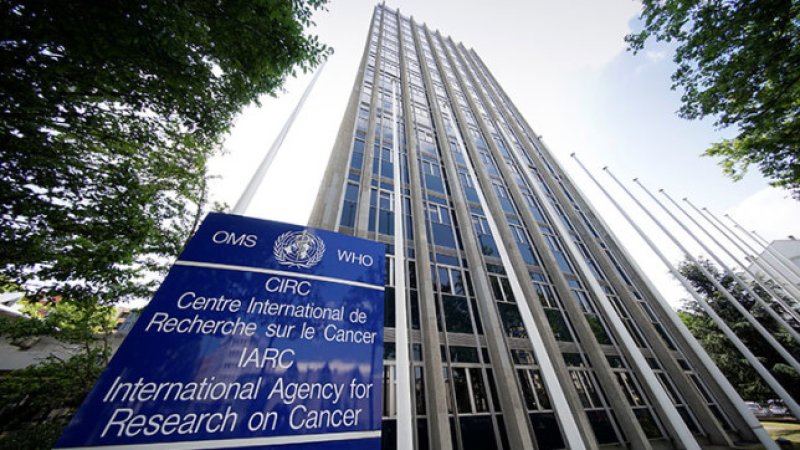
Answer: When the labelling is done by the World Health Organization’s International Agency for Research on Cancer (IARC), a French-based institution that is having a big and unjustified impact on American law and our economy.

That’s the majority view from an investigation by the U.S. House Committee on Science, Space, and Technology, which is trying to understand how IARC classified the most commonly used herbicide in the world as a probable carcinogen, while nearly every government agency which evaluated the chemical, including our own EPA, reached the opposite conclusion.

The fact is that IARC badly needs to be reformed, and some fundamental changes need to be made.

For starters, the U.N. agency should acknowledge that its reports have been repeatedly misused, more effectively communicate that its findings are not relevant to risk, and should not be used for inappropriate warnings, such as for California’s Proposition 65.

Better yet, IARC  should do actual risk-assessments, which would result in far fewer needless headline-grabbing carcinogen classifications.  And it should operate transparently; allowing for outside peer-review, public engagement, and, yes, oversight from its donors.

U.S. taxpayers should let their representatives know that because Americans support responsible global public health programs, evidence-based science, and transparent government, IARC funding should be frozen until it institutes these changes.

Read full, original post: This flawed UN health agency threatens America’s food supply. It’s time for badly needed reform

{{ reviewsTotal }}{{ options.labels.singularReviewCountLabel }}
{{ reviewsTotal }}{{ options.labels.pluralReviewCountLabel }}
{{ options.labels.newReviewButton }}
{{ userData.canReview.message }}

Related Articles

Infographic: Global regulatory and health research agencies on whether glyphosate causes cancer

Infographic: Global regulatory and health research agencies on whether glyphosate causes cancer

Does glyphosate—the world's most heavily-used herbicide—pose serious harm to humans? Is it carcinogenic? Those issues are of both legal and ...

Most Popular

Screenshot-2026-05-01-at-1.29.41-PM
Viewpoint: What happens when whole grains meet modern food manufacturing? Labels don’t tell the whole story.
S
As vaccine rejectionism spreads, measles may be taking a more dangerous turn
ChatGPT-Image-Mar-27-2026-11_47_30-AM-2
FDA’s expedited drug reviews are hailed in some quarters but other approval practices are problematic
Screenshot 2026-05-06 at 2.56
Singularity crisis ahead? Can super babies save us from rogue AI geniuses?
Screenshot-2026-04-20-at-2.26.27-PM
Viewpoint — Food-fear world: The latest activist scientists campaign: Cancer-causing additives
Farmers can talk to plants
Farmers are a major source of misinformation—about farming
Screenshot-2026-04-30-at-2.19.37-PM
5 myths about summer dehydration that could damage your health — or even kill you
Screenshot-2026-05-06-at-2.07.43-PM
Manufacturing a conspiracy: The timeline of how  the White House embraced the fringe claim that scientists are being mysteriously murdered
Screenshot-2026-03-13-at-12.14.04-PM
The FDA wants to make many popular prescription drugs OTC—a great idea. Here’s why it’s unlikely to happen
Screenshot 2026-05-06 at 2.19
Vaccine shootout at the CDC 
Screenshot-2026-04-03-at-11.15.51-AM
Paraben panic: How a flawed study, media hype, and chemophobia convinced the public of the danger of one of the safest classes of preservatives
Screenshot-2026-04-12-135256
Bixonimania: The fake disease scam that AI swallowed whole
glp menu logo outlined

Get news on human & agricultural genetics and biotechnology delivered to your inbox.