Viewpoint: CRISPR crops poised to help global food insecurity and limit farming’s environmental impact

FAO farmers

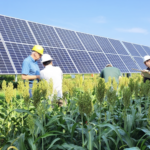
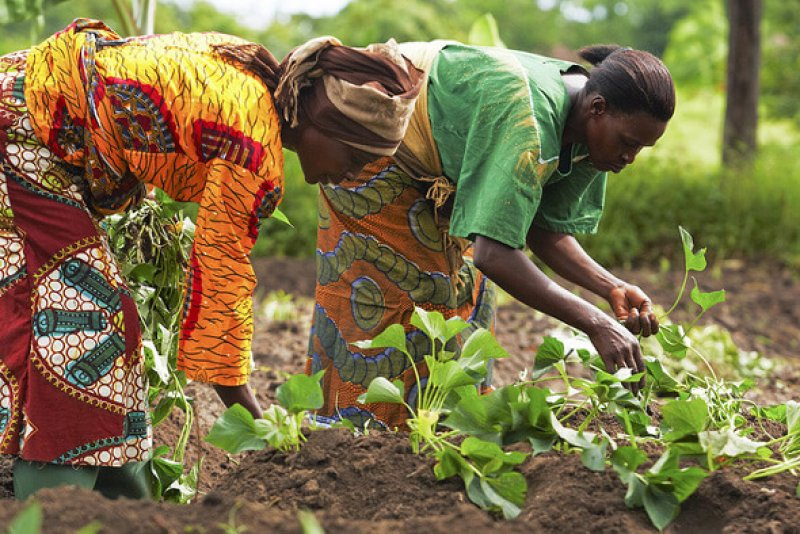
Increased crop productivity, including the use of genetically modified and other forms of biotechnology crops, leads to more affordable food through reduced production costs, less pesticide spraying, decreased soil damage, fuel use and carbon dioxide release through reduced ploughing. Farm income gains through the use of biotechnology crops for 1996-2014 reached $150 Bn globally. Environmental security can be enhanced by conserving biodiversity and maintaining forests through increasing productivity of the world’s 1.5 Bn ha of arable land. More efficient production will reduce the eco-footprint of agriculture.

As technology continues to advance, new ways of approaching issues of food and environmental security emerge. Spraying crops with synthetic RNAs to stimulate responses linked to e.g. drought stress is one such example, whilst such RNA spraying can also convey resistance to pests such as Colorado beetle in potato for several months.

Meta-analysis of 52 peer-reviewed articles since 2014 confirms use of CRISPR to increase yield, tolerance to biotic and abiotic stress and biofortification.
Initiatives such as these may be some years away from commercial reality, but emphasise that biotechnology is making considerable progress in addressing issues of food and environmental security, which remains one of the great global challenges.

Read full, original post: Contributions of biotechnology to meeting future food and environmental security needs

{{ reviewsTotal }}{{ options.labels.singularReviewCountLabel }}
{{ reviewsTotal }}{{ options.labels.pluralReviewCountLabel }}
{{ options.labels.newReviewButton }}
{{ userData.canReview.message }}

Related Articles

Infographic: Global regulatory and health research agencies on whether glyphosate causes cancer

Infographic: Global regulatory and health research agencies on whether glyphosate causes cancer

Does glyphosate—the world's most heavily-used herbicide—pose serious harm to humans? Is it carcinogenic? Those issues are of both legal and ...

Most Popular

Screenshot-2026-04-22-at-12.21.32-PM
Viewpoint: Why the retracted Monsanto glyphosate study doesn’t change the science—the world’s most popular herbicide is safe 
Picture1
The FDA couldn’t find a vaccine safety crisis, so it buried its own research
ChatGPT-Image-Apr-16-2026-02_56_53-PM
Financial incentives, over diagnosis, and weak oversight: Autism claims are driving up Medicare costs
ChatGPT-Image-May-1-2026-11_42_59-AM-2
Viewpoint: NAD is the wellness grifters latest evidence-lite longevity fad. At least the mice are impressed.
Screenshot-2026-05-21-at-12.15.17-PM
UK gene-editing milestone: Livestock barley that increases ruminant value and reduces methane emissions is first-approved CRISPR crop
global warming
‘Implausible’: Top climate scientists reject worst-case scenario—soaring temperatures and fast-rising sea levels
Screenshot-2026-05-21-at-3.15.53-PM
Chiropractors may no longer be modern-day snake oil salesmen, but the benefits of their therapy are limited–at best

Sorry. No data so far.

glp menu logo outlined

Get news on human & agricultural genetics and biotechnology delivered to your inbox.