Tracking the role of tau protein in Alzheimer’s

ht tau protein x jpg e
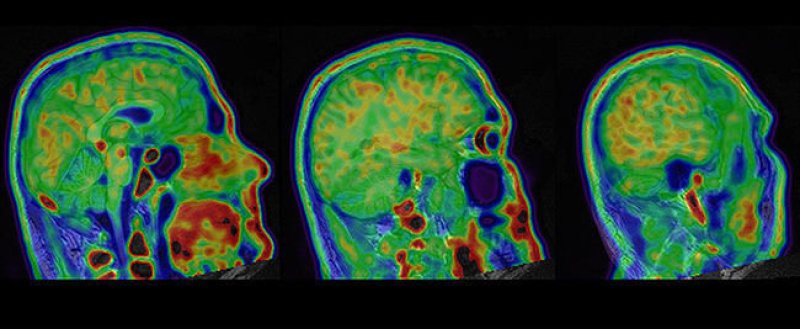
Tau imaging in the brain. Image credit: Medscape

Jhon Kennedy’s relatives understood the illness they faced. For more than three decades, researchers there have been tracking a genetic mutation — common in the region — that causes Alzheimer’s to strike people in their 40s and 50s.

[New imaging procedures] will allow the researchers to track a protein called tau, which accumulates rapidly in the brains of people with the disease as symptoms begin to emerge. Watching tau form in real time could reveal the role it plays in Alzheimer’s, says Francisco Lopera, the neurologist who is leading the research.

The genetic mutation that affected Jhon Kennedy’s father and uncles is famous in the field of Alzheimer’s research. It probably arrived in South America with Spanish conquerors 375 years ago, and now affects 25 extended families in Antioquia with more than 5,000 members. Researchers have published dozens of papers about this group, including some of the clearest proof that amyloid plaques can accumulate in the brain decades before symptoms of Alzheimer’s appear.

..

Lopera and his colleagues want to determine how tau spreads through the brains of young people with Alzheimer’s, and whether that pattern mirrors the distribution of tau seen in elderly people with the disease. They hope to compare their results with data from two clinical trials of anti-amyloid drugs in the United States that have begun scanning participants’ brains for tau.

Read full, original post: Pioneering Alzheimer’s study in Colombia zeroes in on enigmatic protein

{{ reviewsTotal }}{{ options.labels.singularReviewCountLabel }}
{{ reviewsTotal }}{{ options.labels.pluralReviewCountLabel }}
{{ options.labels.newReviewButton }}
{{ userData.canReview.message }}

Related Articles

Infographic: Global regulatory and health research agencies on whether glyphosate causes cancer

Infographic: Global regulatory and health research agencies on whether glyphosate causes cancer

Does glyphosate—the world's most heavily-used herbicide—pose serious harm to humans? Is it carcinogenic? Those issues are of both legal and ...

Most Popular

Screenshot-2026-05-01-at-1.29.41-PM
Viewpoint: What happens when whole grains meet modern food manufacturing? Labels don’t tell the whole story.
S
As vaccine rejectionism spreads, measles may be taking a more dangerous turn
ChatGPT-Image-Apr-13-2026-02_20_22-PM
Viewpoint: Misinformation infodemic? Why assessing evidence is so challenging 
Screenshot-2026-04-20-at-2.26.27-PM
Viewpoint — Food-fear world: The latest activist scientists campaign: Cancer-causing additives
ChatGPT-Image-Mar-27-2026-11_47_30-AM-2
FDA’s expedited drug reviews are hailed in some quarters but other approval practices are problematic
Screenshot-2026-03-13-at-12.14.04-PM
The FDA wants to make many popular prescription drugs OTC—a great idea. Here’s why it’s unlikely to happen
Picture1-5
Science Disinformation Gap: The transatlantic battle over social media and censorship
ChatGPT Image May 10, 2026, 08_16_59 PM 2
Overmedicalization? RFK Jr.’s antidepressant crackdown raises conflict questions over his fee stake in Wisner Baum, the tort firm built on suing drug makers
bigstock opioids on chalkboard with rol
GLP podcast: 'Safe injection sites': enabling drug addiction or saving lives?
circular-bioeconomy-should-focus-on-sustainable-wellbeing
GLP podcast: What's wrong with 'doomsday' environmentalism? It's false.
Screenshot-2026-04-12-135256
Bixonimania: The fake disease scam that AI swallowed whole
glp menu logo outlined

Get news on human & agricultural genetics and biotechnology delivered to your inbox.