US tentatively approves Bayer’s $62.5 billion takeover of Monsanto

Bayer Monsanto Merger

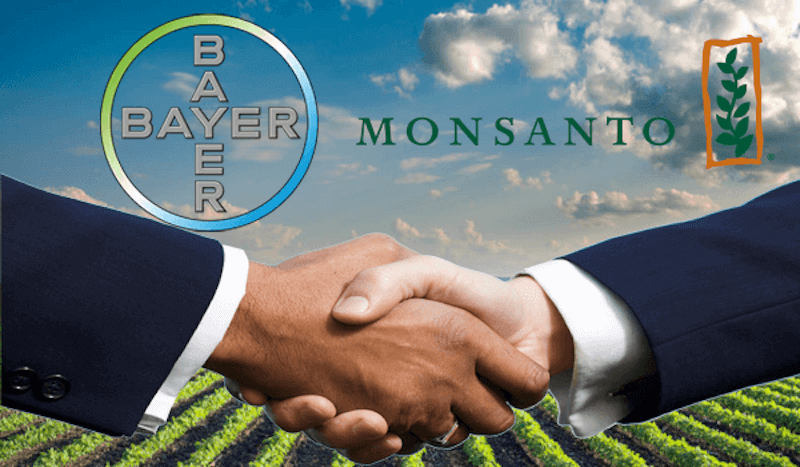
The Justice Department has decided to allow BayerAG’s megadeal to acquire Monsanto Co., valued at more than $60 billion, after the companies pledged to sell off additional assets to secure government antitrust approval, according to people familiar with the matter.

An agreement in principle between the companies and the department, brokered in recent days, marked a breakthrough in the U.S. merger review process, which had remained in limbo because of Justice Department concerns about the deal.

Germany’s Bayer, a pharmaceutical and chemical conglomerate, is a leading player in the pesticide industry, while Monsanto, based in St. Louis, is a market leader on seeds and crop genes. The deal, which was announced in September 2016, would make Bayer the world’s biggest supplier of pesticides and seeds for farmers.

The European Union last month conditionally approved the deal after Bayer agreed to sell off more than $7 billion worth of assets to rival BASF SE. The sales include Bayer’s soybean and cottonseed businesses, as well as Bayer’s glufosinate weedkiller, which competes against Monsanto’s Roundup.

As part of an agreement with U.S. antitrust enforcers, people familiar with the matter said Bayer will divest additional seed and seed-treatment assets and will make concessions related to its digital agriculture business, which provides data-driven farming advice and services. BASF will also acquire those assets, the people said.

Read full, original post: U.S. to Allow Bayer’s Monsanto Takeover

{{ reviewsTotal }}{{ options.labels.singularReviewCountLabel }}
{{ reviewsTotal }}{{ options.labels.pluralReviewCountLabel }}
{{ options.labels.newReviewButton }}
{{ userData.canReview.message }}

Related Articles

Infographic: Global regulatory and health research agencies on whether glyphosate causes cancer

Infographic: Global regulatory and health research agencies on whether glyphosate causes cancer

Does glyphosate—the world's most heavily-used herbicide—pose serious harm to humans? Is it carcinogenic? Those issues are of both legal and ...

Most Popular

ChatGPT Image May 26, 2026, 08_42_17 AM (1)
Viewpoint: Greenpeace and poison: How environmental advocacy groups rely on compliant (and often ignorant) journalists to spread disinformation and spark litigation
Screenshot 2025-07-30 at 10.48
Can gene editing eliminate Down syndrome? Scientists have done it in lab-grown cells
Screenshot-2026-05-28-at-1.36.28-PM
Viewpoint: Can mRNA research survive the Trump administration?
Screenshot-2026-06-02-at-11.59.11-AM
Magnifica Humanitas: Pope’s encyclical broadside against AI naivete and overreach
Screenshot 2025-11-18 at 3.45
Viewpoint—GMOs and sustainability: Why buying organic foods is the least environmentally-sensitive food choice—without offering any health benefits
ChatGPT-Image-May-26-2026-07_51_21-AM-2
Viewpoint: There are more than 1,000 chemicals in a cup of coffee—including many substances that can cause cancer. Why isn’t it banned?
ChatGPT-Image-Jun-2-2026-11_39_58-AM
Viewpoint: Who is RFK, Jr.’s newly-appointed CDC senior counselor, Sara Brenner — Vaccine skeptic and self-proclaimed “MAHA mom”
Picture1
Sounds we can’t hear — the hidden planetary signals behind science, fear, and misinformation
ChatGPT Image May 28, 2026, 08_16_38 PM
Viewpoint: Why the EPA mismeasures cancer risk of chemicals and what should be done to fix it
Screenshot-2026-04-14-at-11.11.06-AM
‘Turbo cancer’ or mRNA cancer cure? Strategies to counter misinformation
glp menu logo outlined

Get news on human & agricultural genetics and biotechnology delivered to your inbox.