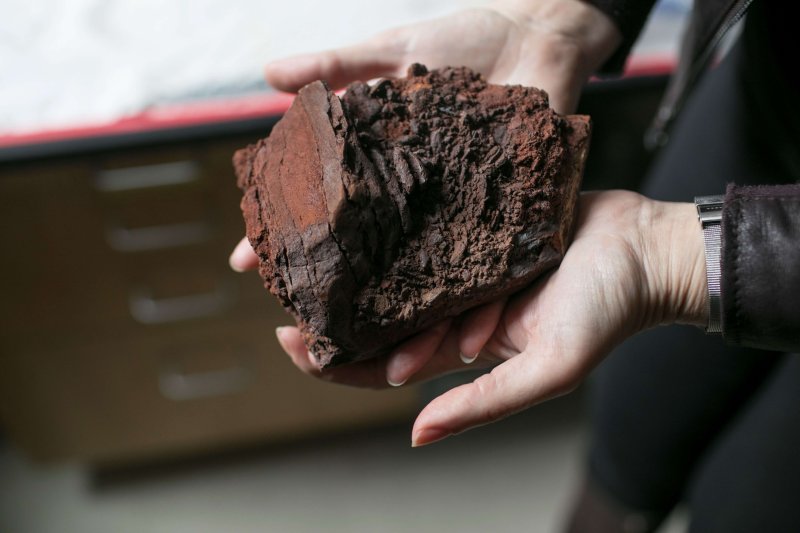

Most of our antibiotics have come from microbes that live in the soil. These organisms naturally make antibiotics for their own survival, to compete against other bacteria. We’ve mined this resource for ourselves, but now the soil is coming up dry.
…
Finding new antibiotics in these remote environmental sources has proved to be a challenge. But deep in the caves, [microbiologist Hazel] Barton has found something different—microbes that have already developed antibiotic resistance.
…
[I]n Lechuguilla Cave in Carlsbad Caverns National Park, [b]etween 2008 and 2011, Barton went into areas of the cave that had been almost completely isolated for millions of years. In a region known as “Deep Secrets,” more than 1,300 feet from the surface, Barton found microbes that were resistant to multiple antibiotics we use in medical care.…



Barton says,“[t]he continued notion that resistance just emerged in the last 60 to 80 years is a bit silly. Antibiotic resistance probably evolved with the evolution of antibiotics themselves.”
…
[I]f we know all the ways bacteria can become resistant, we’ll be better equipped to interfere. Barton calls it “inhibiting the inhibitor.” Some microbes evolve the ability to produce specific molecules to block antibiotics. According to Barton, if we can figure out what those are, we can, in turn, block them, allowing the antibiotic to be effective again.Read full, original post: This Woman Is Exploring Deep Caves to Find Ancient Antibiotic Resistance