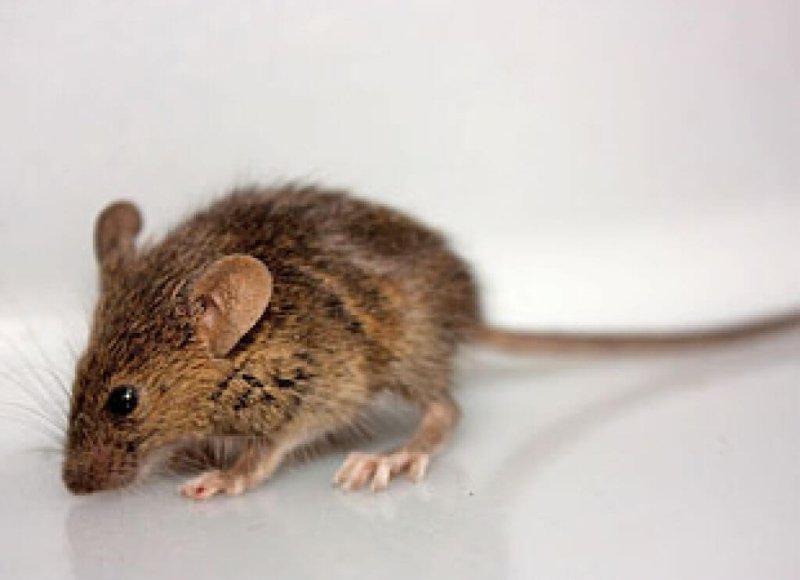
Unable to gain weight: Mice kept thin by blocking fat-storing enzyme

The Mystery Of The Mutant Mice That Never Got Fat ubg tlcbmz xj gghzwg
Image credit: Asian Scientist

A compelling study from a team of researchers at the University of Copenhagen has demonstrated a way to completely stop a body’s ability to store fat. In experiments with mice, the team showed that genetically deleting a single enzyme resulted in the animal not being able to gain weight, even when fed a fatty diet.

An enzyme dubbed NAMPT has been connected to obesity in both human and animal models by several studies. Its presence in fat tissue has been found to increase metabolic functionality in numerous body tissues, including fat tissue, which enhances the body’s ability to store fat.

‘We gave the mice a diet that more or less corresponds to continuously eating burgers and pizza,” explains Karen Nørgaard Nielsen, first author on the study. “Still, it was impossible for them to expand their fat tissue. Our ultimate goal is that by understanding these fundamental underpinnings of how we become obese, we can apply our finding to the development of novel treatment strategies for metabolic disease.”


Further research is proposed to investigate exactly how a deficiency in NAMPT inhibits fat storage and obesity. It is hoped that understanding the mechanism at play could help researchers develop a more targeted treatment strategy that regulates fat storage without causing the broader systemic issues that would result from entirely eliminating NAMPT from a body.

Read full, original post: Deletion of single enzyme stops mice getting fat, no matter the diet

{{ reviewsTotal }}{{ options.labels.singularReviewCountLabel }}
{{ reviewsTotal }}{{ options.labels.pluralReviewCountLabel }}
{{ options.labels.newReviewButton }}
{{ userData.canReview.message }}

Related Articles

Infographic: Global regulatory and health research agencies on whether glyphosate causes cancer

Infographic: Global regulatory and health research agencies on whether glyphosate causes cancer

Does glyphosate—the world's most heavily-used herbicide—pose serious harm to humans? Is it carcinogenic? Those issues are of both legal and ...

Most Popular

Screenshot 2026-05-06 at 2.56
Singularity crisis ahead? Can super babies save us from rogue AI geniuses?
Screenshot-2026-03-13-at-12.14.04-PM
The FDA wants to make many popular prescription drugs OTC—a great idea. Here’s why it’s unlikely to happen
Screenshot-2026-04-20-at-2.26.27-PM
Viewpoint — Food-fear world: The latest activist scientists campaign: Cancer-causing additives
Screenshot-2026-05-01-at-11.56.24-AM
‘Science moves forward when people are willing to think differently’: Memories of DNA maverick Craig Venter
Screenshot-2026-05-01-at-1.29.41-PM
Viewpoint: What happens when whole grains meet modern food manufacturing? Labels don’t tell the whole story.
images
The never-ending GMO debate: Pros and cons
Screenshot-PM-24
Viewpoint: The herbicide glyphosate isn’t perfect. Banning it would be far worse.
Screenshot-2026-04-03-at-11.15.51-AM
Paraben panic: How a flawed study, media hype, and chemophobia convinced the public of the danger of one of the safest classes of preservatives
Screenshot-2026-04-30-at-2.19.37-PM
5 myths about summer dehydration that could damage your health — or even kill you
Screenshot-2026-05-06-at-2.07.43-PM
Manufacturing a conspiracy: The timeline of how  the White House embraced the fringe claim that scientists are being mysteriously murdered
Screenshot-2026-04-12-135256
Bixonimania: The fake disease scam that AI swallowed whole
glp menu logo outlined

Get news on human & agricultural genetics and biotechnology delivered to your inbox.