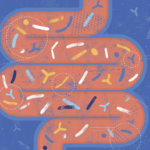
Astronomical cycles may have influenced animal evolution on Earth

a a bec c d c b
Image credit: NASA

A team of researchers from the United States and New Zealand took a look at how likely species were to go extinct and how likely new species were to appear during a 60-million-year period, long before humans evolved. Upon analyzing fossil data, it seemed to them as if astronomical cycles led to climactic effects that ultimately aligned with new species of plankton appearing and going extinct on Earth.

The researchers looked specifically at data on 1,794 fossilized species of zooplankton, and how they appeared and disappeared during the time period from 481 million to 419 million years ago. They compared this to their model of Milankovitch “grand cycles,” regular changes to the shape of the Earth’s orbit around the Sun that occur every 1.3 million and 2.6 million years, that may have had effects on the climate. They thought these cycles could explain statistical changes in the number of new zooplankton species appearing and going extinct.

But perhaps it’s not so outlandish to think that cosmic forces could be driving species turnover. Just last week, scientists hypothesized that the orbits of Jupiter and Venus planets could have an influence on our planet’s climate.
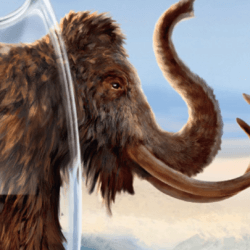

[C]osmic forces actually might be influencing life here on Earth. How and why, we don’t quite know—but it’s safe to say Earth’s history is influenced by more than just the Moon and the Sun.

Editor’s note: Read the full study (behind paywall)

Read full, original post: Does Earth’s Shifting Orbit Influence How Life Evolves?

{{ reviewsTotal }}{{ options.labels.singularReviewCountLabel }}
{{ reviewsTotal }}{{ options.labels.pluralReviewCountLabel }}
{{ options.labels.newReviewButton }}
{{ userData.canReview.message }}

Related Articles

Infographic: Global regulatory and health research agencies on whether glyphosate causes cancer

Infographic: Global regulatory and health research agencies on whether glyphosate causes cancer

Does glyphosate—the world's most heavily-used herbicide—pose serious harm to humans? Is it carcinogenic? Those issues are of both legal and ...

Most Popular

Screenshot 2026-05-26 at 10.15
Viewpoint: Double standard—Why does the wellness industry get a free pass while Big Healthcare is treated as morally suspect?
ChatGPT-Image-Jun-4-2026-11_49_36-AM-2
‘You don’t understand Tolkien’: Skeptic Pope trolls tech giants about the exaggerated, risk-less benefits of AI
Screenshot-2026-06-04-at-12.05.08-PM
Cases of brain inflammation surge as U.S. measles pandemic approaches 2000
ChatGPT-Image-Jun-4-2026-01_27_58-PM
Viewpoint—N.A.D.+: Why Gwenyth Paltrow’s heralded anti-aging supplement doesn’t work
Screenshot 2025-07-30 at 10.48
Can gene editing eliminate Down syndrome? Scientists have done it in lab-grown cells
ChatGPT Image May 26, 2026, 08_42_17 AM (1)
Viewpoint: Greenpeace and poison: How environmental advocacy groups rely on compliant (and often ignorant) journalists to spread disinformation and spark litigation
Screenshot-2026-06-03-at-1.24.46-PM
Challenging anti-GMO disinformation: Why genetically-tweaked crops offer bushels of benefits
ChatGPT-Image-Mar-10-2026-01_39_01-PM
Viewpoint—“Miracle molecule” debunked: Why acemannan supplements don’t work
ChatGPT Image May 26, 2026, 08_21_36 AM
Limiting gender affirming interventions: Trump administration targets Texas even though it already bans youth access
Screenshot 2026-06-04 at 12.43
Viewpoint: Doctors who are battling Ebola are incredulous that U.S. government is not utilizing specially designed emergency health units meant to fight virulent disease
tick-DNA
GLP podcast: Spread meat allergy with gene-edited ticks? Bioethicists pose vile ‘thought experiment’
glp menu logo outlined

Get news on human & agricultural genetics and biotechnology delivered to your inbox.