
Evolution may be responsible for a range of complex traits, including height and waist-to-hip ratio, and diseases such as schizophrenia, research from The University of Queensland shows.
The findings improve understanding of how natural selection shapes human populations, and could lead to better prevention, diagnosis and treatment of complex diseases through an enhanced knowledge of their underlying genetics.
…
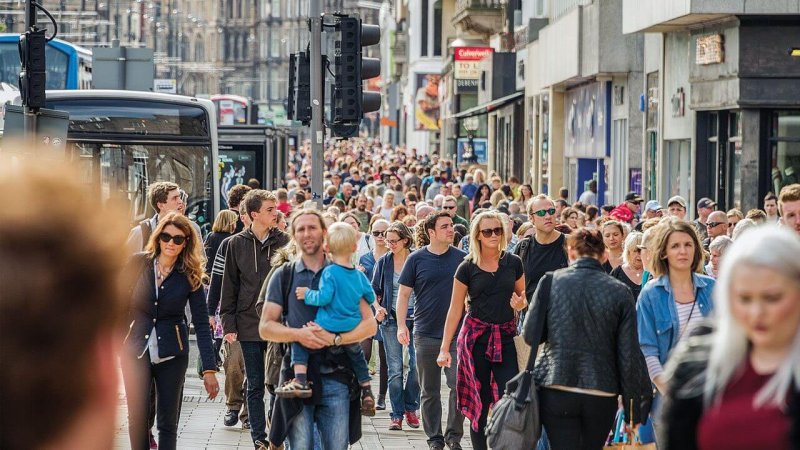
“Many human complex traits are concentrated in different populations around the world,” Professor [Jian] Yang said. “For example, populations in the Northern Hemisphere tend to get taller the further north you go, and European Americans have a lower body mass index (BMI) than African Americans, but higher than Chinese, Indonesians or Thais.”
…
“The question is whether or not these differences are the consequence of natural selection or simply the result of what we call ‘genetic drift’ – where gene mutations (also called genetic variants) become more or less frequent in a population by chance.”




Professor Yang and his colleagues set out to answer the question.
…
If genetic variants associated with a complex trait resulted from natural selection they should appear more frequently than expected under genetic drift. The analysis supported this, showing that the genetic variants associated with height, weight-to-hip ratio and schizophrenia were more differentiated than expected by random drift.
Editor’s note: Read full study
Read full, original post: Does evolution make us or are we just drifting that way?