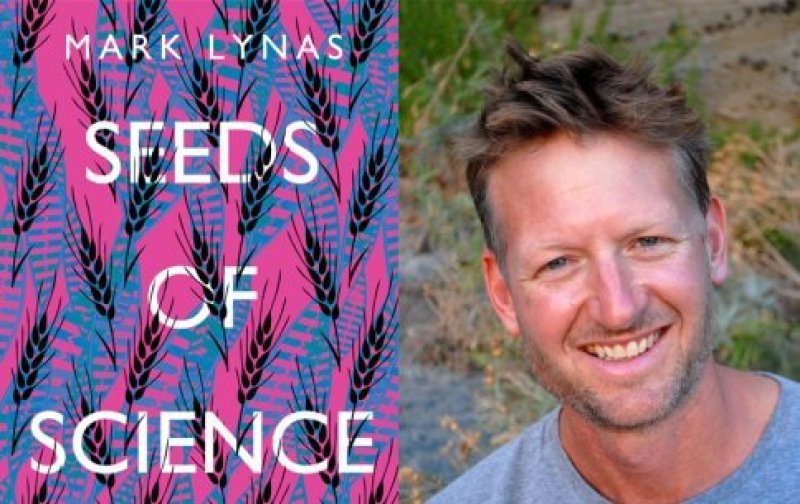
Why it’s OK to change your mind, from a former anti-GMO activist

DfBHT uX AABA R
Image Credit: Mark Lynas

Once upon a time, shortly after the age of bloodletting, people thought that facts could change minds. It may seem laughable now, but many used to believe they could simply provide evidence that fire is hot, that the Earth is round, or that humans are causing climate change, and others would respond, “Right, I understand now! Thanks for setting me straight.”

It doesn’t work that way, a fact you can see clearly demonstrated in Seeds of Science: Why We Got it So Wrong on GMOs, by Mark Lynas, an environmental activist and science writer. The book, out June 26, seeks to understand why greens, including Lynas himself, saw genetic engineering as an enemy from the very beginning.

In his youth, Lynas snuck out with other anti-GMO activists to destroy fields of biotech corn. In 2013, he formally apologized for his actions 15 years earlier. What changed? Sure, Lynas learned some new facts. But these facts only sunk in after he had earned plaudits as a science writer and begun to think of himself as a member of the scientific tribe. It was only after he started caring about his reputation among scientists that he began to feel threatened by the critique that his ideas about GMOs were “perilously unscientific.” He had to change clans before he could change his mind.

Read full, original article: Why it’s OK to change your mind, from a former anti-GMO activist

{{ reviewsTotal }}{{ options.labels.singularReviewCountLabel }}
{{ reviewsTotal }}{{ options.labels.pluralReviewCountLabel }}
{{ options.labels.newReviewButton }}
{{ userData.canReview.message }}

Related Articles

Infographic: Global regulatory and health research agencies on whether glyphosate causes cancer

Infographic: Global regulatory and health research agencies on whether glyphosate causes cancer

Does glyphosate—the world's most heavily-used herbicide—pose serious harm to humans? Is it carcinogenic? Those issues are of both legal and ...

Most Popular

Screenshot-2026-03-13-at-12.14.04-PM
The FDA wants to make many popular prescription drugs OTC—a great idea. Here’s why it’s unlikely to happen
Screenshot-2026-05-04-at-12.54.32-PM
How Utah became the country’s supplement capital  — and a haven for unregulated, ineffective and fake products
Screenshot-2026-04-20-at-2.26.27-PM
Viewpoint — Food-fear world: The latest activist scientists campaign: Cancer-causing additives
Screenshot-PM-24
Viewpoint: The herbicide glyphosate isn’t perfect. Banning it would be far worse.
images
The never-ending GMO debate: Pros and cons
Screenshot-2026-05-01-at-11.56.24-AM
‘Science moves forward when people are willing to think differently’: Memories of DNA maverick Craig Venter
Screenshot-2026-04-30-at-2.19.37-PM
5 myths about summer dehydration that could damage your health — or even kill you
Screenshot-2026-04-03-at-11.15.51-AM
Paraben panic: How a flawed study, media hype, and chemophobia convinced the public of the danger of one of the safest classes of preservatives
ChatGPT-Image-May-1-2026-02_20_13-PM
How RFK, Jr.’s false vaccine claims are holding up $600 million to fight diseases in poor countries
79d03212-2508-45d0-b427-8e9743ff6432
Viewpoint: The Casey Means hustle—Wellness woo opportunism dressed up as medical wisdom
glp menu logo outlined

Get news on human & agricultural genetics and biotechnology delivered to your inbox.