Viewpoint: Using robots to treat autistic children has potential pitfalls

kaspar robot autism
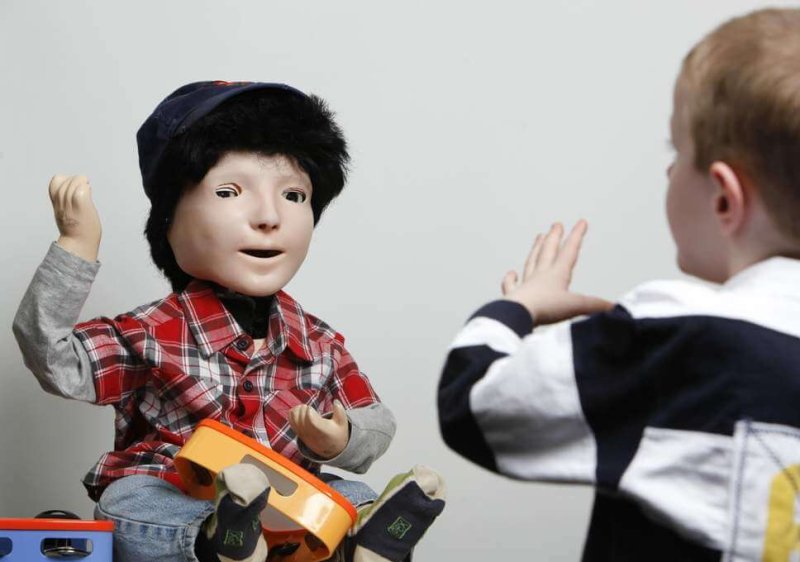
Kaspar, a humanoid robot designed to help children with autism. Image credit: Independent

Previous research suggests robots are well received by children with autism spectrum disorders, and there’s plenty of anecdotal stories of children showing progress with interaction and communication after working with robots. In the UK, researchers based at the University of Hertfordshire have had plenty of positive attention around Kaspar, a child-like robot that helps teach children social skills.

These robots aren’t designed to replace human therapists, but to be used as a tool by them. The therapist might use the robot as a focal point for the child, as some find it easier or more engaging to interact with a robot than an adult, or the therapist may use it to show a movement the child should mimic, a key aspect of behaviour-based therapies.

Robots may help treat children with autism, but we need to be wary of treating them like robots in return. Are machines the best way to teach social interaction? Do we risk further entrenching flawed assumptions that people with autism are machine-like? Could we be ignoring known successful therapies in favour of high-tech wizardry?

[T]herapy robots are worth investigating, so long as they’re about bettering the lives of affected children — and not merely about making clever, headline-grabbing robots.

Read full, original post: The questionable ethics of treating autistic children with robots

{{ reviewsTotal }}{{ options.labels.singularReviewCountLabel }}
{{ reviewsTotal }}{{ options.labels.pluralReviewCountLabel }}
{{ options.labels.newReviewButton }}
{{ userData.canReview.message }}

Related Articles

Infographic: Global regulatory and health research agencies on whether glyphosate causes cancer

Infographic: Global regulatory and health research agencies on whether glyphosate causes cancer

Does glyphosate—the world's most heavily-used herbicide—pose serious harm to humans? Is it carcinogenic? Those issues are of both legal and ...

Most Popular

ChatGPT Image May 26, 2026, 08_42_17 AM (1)
Viewpoint: Greenpeace and poison: How environmental advocacy groups rely on compliant (and often ignorant) journalists to spread disinformation and spark litigation
Screenshot 2025-07-30 at 10.48
Can gene editing eliminate Down syndrome? Scientists have done it in lab-grown cells
Screenshot-2026-05-28-at-1.36.28-PM
Viewpoint: Can mRNA research survive the Trump administration?
Screenshot 2025-11-18 at 3.45
Viewpoint—GMOs and sustainability: Why buying organic foods is the least environmentally-sensitive food choice—without offering any health benefits
Screenshot-2026-06-02-at-11.59.11-AM
Magnifica Humanitas: Pope’s encyclical broadside against AI naivete and overreach
ChatGPT-Image-May-26-2026-07_51_21-AM-2
Viewpoint: There are more than 1,000 chemicals in a cup of coffee—including many substances that can cause cancer. Why isn’t it banned?
ChatGPT-Image-Jun-2-2026-11_39_58-AM
Viewpoint: Who is RFK, Jr.’s newly-appointed CDC senior counselor, Sara Brenner — Vaccine skeptic and self-proclaimed “MAHA mom”
Picture1
Sounds we can’t hear — the hidden planetary signals behind science, fear, and misinformation
ChatGPT Image May 28, 2026, 08_16_38 PM
Viewpoint: Why the EPA mismeasures cancer risk of chemicals and what should be done to fix it
Screenshot-2026-04-14-at-11.11.06-AM
‘Turbo cancer’ or mRNA cancer cure? Strategies to counter misinformation
glp menu logo outlined

Get news on human & agricultural genetics and biotechnology delivered to your inbox.