Inside the battle to convince insurers that chronic fatigue syndrome is a legitimate illness

brian vastag mn a e b ad f f
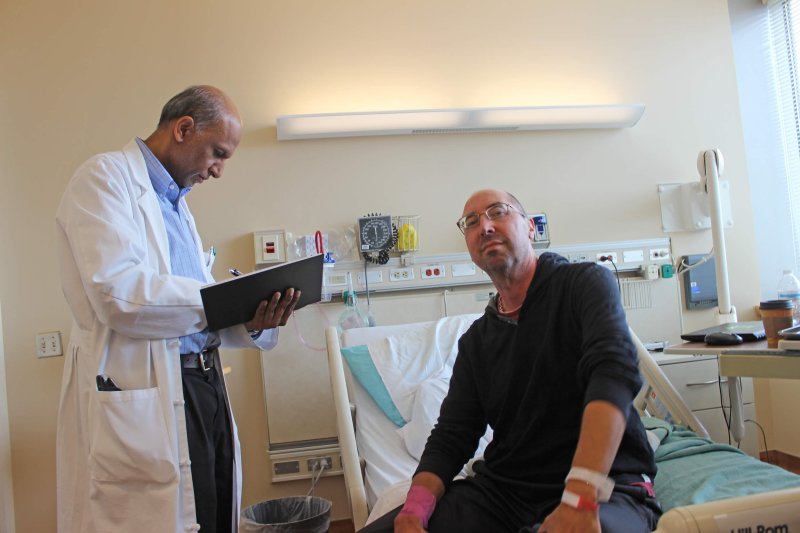
Dr. Avindra Nath, a neurologist at the National Institute of Neurological Disorders and Stroke examines Brian Vastag. Image credit: Beth Mazur
[Reporter Brian Vastag’s career] came to an end in July 2012, when he found himself afflicted by a mysterious and poorly understood illness that ended up sweeping away almost every vestige of his vigorous and productive life. To add insult to injury, he also had to endure a four-year battle with his insurance company to cover his disability claim for the condition he eventually learned was chronic fatigue syndrome.

But because there is no widely accepted diagnostic test for chronic fatigue syndrome [many] of the 1 million or more Americans who have it are ridiculed and dismissed as delusional.

Prudential refused to believe that Vastag could be so severely disabled, no matter what his doctors and other national experts on ME/CFS stated. With no alternative, Vastag retained two attorneys who specialize in disability issues [and sued Prudential.]

[Judge Katharine] Hayden concluded that Prudential had wrongly denied Vastag’s benefits due to its “significant failure to understand the current state of medical knowledge about CFS and its devastating impact.”

Vastag’s win against Prudential is a hopeful sign that individuals with ME/CFS, many of whom have been turned down for disability benefits under similar arguments, might finally be gaining the respect, sympathy, and support they have always deserved.

Read full, original post: The medical community is changing its mind on chronic fatigue syndrome. Why aren’t insurers?

Related Articles

Infographic: Global regulatory and health research agencies on whether glyphosate causes cancer

Infographic: Global regulatory and health research agencies on whether glyphosate causes cancer

Does glyphosate—the world's most heavily-used herbicide—pose serious harm to humans? Is it carcinogenic? Those issues are of both legal and ...

Most Popular

ChatGPT-Image-Mar-10-2026-01_39_01-PM
Viewpoint—“Miracle molecule” debunked: Why acemannan supplements don’t work
ChatGPT-Image-Sep-17-2026-12_28_43-PM
Vitamin D, omega-3 fish oil and glucosamine supplements could cause brain damage 
Screenshot-2026-08-19-at-6.19.42-PM
Facts & Fallacies podcast: 'Regenerative farming'? RFK Jr.’s federal push romanticizes the past and risks food security
ChatGPT-Image-Aug-28-2026-03_33_46-PM
Viewpoint: Bad science—Five bogus Trump administration claims about vaccines and autism
Screenshot-2026-08-12-at-11.31.46-AM
AI is helping develop new vaccines
Screenshot-2026-09-10-at-12.20.19-PM
'Jet fuel didn't melt the steel': 9/11 conspiracy theories debunked
Screenshot-2026-09-14-at-4.31.14-PM
Viewpoint: What’s the likely impact when the EPA loosens rules limiting methane pollution from oil and gas wells?
ChatGPT-Image-Sep-17-2026-10_17_15-AM
Viewpoint: Why are the less intelligent more likely to be conservative—and smarter people more socially liberal?
ChatGPT-Image-Sep-9-2026-02_48_24-PM
Viewpoint: Trump-RFK Jr. report on “Gender Ideology & Left-wing Ideology’ targets LGBTQ community—and science
Eating Nuts Adds up to Longer Life x
For millions with peanut allergies, Nurtured Nuts’ CRISPR gene-edited peanuts could ease the fear of accidental exposure
ChatGPT-Image-Sep-13-2026-10_46_11-AM
“Hit the brakes”: Anthropic warns the race to superintelligence could spawn internet-seizing AI swarms—and empower authoritarians. Here’s how to stop it.
Screenshot-2026-09-15-at-11.04.54-AM
Viewpoint: Childhood deaths in dispute: Why the CDC vs Pennsylvania conflict over measles vaccines matters
glp menu logo outlined

Get news on human & agricultural genetics and biotechnology delivered to your inbox.