In wake of California jury’s glyphosate verdict, New Zealand likely won’t revisit conclusion that herbicide is safe

efsa snip
Image Credit: European Food Safety Authority

A lot has been said about a recent court case ruling about Monsanto’s Roundup ….. Adding to the mix, in New Zealand the Associate Environment Minister, Eugenie Sage, has said she will ask the [country’s environmental protection agency] to consider declaring Monsanto’s weed-killer, Roundup, hazardous.

[Eugenie Sage’s] call to revise the status of Roundup looks to be a political exercise. In my opinion it would be fruitless, and time-wasting. She’d want to first show that the court case introduces new safety evidence. My understanding (so far) is that it doesn’t.

Editor’s note: The jury verdict on glyphosate was based primarily on IARC’s 2015 monograph, which called the herbicide a “probable carcinogen.”

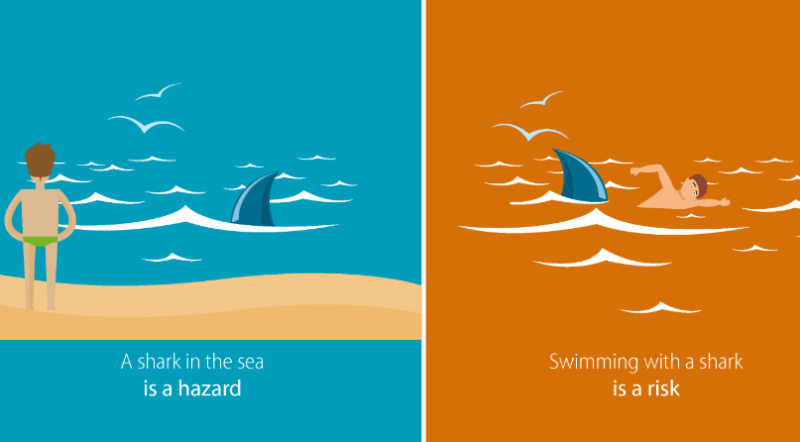
IARC reports possible hazards: things that in some setting, in some amount, in some way might cause cancer. Something maybe a hazard, but no risk if you are not exposed to the substance. Similarly, there may be no risk if the dose is small …. IARC gives a heads-up as to what substances ‘might’ be hazards. It is for regulatory bodies to take this and decide where risks—if any—might lie, and how [to] manage this.

The NZ EPA has already reviewed IARC’s report on their own initiative in 2016 …. This would suggest there is nothing further to be done.

Read full, original article: USA Court ruling on glyphosate— the role of IARC and Eugenie Sage’s call

{{ reviewsTotal }}{{ options.labels.singularReviewCountLabel }}
{{ reviewsTotal }}{{ options.labels.pluralReviewCountLabel }}
{{ options.labels.newReviewButton }}
{{ userData.canReview.message }}

Related Articles

Infographic: Global regulatory and health research agencies on whether glyphosate causes cancer

Infographic: Global regulatory and health research agencies on whether glyphosate causes cancer

Does glyphosate—the world's most heavily-used herbicide—pose serious harm to humans? Is it carcinogenic? Those issues are of both legal and ...

Most Popular

Screenshot-2026-04-20-at-2.26.27-PM
Viewpoint — Food-fear world: The latest activist scientists campaign: Cancer-causing additives
Screenshot-2026-03-13-at-12.14.04-PM
The FDA wants to make many popular prescription drugs OTC—a great idea. Here’s why it’s unlikely to happen
ChatGPT-Image-May-1-2026-02_20_13-PM
How RFK, Jr.’s false vaccine claims are holding up $600 million to fight diseases in poor countries
Screenshot-2026-05-01-at-11.56.24-AM
‘Science moves forward when people are willing to think differently’: Memories of DNA maverick Craig Venter
viva-la-vida-watermelons
Misinformation and climate change are endangering summer watermelons
Screenshot-2026-04-03-at-11.15.51-AM
Paraben panic: How a flawed study, media hype, and chemophobia convinced the public of the danger of one of the safest classes of preservatives
Screenshot-2026-04-30-at-2.19.37-PM
5 myths about summer dehydration that could damage your health — or even kill you
ChatGPT-Image-Mar-27-2026-11_27_05-AM
The myths of “process”: What science says about the “dangers’ of synthetic products and ultra-processed foods
Screenshot-2026-05-04-at-12.54.32-PM
How Utah became the country’s supplement capital  — and a haven for unregulated, ineffective and fake products
ChatGPT-Image-Mar-10-2026-01_39_01-PM
Viewpoint—“Miracle molecule” debunked: Why acemannan supplements don’t work
Drinking lots of water can help reduce the effects of aging
Nanoplastics in drinking water: MAHA activists forge science-based bipartisan coalition 
circular-bioeconomy-should-focus-on-sustainable-wellbeing
GLP podcast: What's wrong with 'doomsday' environmentalism? It's false.
79d03212-2508-45d0-b427-8e9743ff6432
Viewpoint: The Casey Means hustle—Wellness woo opportunism dressed up as medical wisdom

Sorry. No data so far.

glp menu logo outlined

Get news on human & agricultural genetics and biotechnology delivered to your inbox.