GAANTRY: USDA develops ‘gene-stacking’ solution to fungal pathogens—but will it actually work?

fungal
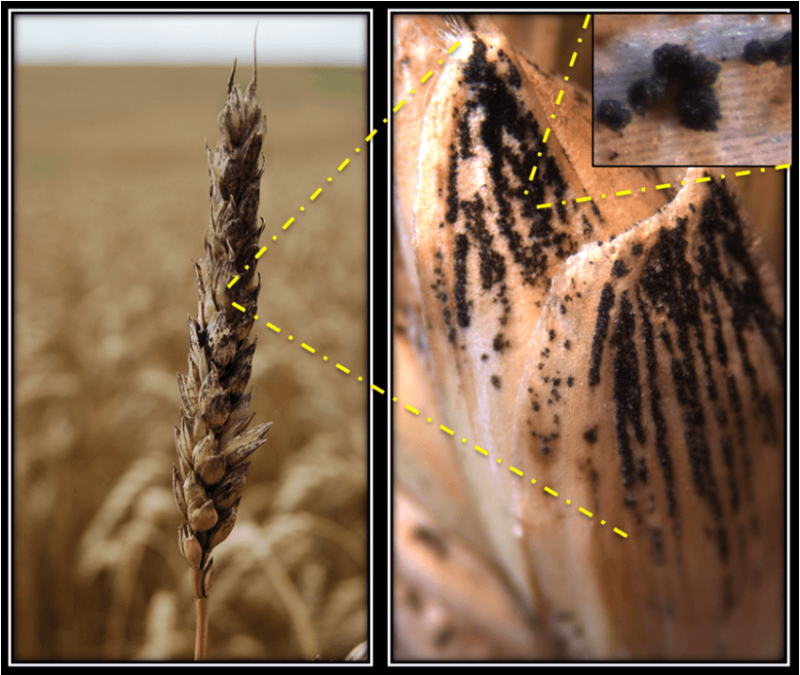
Image Credit: Ohio State University Extension

If climate change is the new normal, farmers in some regions of the world will have to get used to fighting mold and mildew. For wheat growers in particular, fungal blights are already a big problem …. Fungal pathogens are advancing northwards at about 7 kilometers per year on average, worldwide.

Enter the USDA’s Agricultural Research Service (ARS). On June 14, the ARS published a pilot study on an innovative technology called GAANTRY (Gene Assembly in Agrobacterium by Nucleic acid Transfer using Recombinase technologY) that can insert a “stack” of multiple genes simultaneously into plants.

Roger Thilmony, a research molecular biologist at the ARS, says his team inserted 10 genes into Arabidopsis plants …. The genes were transgenic, making the Arabidopsis seedlings glow fluorescent colors so the researchers would know at a glance if the genes had been successfully inserted. However, genes from the same or related species that have some benefit, such as disease resistance, can also be swapped in ….

Sarah Gurr, a plant pathologist at the University of Exeter, is skeptical about whether GAANTRY is ready for prime time. “Arabidopsis is a little weed and it’s not a crop plant,” she says. “While it’s all fantastic stuff, it isn’t necessarily transferrable from a Brassica, which is what Arabidopsis is, into wheat, which is hugely complex genome-wise.”

Read full, original article: USDA Unveils New Gene-Stacking Tool to Prevent Plant Diseases

{{ reviewsTotal }}{{ options.labels.singularReviewCountLabel }}
{{ reviewsTotal }}{{ options.labels.pluralReviewCountLabel }}
{{ options.labels.newReviewButton }}
{{ userData.canReview.message }}

Related Articles

Infographic: Global regulatory and health research agencies on whether glyphosate causes cancer

Infographic: Global regulatory and health research agencies on whether glyphosate causes cancer

Does glyphosate—the world's most heavily-used herbicide—pose serious harm to humans? Is it carcinogenic? Those issues are of both legal and ...

Most Popular

d-b
Blocked arteries, kidney stones, nausea, constipation, fatigue: Long list of health problems caused by too much vitamin D 
Screenshot-PM-24
Viewpoint: The herbicide glyphosate isn’t perfect. Banning it would be far worse.
79d03212-2508-45d0-b427-8e9743ff6432
Viewpoint: The Casey Means hustle—Wellness woo opportunism dressed up as medical wisdom
ChatGPT-Image-Mar-10-2026-01_39_01-PM
Viewpoint—“Miracle molecule” debunked: Why acemannan supplements don’t work
ChatGPT-Image-Mar-27-2026-11_27_05-AM
The myths of “process”: What science says about the “dangers’ of synthetic products and ultra-processed foods
ChatGPT-Image-Apr-30-2026-12_21_05-PM-2
The tech billionaires behind the immortality movement
ChatGPT-Image-Apr-30-2026-05_00_48-PM
Wellness grifter physician turned wellness influencer out as surgeon general nominee

Sorry. No data so far.

glp menu logo outlined

Get news on human & agricultural genetics and biotechnology delivered to your inbox.