
Evidence suggests that a warming planet could melt away differences between human races — or population groups, as scientists more accurately call them. The reason why climate change could reduce racial differences is that it will trigger massive migrations.
…
One consequence of large-scale migrations is what biologists call gene flow, a type of evolution caused by the blending of genes between populations. When people from different populations mate and reproduce, their genes intermingle in their children.
…
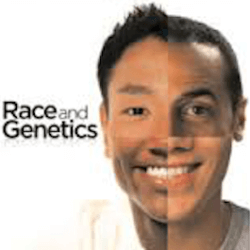
Because skin color is controlled by many genes, parents whose skin color differs tend to have children with intermediate skin tones. And so in five to 10 generations (125 to 250 years), we may see fewer people with dark skin or pale skin and more with a brown or olive complexion.




…
Blending of races is already well underway in ethnically diverse countries like Brazil, Singapore and the U.S. A Pew report from 2017 found that the number of multiracial births in the U.S. rose from 1 percent in 1970 to 10 percent in 2013. And the increase will continue — the multiracial population is projected to grow by 174 percent over the next four decades.
The bottom line? As people around the world become more physically similar to one another, it’s possible that racism might slowly fade.
Read full, original post: Climate change could affect human evolution. Here’s how.