Challenging earth’s oldest fossils: Critics say ‘there’s absolutely nothing biological about them’

sxmm leske q nn jgo
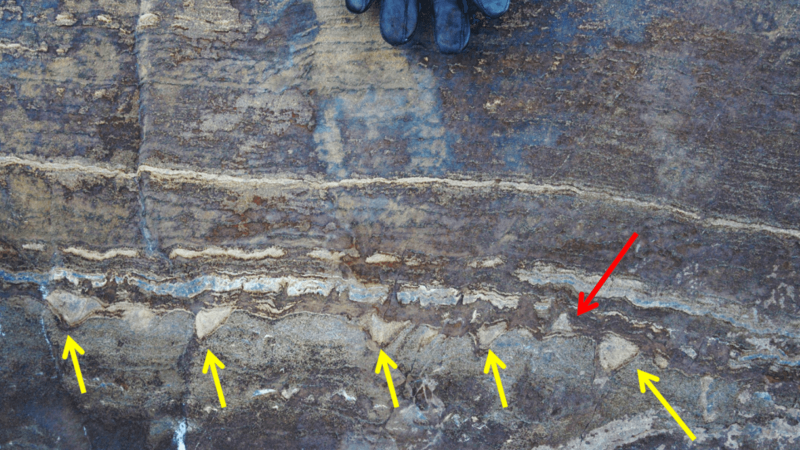
Image credit: Abigail Allwood

Two years ago, researchers from the University of Wollongong in Australia shook the science world by claiming to have discovered 3.7 billion-year-old fossils in a rock formation in Greenland, a finding that pushed back the origin of life on Earth by 200 million years. New research is now casting doubt on this discovery, with scientists saying the rock structures are of non-biological origin.

In the original 2016 study, geologist Allen Nutman and colleagues identified cone-like structures, ranging between 1 and 4 centimeters in length, in 3.7-billion-year-old rock found in the Isua formation in southwest Greenland. These structures, the researchers said, were evidence of stromatolites—sedimentary formations created by the layered growth of microbial organisms in shallow waters.

Abigail C. Allwood, a geologist from the California Institute of Technology, Minik T. Rosing, a geochemist at the University of Copenhagen, and colleagues decided to visit the Isua formation in Greenland and take a look at these rocks for themselves. Their resulting analysis, published [October 17] in Nature, suggests Nutman and his colleagues got it wrong. The observed structures in the rocks are just products of tectonic processes, they say, and there’s absolutely nothing biological about them.

But if there’s anything Nutman, Allwood, and Rosing do agree on, it’s that the formations were created in a marine environment.

Read full, original post: World’s Oldest Fossils Aren’t Actually Fossils, New Research Suggests

{{ reviewsTotal }}{{ options.labels.singularReviewCountLabel }}
{{ reviewsTotal }}{{ options.labels.pluralReviewCountLabel }}
{{ options.labels.newReviewButton }}
{{ userData.canReview.message }}

Related Articles

Infographic: Global regulatory and health research agencies on whether glyphosate causes cancer

Infographic: Global regulatory and health research agencies on whether glyphosate causes cancer

Does glyphosate—the world's most heavily-used herbicide—pose serious harm to humans? Is it carcinogenic? Those issues are of both legal and ...

Most Popular

ChatGPT-Image-Mar-10-2026-01_39_01-PM
Viewpoint—“Miracle molecule” debunked: Why acemannan supplements don’t work
ChatGPT-Image-Jun-25-2026-12_23_17-PM
No, Bill Gates did not secretly engineer ticks to promote veganism
ChatGPT-Image-Jun-19-2026-04_11_20-PM
Daubert for Dummies—Scientific Reliability in U.S. Courts: Daubert, Rule 702, and Made-for-Litigation Evidence
ChatGPT-Image-Jun-17-2026-10_52_43-AM
Anguished parents, doctors in tears: Utah’s long measles outbreak takes a toll
Screenshot-2026-06-22-at-9.04.46-PM
Kennedy's nutrition prescription for medical schools: Real problem, bad cure
Screenshot-2026-06-15-at-1.55.27-PM
America's trust in Trump-Kennedy's CDC health recommendations is plunging
ChatGPT-Image-Jun-15-2026-11_51_00-AM-4
Viewpoint: As the International Association for Research on Cancer loses influence, activists and trial lawyers scramble to protect a lucrative playbook
Screenshot-2026-06-05-at-2.12.30-PM
Some plants can poison you. So how did humans figure out what is safe to eat?

Sorry. No data so far.

glp menu logo outlined

Get news on human & agricultural genetics and biotechnology delivered to your inbox.