‘Gender-equality paradox’: Why are differences stronger in wealthier, gender-equal nations?

difference
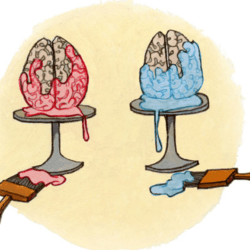
Image credit: CBE International

Inย Sweden, girls are just as likely to go to school and university as boys are. Women make up a greater proportion of the countryโ€™s professional and technical workers than any other country in the world. And their representation in the countryโ€™s politics is among the worldโ€™s best. But when it comes to personality tests, Swedish men and women are worlds apart.

Malaysiaย sits toward the opposite end of the scale: despite ranking among the worldโ€™s lowest for political empowerment of women and lagging when it comes to womenโ€™s health and survival, men and women end up looking similar in those same personality tests. What gives?

This fascinating findingโ€”dubbed the gender-equality paradoxโ€”isn’t new, but two recent papers report fresh details. In a paper published inย Scienceย [October 18], Armin Falk and Johannes Hermle report that gender differences in preferences like risk-taking, patience, and trust were more exaggerated in wealthier and more gender-equal countries. And in a recentย paperย in theย International Journal of Psychology, Erik Mac Giolla and Petri Kajonius provide more detail on the original paradox.

โ€ฆ

โ€œ[W]hen men and women are free to express individual characteristics in more unconstrained societies, sex differences may be enlarged,โ€ write Mac Giolla and Kajonius.

โ€ฆ

Falk and Hermle have a slightly different argument: [when] basic material needs are fulfilled, they write, it paves the way for self-expression, including expression of gender.

Read full, original post:ย Why figuring out whatโ€™s behind a big gender paradox wonโ€™t be easy

{{ reviewsTotal }}{{ options.labels.singularReviewCountLabel }}
{{ reviewsTotal }}{{ options.labels.pluralReviewCountLabel }}
{{ options.labels.newReviewButton }}
{{ userData.canReview.message }}

Related Articles

Infographic: Global regulatory and health research agencies on whether glyphosate causes cancer

Infographic: Global regulatory and health research agencies on whether glyphosate causes cancer

Does glyphosateโ€”the world's most heavily-used herbicideโ€”pose serious harm to humans? Is it carcinogenic? Those issues are of both legal and ...

Most Popular

wuhan institute of virology main entrance
โ€‹โ€‹COVID lab leak? Making a case that the Wuhan market origins theory is wrong
Screenshot-2026-06-17-at-9.44.03-AM
Viewpoint: Embryos are becoming the newest battleground of love, loss, and legal uncertainty
Screenshot-2026-06-18-at-11.41.51-AM
Viewpointโ€”Protecting baloney science: Far right senators move to protect the phony homeopathy industry
ChatGPT-Image-Mar-10-2026-01_39_01-PM
Viewpointโ€”โ€œMiracle moleculeโ€ debunked: Why acemannan supplements donโ€™t work
Screenshot-2026-06-17-at-11.57.12-AM
Viewpoint: Raw milk and the myth of safetyโ€”ProPublica exposes the growing anti-homogenization movement
ChatGPT-Image-Jun-9-2026-01_11_37-PM
Turmeric supplements: More risks than benefits
Screenshot-2026-06-18-at-2.52.05-PM
Activist organization accuses Trump of protecting methane-generating stripper wells to benefit billionaire and donor Jeffrey Hildebrandย 
Screenshot-2026-06-16-at-10.02.22-PM
Viewpoint: โ€˜Industrial foodโ€™ primerโ€”Challenging the dangerous delusions of the alternative food movement
ChatGPT-Image-Jun-16-2026-10_01_45-AM-2
Viewpointโ€”Recursive self-improvement: AI leader Anthropic calls for AI slowdown
ChatGPT-Image-Jun-18-2026-02_32_04-PM
Can illegal social media content be stopped before it goes viral? UK is going to try.
ChatGPT-Image-Jun-4-2026-03_07_27-PM
AAP v. Kennedy: While a court challenge grinds on, RFK Jr. quietly advances his anti-vaccine conspiracy agenda
ChatGPT-Image-Jun-16-2026-10_29_11-AM
Whatโ€™s behind Anthropicโ€™s warning about the accelerating development of AI
glp menu logo outlined

Get news on human & agricultural genetics and biotechnology delivered to your inbox.