‘In someone else’s shoes’: How virtual reality is altering autism research, treatment

vr
Image credit: Maryam Scoble

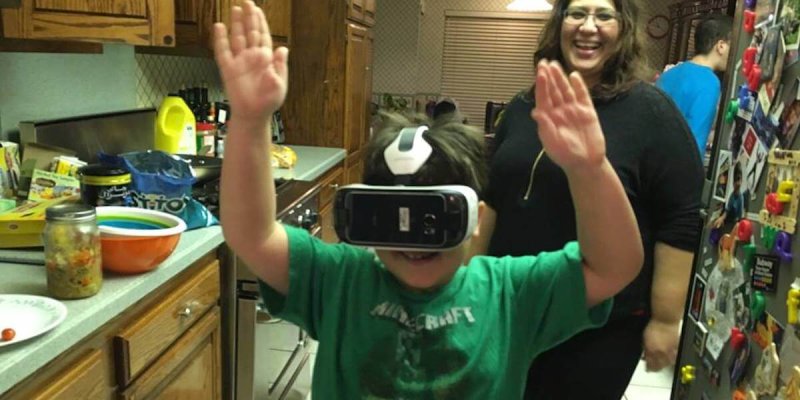
For more than two decades, scientists have experimented with [virtual reality] to set up controlled scenarios to study autistic traits. At the same time, some teams have used VR to create role-playing environments for practicing social skills. Increasingly, however, people with autism are using VR to convey their own experiences, both to raise awareness of the condition and to capture the cognitive and perceptual differences that characterize it.

Proponents of VR argue that no other medium comes as close to putting you in someone else’s shoes. “Having a perceptual experience — that’s something we haven’t been able to do without VR,” says Albert “Skip” Rizzo, research professor at the University of Southern California in Los Angeles and a pioneer of using VR in psychiatry.

Autism therapists and researchers started to use VR in the mid-1990s, not long after headsets became widely available to consumers and other forms of immersion, such as first-person shooter games, became popular. Researchers often deployed the technology to create virtual environments to help autistic people rehearse stressful encounters. For instance, Rizzo’s team built a virtual job-interview training program. In a study published last year, they recruited adults with autism or other conditions for a training regimen involving interviewers who ranged from gentle to aggressive. Rizzo says the participants with autism significantly improved in their interviewing skills, as rated by job counselors.

Read full, original post: How virtual reality is transforming autism studies

{{ reviewsTotal }}{{ options.labels.singularReviewCountLabel }}
{{ reviewsTotal }}{{ options.labels.pluralReviewCountLabel }}
{{ options.labels.newReviewButton }}
{{ userData.canReview.message }}

Related Articles

Infographic: Global regulatory and health research agencies on whether glyphosate causes cancer

Infographic: Global regulatory and health research agencies on whether glyphosate causes cancer

Does glyphosate—the world's most heavily-used herbicide—pose serious harm to humans? Is it carcinogenic? Those issues are of both legal and ...

Most Popular

Screenshot 2026-05-26 at 10.15
Viewpoint: Double standard—Why does the wellness industry get a free pass while Big Healthcare is treated as morally suspect?
ChatGPT-Image-Jun-4-2026-11_49_36-AM-2
‘You don’t understand Tolkien’: Skeptic Pope trolls tech giants about the exaggerated, risk-less benefits of AI
ChatGPT-Image-Jun-4-2026-01_27_58-PM
Viewpoint—N.A.D.+: Why Gwenyth Paltrow’s heralded anti-aging supplement doesn’t work
Screenshot-2026-06-04-at-12.05.08-PM
Cases of brain inflammation surge as U.S. measles pandemic approaches 2000
Screenshot-2026-06-03-at-1.24.46-PM
Challenging anti-GMO disinformation: Why genetically-tweaked crops offer bushels of benefits
ChatGPT Image May 26, 2026, 08_42_17 AM (1)
Viewpoint: Greenpeace and poison: How environmental advocacy groups rely on compliant (and often ignorant) journalists to spread disinformation and spark litigation
Screenshot 2025-07-30 at 10.48
Can gene editing eliminate Down syndrome? Scientists have done it in lab-grown cells
ChatGPT-Image-Mar-10-2026-01_39_01-PM
Viewpoint—“Miracle molecule” debunked: Why acemannan supplements don’t work
downsyndrome_compilation_MID_1
CRISPR breakthrough that can remove the chromosome responsible for Down syndrome raises ethical questions
tick-DNA
GLP podcast: Spread meat allergy with gene-edited ticks? Bioethicists pose vile ‘thought experiment’
ChatGPT Image May 26, 2026, 08_21_36 AM
Limiting gender affirming interventions: Trump administration targets Texas even though it already bans youth access

Sorry. No data so far.

glp menu logo outlined

Get news on human & agricultural genetics and biotechnology delivered to your inbox.