Some US towns were untouched by 1918 Spanish flu pandemic. The military wants to know why.

web unnamed
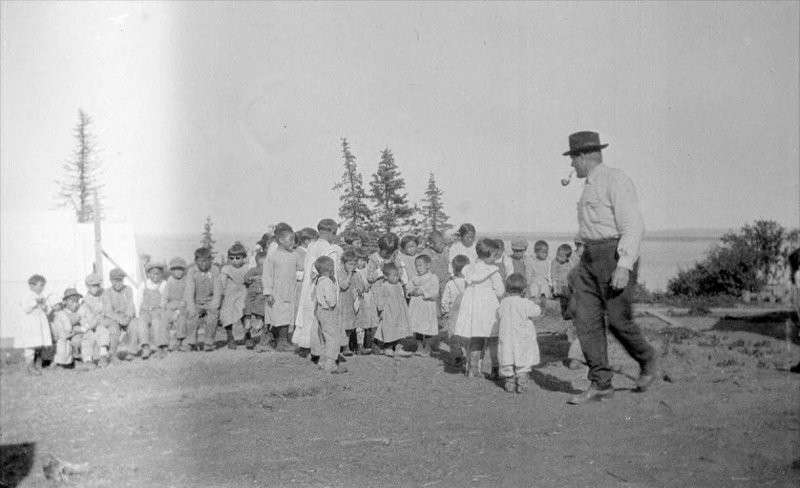
Doctor Linus Hiram French with Alaskan orphans of the Spanish flu epidemic in 1919. Image credit: Tim Troll
[On 4 June 1919, the Spanish flu] had finally found its way to the remote native Inuit communities that dotted the Alaskan coastline.

In just a few days nearly 200 people would die from the disease in the Bristol Bay area, leaving dozens of children orphaned. From some places, stories emerged of packs of stray dogs feasting on the bodies of the dead. In some communities, up to 90% of the population died and the mortality rates were some of the highest in the world.

Yet, just a few miles from some of the worst hit areas of Bristol Bay, one community in a tiny settlement called Egegak escaped the disease entirely.

The lessons [learned] are considered so important that the US Department of Defense’s Threat Reduction Agency investigated the handful of the places across the United States that were untouched by Spanish flu in the hope of gleaning some clues about how to keep military personnel safe in the future.

“These communities basically shut themselves down,” explains Howard Markel, an epidemiological historian at the University of Michigan who was one of the authors of the study. “No one came in and no one came out. Schools were closed and there were no public gatherings. We came up with the term ‘protective sequestration’, where a defined and healthy group of people are shielded from the risk of infection from outsiders.”

Read full, original post: The places that escaped the Spanish flu

{{ reviewsTotal }}{{ options.labels.singularReviewCountLabel }}
{{ reviewsTotal }}{{ options.labels.pluralReviewCountLabel }}
{{ options.labels.newReviewButton }}
{{ userData.canReview.message }}

Related Articles

Infographic: Global regulatory and health research agencies on whether glyphosate causes cancer

Infographic: Global regulatory and health research agencies on whether glyphosate causes cancer

Does glyphosate—the world's most heavily-used herbicide—pose serious harm to humans? Is it carcinogenic? Those issues are of both legal and ...

Most Popular

Picture1
The FDA couldn’t find a vaccine safety crisis, so it buried its own research
Screenshot-2026-04-22-at-12.21.32-PM
Viewpoint: Why the retracted Monsanto glyphosate study doesn’t change the science—the world’s most popular herbicide is safe 
ChatGPT-Image-May-7-2026-12_32_36-PM
Viewpoint: The state of U.S. vaccine policy? Dismal nationally, but some states are stepping up.
Screenshot-2026-05-19-at-11.23.34-AM
West-originated vaccine disinformation sparks murders of health care workers across Africa
_20250221_nib_rfk_trump
Viewpoint: 'Crisis of public trust': Autism support community shocked RFK continues to peddle false claims about the danger of vaccines
placebo
Viewpoint — Alternative medicine and the placebo effect: Selling a reassuring illusion of health
Screenshot-2026-04-13-at-1.39.26-PM
Viewpoint: ‘Safer for children?’ Stonyfield yogurt under fire for deceptive organic marketing
ChatGPT-Image-May-18-2026-01_45_05-PM-2
Newest hantavirus conspiracy: Online disinformation turns outbreak into latest ivermectin grift
ChatGPT-Image-May-18-2026-12_06_18-PM-2
Defying death: The immortality movement goes mainstream
Screenshot-2026-04-22-at-10.46.29-AM
Viewpoint: How to counter science disinformation? Science journalist offers 12 practical tips
glp menu logo outlined

Get news on human & agricultural genetics and biotechnology delivered to your inbox.