Why things aren’t looking good for cryogenically frozen people

cryogenic freezing cryonics baby alcor
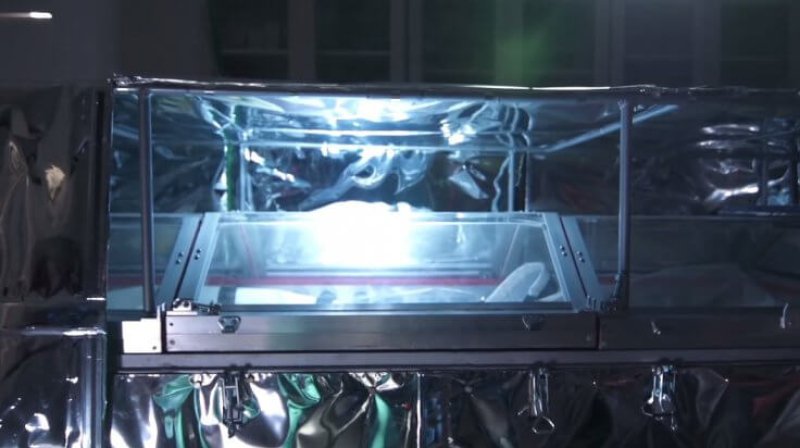
Toddler Matheryn Naovaratpong was cryogenically preserved shortly after dying from brain cancer. Image credit: Alcor Life Extension Foundation

Corpse-freezing hasn’t exactly gone mainstream, but most people are now familiar with the concept: you lay out a ton of cash, sign some papers, and spend a couple post-death decades in a cutting-edge meat locker, calmly awaiting the conditions for your eventual revival.

For this week’s Giz Asks, we reached out to a number of neuroscientists, bioethicists, cryo advocates and skeptics to get some sense of what will happen to those frozen former consciousness-havers. Honestly it’s not looking good for them just yet.

Nick Bostrom, Professor at the University of Oxford and Director at the Future of Humanity Institute and the Governance of AI program

Technically it seems like it should probably work. The freezing (rather: vitrification or plastination) and storing we can do now. The bringing back part may however require the assistance of machine superintelligence in order to repair the extensive cellular damage that occurs during the suspension process.

Cathal O’Connell, Researcher in 3D bioprinting and biofabrication at BioFab3D, St Vincent’s Hospital, Melbourne

All signs point to no. The freezing-down process is critical. Doing this in a way that preserves cell function—especially regarding connectivity in the human brain—is way beyond our current capabilities. Unfortunately, everyone who has ever been frozen so far is essentially turned to mush. These people will never be revived.

Read full, original post: Will Cryogenically Frozen People Ever Be Revived?

{{ reviewsTotal }}{{ options.labels.singularReviewCountLabel }}
{{ reviewsTotal }}{{ options.labels.pluralReviewCountLabel }}
{{ options.labels.newReviewButton }}
{{ userData.canReview.message }}

Related Articles

Infographic: Global regulatory and health research agencies on whether glyphosate causes cancer

Infographic: Global regulatory and health research agencies on whether glyphosate causes cancer

Does glyphosate—the world's most heavily-used herbicide—pose serious harm to humans? Is it carcinogenic? Those issues are of both legal and ...

Most Popular

Screenshot-2026-05-01-at-1.29.41-PM
Viewpoint: What happens when whole grains meet modern food manufacturing? Labels don’t tell the whole story.
S
As vaccine rejectionism spreads, measles may be taking a more dangerous turn
Screenshot 2026-05-06 at 2.56
Singularity crisis ahead? Can super babies save us from rogue AI geniuses?
Screenshot-2026-03-13-at-12.14.04-PM
The FDA wants to make many popular prescription drugs OTC—a great idea. Here’s why it’s unlikely to happen
Screenshot-2026-05-06-at-2.07.43-PM
Manufacturing a conspiracy: The timeline of how  the White House embraced the fringe claim that scientists are being mysteriously murdered
Screenshot-2026-05-01-at-11.56.24-AM
‘Science moves forward when people are willing to think differently’: Memories of DNA maverick Craig Venter
Screenshot-2026-04-30-at-2.19.37-PM
5 myths about summer dehydration that could damage your health — or even kill you
Screenshot-2026-04-20-at-2.26.27-PM
Viewpoint — Food-fear world: The latest activist scientists campaign: Cancer-causing additives
Screenshot-2026-04-03-at-11.15.51-AM
Paraben panic: How a flawed study, media hype, and chemophobia convinced the public of the danger of one of the safest classes of preservatives
images
The never-ending GMO debate: Pros and cons
glp menu logo outlined

Get news on human & agricultural genetics and biotechnology delivered to your inbox.