‘Synthetic media’: How AI could make the era of ‘fake news’ far worse

Deepfakes
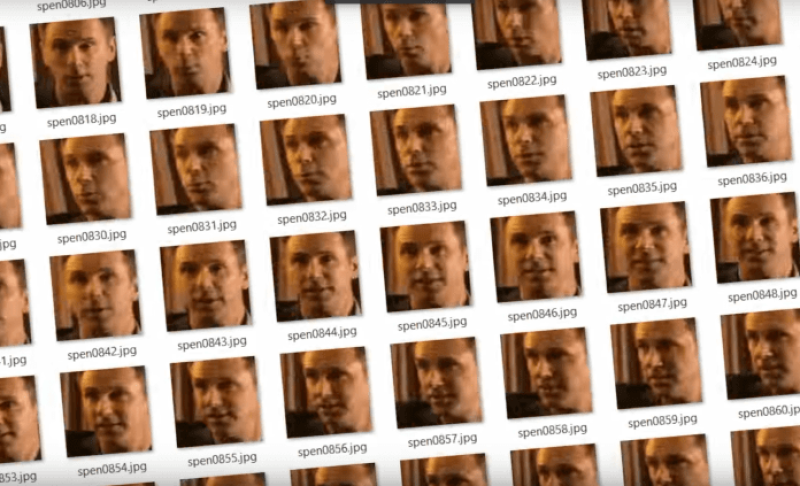
Deepfake files. Image credit: Tech Talks

In the emerging world of “synthetic media,” the work of digital-image creation—once the domain of highly skilled programmers and Hollywood special-effects artists—could be automated by expert systems capable of producing realism on a vast scale.

In a media environment saturated with fake news, such technology has disturbing implications. Last fall, an anonymous Redditor with the username Deepfakes released a software tool kit that allows anyone to make synthetic videos in which a neural network substitutes one person’s face for another’s, while keeping their expressions consistent.

Around the same time, “Synthesizing Obama,” a paper published by a research group at the University of Washington, showed that a neural network could create believable videos in which the former President appeared to be saying words that were really spoken by someone else.

“Why did Stalin airbrush those people out of those photographs?” he asked. “Why go to the trouble? It’s because there is something very, very powerful about the visual image. If you change the image, you change history. We’re incredibly visual beings. We rely on vision—and, historically, it’s been very reliable. And so photos and videos still have this incredible resonance.” He paused, tilting back into the sun and raising his hands. “How much longer will that be true?”

Read full, original post: In the Age of A.I., Is Seeing Still Believing?

{{ reviewsTotal }}{{ options.labels.singularReviewCountLabel }}
{{ reviewsTotal }}{{ options.labels.pluralReviewCountLabel }}
{{ options.labels.newReviewButton }}
{{ userData.canReview.message }}

Related Articles

Infographic: Global regulatory and health research agencies on whether glyphosate causes cancer

Infographic: Global regulatory and health research agencies on whether glyphosate causes cancer

Does glyphosate—the world's most heavily-used herbicide—pose serious harm to humans? Is it carcinogenic? Those issues are of both legal and ...

Most Popular

ChatGPT-Image-May-7-2026-12_16_37-PM-2
Viewpoint: Are cancer rates ‘skyrocketing’ as RFK, Jr. and MAHA claim? The evidence says mostly the opposite
Screenshot-2026-04-22-at-10.46.29-AM
Viewpoint: How to counter science disinformation? Science journalist offers 12 practical tips
Screenshot-2026-04-13-at-1.39.26-PM
Viewpoint: ‘Safer for children?’ Stonyfield yogurt under fire for deceptive organic marketing
Picture1-14
When superbugs threaten vulnerable children: Can AI help solve antibiotic resistance?
Screenshot-2026-04-23-at-11.00.36-AM
Regulators' dilemma: Thalidomide, Metformin, and the cost of getting drug approvals wrong
Picture1-1
Cooling the planet with balloons: Could a geoengineering gamble slow global warming?
bigstock opioids on chalkboard with rol
GLP podcast: 'Safe injection sites': enabling drug addiction or saving lives?
ChatGPT-Image-May-12-2026-08_39_41-PM
GLP podcast: Big Pharma, Big Ag, Big Food—health harming industries or life-saving innovators?

Sorry. No data so far.

glp menu logo outlined

Get news on human & agricultural genetics and biotechnology delivered to your inbox.