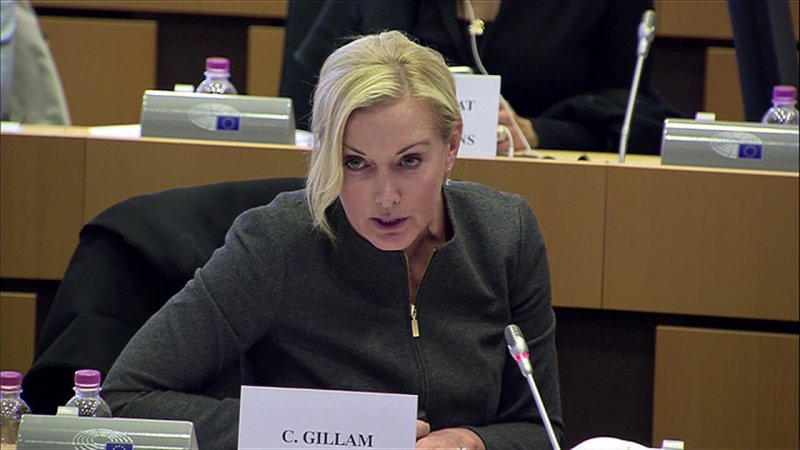

TIME magazine has a story on DeWayne ‘Lee’ Johnston who took Monsanto to court claiming RoundUp caused his non-Hodgkin lymphoma. The story has obvious appeal, but is crying out for balance and its provenance is, to be kind, awkward. I’d love to read his account of his experiences since the trial — but from a source I can trust. I’m dubious that [the author, Carey Gillam] employed by an [anti-GMO] advocacy organization [U.S. Right to Know], can be sensibly used as a journalist.
[Editor’s note: Dr. Grant Jacobs is a computational biologist based in New Zealand.]
I responded on TIME’s Facebook page:
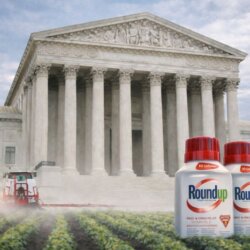 Supreme Court agrees to review Bayer’s request to block lawsuits claiming federally-approved herbicide glyphosate causes cancer
 Bayer on SCOTUS: It should not face liablity in state courts for alleged health damages caused by its weedkiller Roundup (glyphosate) when independent federal agencies have reviewed thousands of studies and labeled it safe


I’d encourage TIME to use independent science writers to cover contentious science-related stories. Your magazine has, or should have, a higher standard than drawing emotive pieces from advocacy groups unchallenged by balance.
…. The science claims made are presented without any balance …. The editors could, for example, have offered a short “fact check” box next to the article, or a matching article from a (biology/medicine) science writer ….
The writer is not a science writer, nor independent of the topic she is covering.
She is [a] ‘researcher’ …. for an advocacy organisation opposed to GMOs …. describing her group as “a nonprofit food industry research group” leaves out that [its] aim [is] to oppose these products …. These groups …. are not sound sources for independent journalism ….
Read full, original article: Glyphosate and TIME magazine: writer employed by advocacy group a dubious choice