
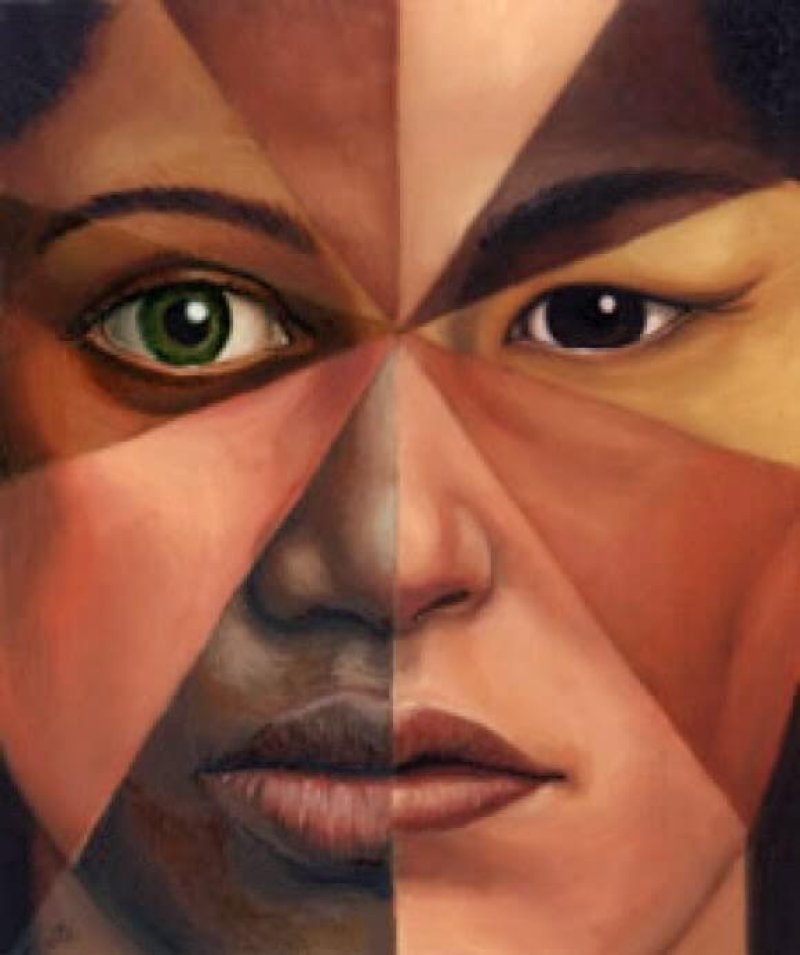
What if you think you’re Black, but your DNA test disagrees?

race

Three years ago, when Sigrid E. Johnson was 62, she got a call from a researcher seeking volunteers for a study on DNA ancestry tests and ethnic identity. Johnson agreed to help.

…

Johnson’s father, a chauffeur who later became a superintendent at a housing project in North Philadelphia, had a golden-brown complexion. Her mother, who said her own father was a white Brit and her mother was half African-American and half Native American, was light-skinned.

…

Johnson figured it was no big deal: She was half African and half Italian. “I knew what the results would show when they came back — that is, until the results actually came back.”

…
The results, which indicated a stunning level of precision, shocked Johnson. They said she was 45.306 percent Hispanic, 32.321 percent Middle Eastern, 13.714 percent European and 8.659 percent “other,” which included a mere 2.978 percent African.

…

Johnson, now 65, hoped the [23andMe] tests would conclude that her genes aligned with who she believed herself to be. In early August, with the kits in hand, she walked around her apartment, trying to work up enough saliva to fill the little collection tubes. Afterward, Johnson was both eager for quick results and hesitant about what they might say. “You know,” she said, “even if the results are the same as they were before, I am still a black woman.”

Read full, original post: Sigrid Johnson Was Black. A DNA Test Said She Wasn’t.

Related Articles

Infographic: Global regulatory and health research agencies on whether glyphosate causes cancer

Infographic: Global regulatory and health research agencies on whether glyphosate causes cancer

Does glyphosate—the world's most heavily-used herbicide—pose serious harm to humans? Is it carcinogenic? Those issues are of both legal and ...

Most Popular

ChatGPT-Image-Mar-10-2026-01_39_01-PM
Viewpoint—“Miracle molecule” debunked: Why acemannan supplements don’t work
Screenshot-2026-09-22-at-12.26.15-PM
‘Forever chemical’ concerns: Separating hysteria from reasonable concern in the debate over PFAS danger
Personalized-Cancer-mRNA-Vaccine-Vial
Personalized mRNA vaccines are poised to revolutionize cancer treatments. Here are the barriers.
AI Doctor with a Digital Neural Head
Utah becomes first state to empower AI to bypass doctors and prescribe certain drugs
AI-Force-Uniform-Insignia-Close-Up
Trump wants an AI Force like Space Force, but that could make AI’s risks harder to manage
Radioactive-Americana-Collage-2
The kooky logic behind the raft of spurious cancer claims from Harvard’s T.H. Chan School of Public Health
Screenshot-2026-09-22-at-10.54.12-AM
‘They misunderstand science’: Research attempting to tie autism to changes in the gut microbiome comes under fire
Deepfake Democracy Media Mosaic
31 states have passed a patchwork of laws to limit election deepfake commercials. They’re not working very well.
Screenshot-2026-10-11-at-8.10.44-PM
Tearful onions? CRISPR has a solution for that
Screenshot-2026-10-08-at-1.23.28-PM
Countries around the world are rushing to pass teenage social media bans. Could they backfire?
Screenshot-2026-10-05-at-11.57.44-AM
Scaremongering or legitimate safety concerns? The political dogfight over America’s food safety system
glp menu logo outlined

Get news on human & agricultural genetics and biotechnology delivered to your inbox.



















