Young people with autism have more psychiatric and medical conditions than do their typical peers or those with attention deficit hyperactivity disorder (ADHD), a new study suggests.
The early onset of these problems suggests they do not stem solely from a lifetime of poor healthcare, says lead researcher Lisa Croen, director of the Autism Research.
…
In general, about one in three people with autism has another psychiatric condition, such as bipolar disorder or anxiety, a rate higher than in the other three groups.
There are exceptions: Depression is more common in people with ADHD than in those with autism. And excessive drug use is least common in the autism group.
Still, the odds of suicide are nearly four times higher among teenagers and young adults with autism than in the control group, the researchers found. “Great attention needs to be paid to help prevent these behaviors,” says Kyle Jones, assistant professor of family and preventative medicine at the University of Utah in Salt Lake City, who was not involved in the study.
…
“One of the big general lessons from the study is how much medical, psychiatric and social issues interplay to impact the health of this population,” Jones says. “Attention to all of these aspects is critical to providing the care that they need and deserve.”
It’s unclear why people with autism have high rates of medical problems, but determining the reasons may help improve their care.
South Korea is importing Canadian wheat again eight days after suspending purchases following the announcement that a handful of unauthorized genetically modified plants were found in Alberta.
Rigorous testing showed there was no evidence of genetically modified wheat in commercial shipments, the Alberta Wheat Commission said in a Tuesday [June 26] news release.
“This resolution is a critical step forward in providing assurance to Canadian wheat customers that Canada does not produce or ship genetically modified wheat,” commission chairman Kevin Bender said.
Canada sold $56 million worth of wheat to South Korea in 2017, or less than one per cent of the country’s total $6.6-billion wheat exports.
A contractor spraying for weeds along an access road in southern Alberta last summer informed local authorities that a few plants weren’t killed by Roundup herbicide, the Canadian Food Inspection Agency revealed earlier this month.
Tests found the plants were genetically modified to tolerate the weed killer, but didn’t make their way into the food supply and were isolated to the ditch where they were found.
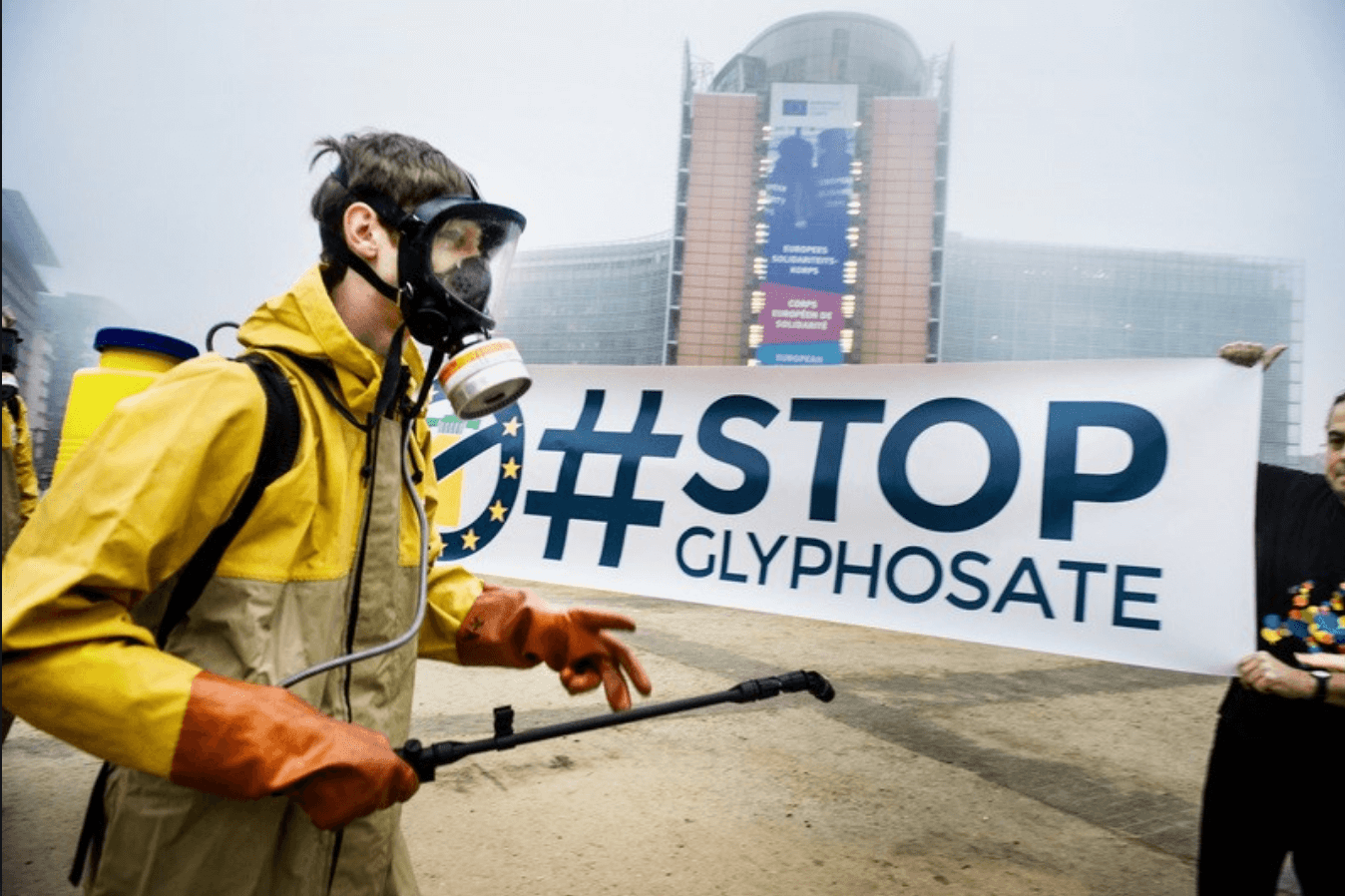
The word ‘evidence’ implies objectivity based on facts and science. But the reality reveals a wide gap between theory and practice, as demonstrated by numerous recent cases, in particular, the glyphosate affair. In the EU, cliché trumps science and emotion win over objectivity – that is my belief.
Two questions come immediately to my mind: are a million signatures collected by Greenpeace against glyphosate more important in the eyes of the legislator than the positive opinions given by the European Food Safety Authority (EFSA) and the European Chemicals Agency (ECHA)?
And why, unlike Greenpeace, are the plant protection industry and farming world so incapable of engaging with public opinion and mobilising local networks?
…
The influence of emotion, subjectivity and cliché over EU rules grows constantly, affecting all policies linked to public opinion. The fear is that the worst is yet to come.
…
[I]t is absolutely essential to clarify the exact role of science in regulation, strengthen the credibility of scientific authorities assisting the EU legislator and draw inspiration from (but not duplicate) the US Food and Drug Administration, where genuine scientific expertise prevails over all other considerations.
Editor’s note: Daniel Guéguen is a European lobbyist and professor at the College of Europe
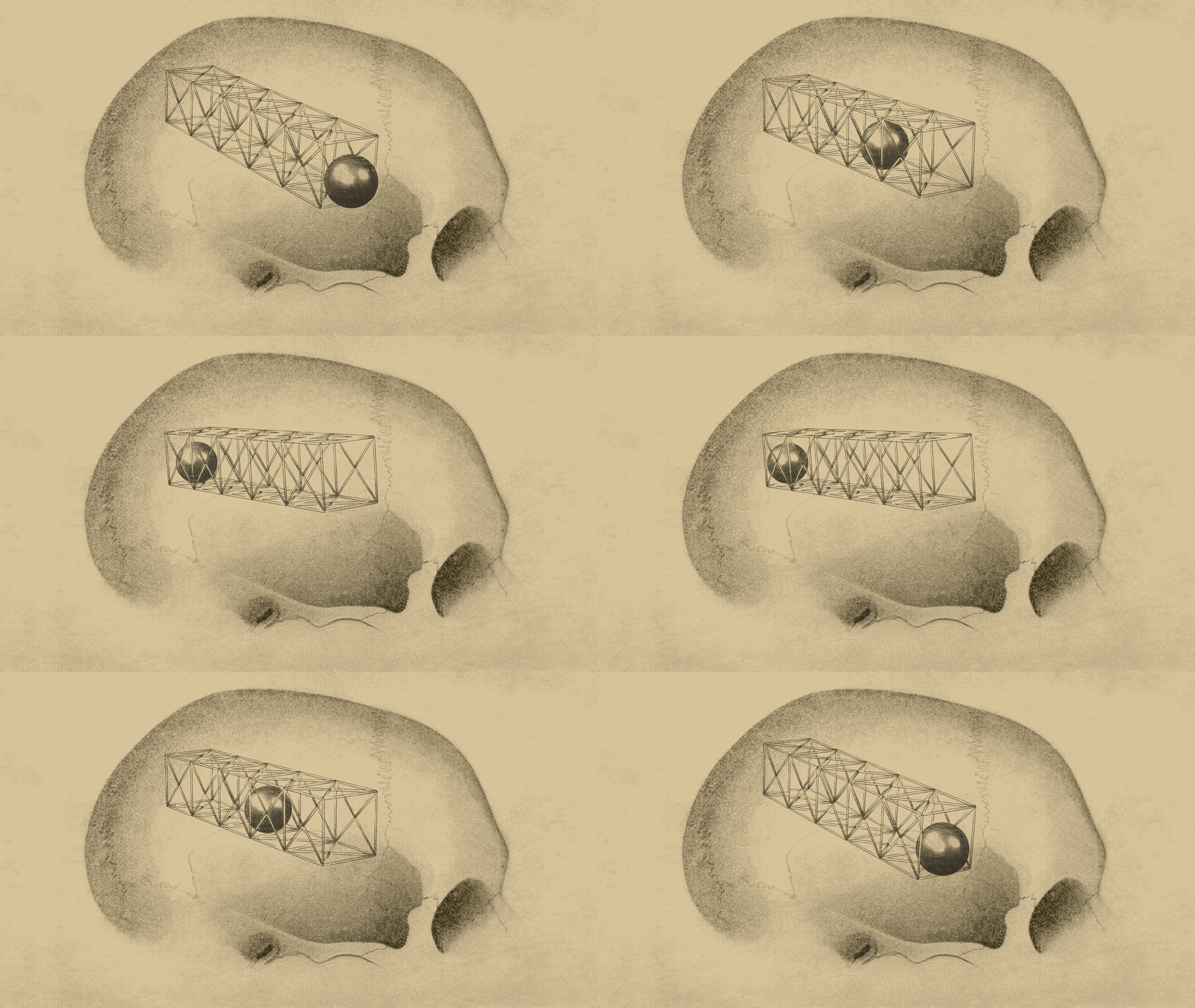
Gerardo Ortiz remembers well the time in 2010 when he first heard his Indiana University colleague John Beggs talk about the hotly debated “critical brain” hypothesis, an attempt at a grand unified theory of how the brain works. Ortiz was intrigued by the notion that the brain might stay balanced at the “critical point” between two phases, like the freezing point where water turns into ice.
…
Ortiz promptly identified one of the knottier problems with the hypothesis: It’s very difficult to maintain a perfect tipping point in a messy biological system like the brain.
…
The brain’s tens of billions of neurons form a highly complex, interconnected network. [Physicist Per] Bak hypothesized that, like a sandpile, the network balances at its critical point, with electrical activity following a power law. So when a neuron fires, this can trigger an “avalanche” of firing by connected neurons, and smaller avalanches occur more frequently than larger ones. In hundreds of papers over the past three decades advancing the idea, researchers have argued that operating at criticality would optimize the brain’s performance by maximizing information transfer and processing.
…
[Ortiz and Beggs] have argued that perhaps the brain inhabits a “quasicritical state.” That is, rather than sitting at a precise critical point, it migrates around a broader but well-defined region, “a volume in phase space where the system can adapt to work efficiently and optimally.”
It’s an indisputable fact that organic farming is on the up, now more than ever. With sales of 8.2 billion euros in 2017, organic – “green gold” – is attracting growing interest among the major players in the agri-food and distribution industries.
…
Lured by false promises of a diet supposed to guarantee them better health, consumers are increasingly clamouring for organic. Regular reminders from the organic lobby sharp shooters about the supposed dangers of products from conventional agriculture, combined with the feverish enthusiasm of politicians for all things organic, maintains a very favourable climate for this farming method, offering a promising financial future for producers.
Except that…
If we examine in a little more detail what is happening in the United States, often a trend-setter for the Old World, there could be some clouds on the horizon in this beautiful clear blue sky. “Hampered by abundant production, destabilised by the rise of giant farms, competing with plant milks: times are tough for American small organic milk producers who are hunkering down hoping not to have to throw in the towel” notes AFP’s US correspondent in a briefing dated 13th March 2018.
“With current prices, I’m losing money,” says Spencer Aitel, a farmer with a herd of 55 cows in Maine (North East USA).
Rick Potts is no atheist-evolutionist-Darwinist. That often comes as a surprise to the faith communities he works with as head of the National Museum of Natural History’s Human Origins Program in Washington, D.C.
Raised Protestant — with, he likes to say, “an emphasis on the ‘protest’” — the paleoanthropologist spends his weekends singing in a choir that sings both sacred and secular songs. At 18, he became a conscientious objector to the Vietnam War, because he felt it was antithetical to people trying to understand each other. In college, he studied comparative religion. “I wanted to understand that universality of human beings,” he explains, framed by the early hominin skull casts that line his office on the National Mall. “How do you understand all of human beings as a totality, rather than the divisions between people?”
That’s why, for him, human evolution is the perfect topic to break down entrenched barriers between people in an increasingly polarized, politicized world.
Potts first joined the Smithsonian Institution, the United States’ vast network of public museums and research centers, back in 1985, and he knew he wanted to create a new kind of human evolution exhibit — one that went beyond phylogeny and taxonomy. The hall’s lofty title — “What Does It Mean To Be Human?” is no accident. “Ours is the only one to ask that larger question,” he says of the installation.
Still, by 2010 Potts says he realized that the only people coming to the exhibit were those who had no quarrel with the science of evolution. In order to reach the more than one-hundred million Americans who still question that science, he would have to take the evidence — carefully packaged — to them.
Such was the origin of the Human Origins Traveling Exhibit, which wrapped up last year. The idea was to bring key parts of the permanent installation in the nation’s capital to diverse communities, including ones that were rural, religious, remote. At least 10 of the 19 sites the Smithsonian visited were deemed “challenging” — places where the researchers suspected that evolution might still be a contentious subject, for religious or other reasons. The exhibit would be accompanied by a team of clergy members and scientists handpicked by the Smithsonian, and they would engage the public and local clergy in conversations about this fraught topic.
This project was funded in part by the John Templeton Foundation, a wealthy group that backs efforts to bring religion and science into harmony, as well as the Smithsonian’s Peter Buck Fund for Human Origins Research. Part of the stated goal was straightforward science education. After all, evolutionary theory is the backbone of chemistry and biology, the through-line that makes sense of all the sciences. Human evolution is also “one of the highest hurdles — if not the highest hurdle — to science education in America,” says Potts, a 64-year-old with wire-rim glasses and a gentle demeanor.
But merely teaching evolutionary science wasn’t the point. Potts was going for something more subtle: Not conversion, but conversation.
“Our goal is to lower the temperature,” he says.
If you aren’t caught on one side of the evolution debates, it can be hard to grasp what all the fuss is about. Here’s the short version: Charles Darwin’s crime wasn’t disproving God. Rather, the evolutionary theory he espoused in “On the Origin of Species” rendered God unnecessary. Darwin provided an explanation for life’s origins — and, more problematically, the origins of humanity — that didn’t require a creator.
What would Darwin think if he could see the evolution wars rage today? If he knew that, year after year, national polls find a third of Americans believe that humans have always existed in their current form? (In many religious groups, that number is far higher.) That, among all Western nations, only Turkey is more likely than the United States to flat-out reject the notion of human evolution?
Those who research the topic call this paradigm the “conflict mode” because it pits religion and science against each other, with little room for discussion. And researchers are starting to realize that it does little to illuminate the science of evolution for those who need it most. “Acceptance is my goal,” says Jamie Jensen, an associate professor who teaches undergraduate biology at Brigham Young University. Nearly all Jensen’s students identify as Mormon. “By the end of Biology 101, they can answer all the questions really well, but they don’t believe a word I say,” she says. “If they don’t accept it as being real, then they’re not willing to make important decisions based on evolution — like whether or not to vaccinate their child or give them antibiotics.”
In 2017, biology education researchers at Arizona State University tested whether teaching strategies could lower this sense of conflict. For a study, they added two-week modules in biology classes to directly address students’ philosophical roadblocks and brought in contemporary scientists with religious backgrounds. By the end of the class, the authors noted in a paper, students who perceived a conflict were reduced by half, leading them to conclude that discussing the compatibility of religion and evolution “can have a positive impact on students that may extend beyond the classroom.”
This work is part of a wider movement seeking to bridge the gap between evolutionary science and religion — whether real or perceived. The big players include the BioLogos Foundation, an organization that stresses the compatibility of Christianity and science founded by the director of the National Institutes of Health, Francis Collins, who is an Evangelical Christian, and the American Association for the Advancement of Science’s Dialogue on Science, Ethics and Religion (DoSER), a program that aims to encourage science dialogues within faith communities.
These groups recognize that cultural barriers, not a lack of education, are what’s preventing more Americans from accepting evolution. “I never want to downplay the importance of teaching our students evolution, I think it’s the most important thing we do,” says Elizabeth Barnes, one of the co-authors of the biology education paper. “But it’s not enough if we want students to actually accept evolution.”
The National Museum of Natural History’s traveling evolution exhibit may be among the most ambitious efforts to bridge the science-faith divide. The idea of going from a debate to a conversation “is a game changer, in terms of the rules of how you listen and how you talk to someone,” says Potts. To do that, he sought to bring human evolution not only to people who wanted to hear about it, but to those who really, really didn’t.
We knew there’d be backlash,” says Penny Talbert, a 47-year old who was born into a Pennsylvania Dutch family and now works as a librarian and executive director of the Ephrata Public Library in Pennsylvania. “We didn’t expect the anger.”
Of all the communities chosen to host the Smithsonian exhibit in 2015, Ephrata would prove to be the most challenging. The town, which means “fruitful” and gets its name from the biblical site of Ephrath, is in the heart of Amish country. Most of its residents are conservative Christian and Anabaptist (Amish, Mennonite, Brethren); more than 70 percent voted for Donald Trump. Ephrata was also the only town that staged a substantial boycott to the Smithsonian exhibit, which included touch-screen kiosks, casts of prehistoric skulls, and a panel pointing out that Homo sapiens share 60 percent of their genes with bananas, 85 percent with mice, and 75 percent with chickens.
But it was a near life-sized likeness of a female Neanderthal and her naked child that sparked the most furor among the 30,000 people in the area the library serves. The reproduced statue was stationed at the library’s front entrance on a wooden support. When families entered, they would often cover their children’s eyes throughout the exhibit. A group called Young Earth Action started a website called “The Devil Comes to Ephrata,” and an editorial in the local paper accused Talbert of “waging spiritual warfare” on her community.
“What troubled me most was your statue of a naked little boy and lady — right as you walk into the library,” one woman wrote to the library’s board. “I was shocked. Our local library should be a safe place for our children, not a place where we have to worry what our children will see when we come into the library.” The letter was signed, “A Troubled Mom.”
When I visited Talbert last summer, I asked her if she could think of any topic more offensive to her community than human evolution. She was wearing jeans and maroon sunglasses; her hair was brown and streaked with gray.
“Library abortions would probably be more offensive,” Talbert replied, “but that would probably be it.”
Of course, no one who comes to the Human Origins exhibit enters as a blank slate; visitors come in shaped by a lifetime of culture and environment. And a growing body of scientific research suggests that facts don’t change people’s beliefs — particularly when those beliefs are wrapped up in their sense of core identity.
“In what has become a relatively contentious society, can we create spaces when people who have serious and profound differences in views can actually engage each other in conversation?” asks Jim Miller, the president of the Presbyterian Association on Science, Technology, and the Christian Faith and an adviser for the Human Origins Program. The hope, Miller says, is “that we can reach not necessarily a level of agreement, but some level of understanding.”
Fabricated skulls traveled the country as part of the exhibit, which encouraged visitors to consider evolution as something that links all of humanity, rather than divides it. Image credit: Smithsonian Institution
Dan Kahan, a science communication expert at Yale Law School, thinks that’s possible, but only if we abandon some tired rhetorical terrain. Asking people whether or not they “believe” in evolution is the wrong question, Kahan’s work suggests, because it forces them to decide between what they know and who they are.
When I told Kahan about the Smithsonian’s project, he agreed with the premise. “I think the organizers are hitting on a really important point, which is that you don’t want to put people in the position of choosing between what science knows and being who you are as a member of the social community,” he says.
“In fact, the literature suggests that’s the worst thing you can do if you want people who have that identity to openly engage with evolution,” he adds.
Mis- and disinformation are distorting science and public policy. Subscribe to our Daily and Weekly Digests for incisive coverage of ‘disruptive’ innovations in AI, agricultural biotechnology, food, chemicals, nuclear energy, vaccines, and other disruptive innovations.
Better, he suggests, to ask these communities how they think science would explain the mechanisms behind evolution. “Science should be true to science, and then figure out how to make the experience as accessible as possible to as many diverse people as they can,” Kahan says. This involves “teaching them what science knows, you’re not making them into another person.”
About halfway through the Human Origins Hall is an interactive kiosk that asks the titular question, “What does it mean to be human?” Here, visitors can view past responses: “We appreciate beauty,” reads one. “To believe in right versus wrong,” says another. “Write poetry and equations … To create and talk incessantly about it … Imagine the impossible … Laughter … To weep for the loss of a loved one … Understand our connection to other living creatures.”
Then visitors are invited to write in their own answers. Many of these, which appear on the Human Origins website, are God-focused, anti-evolution, or have nothing to do with science, but that doesn’t bother Potts. Of course, he’d like to see a society that more readily accepts the science of evolution. “But my philosophy about that is that acceptance has to come from within,” he says. “It doesn’t come from an external effort to gain acceptance.”
What can come from the outside is understanding through conversation. Even in Ephrata, Talbert suggests, the biggest surprise was how much engagement there was around the exhibit. “Not everyone left those conversations feeling incredibly thrilled,” Talbert says, “but I think they all left feeling like they’d been heard.”
And for Potts, that has always been the goal: to change the national rhetoric from a roiling debate to a simmering conversation. “The conflict mode is something we have inherited from past generations, and it’s really up to us whether we want to continue that,” he says. “You have a choice.”
Rachel E. Gross is the online science editor at Smithsonian Magazine in Washington, D.C. She was previously a reporter for Slate Magazine, a researcher at WIRED Magazine, and a blogger at The New York Times. Her work has appeared in The Atlantic, National Geographic, New Scientist, Science, and The Jewish Daily Forward. Follow her on Twitter @rachelegross
The Food and Drug Administration on Monday [June 25] approved the country’s first drug derived from marijuana, a medication that treats two rare and devastating forms of epilepsy.
The drug, GW Pharmaceuticals’ Epidiolex, is made of cannabidiol, or CBD, a component of marijuana that does not give users a high. It is given as an oil, and in clinical trials, it was shown to reduce the number of seizures by about 40 percent in patients with Dravet or Lennox-Gastaut syndromes.
“This approval serves as a reminder that advancing sound development programs that properly evaluate active ingredients contained in marijuana can lead to important medical therapies,” FDA Commissioner Scott Gottlieb said in a statement.
…
Before GW can market Epidiolex, though, the Drug Enforcement Administration will have to reclassify CBD, which in this case, because it comes from marijuana, is considered a Schedule I drug, meaning it has no medical value and a high risk of abuse. The agency is expected to do so within 90 days.
…
Patients with Lennox-Gastaut and Dravet syndromes, which typically emerge in the first few years of life, can suffer from debilitating and recurrent seizures, sometimes dozens a day…
Although Epidiolex was only approved for the two specific conditions, analysts expect doctors to prescribe it off label for a variety of epileptic diseases.
The race to determine the structure of DNA has a dark subtext that is frequently ignored when discussing this seminal discovery in biology. Competing groups at Cambridge and King’s College set their sights on resolving this important question. King’s College recruited a bright young x-ray crystalographer, a scientist that used energy to examine molecular structure. Her name was Dr. Rosalind Franklin. While teams in this old-boy’s network pushed forward, Franklin used her skills to generate data to answer the question. Her data would provide the information needed to determine the structure of DNA. However, she was not credited beyond a tiny footnote, and died at 37 never realizing how her data illuminated the discovery of DNA’s double-helical structure. The story is told by Dr. Mark Lawler of Queens University in Belfast, Northern Ireland.
Should a federal agency issue a regulation that will impose up to $3.5 billion in costs next year and billions more in the coming decade — while delivering essentially no benefits?
That sounds crazy. But a few weeks ago, the Department of Agriculture proposed to do exactly that.
OK, not exactly — but pretty close. The proposal is the outgrowth of the longstanding national battle over whether to require labels for bioengineered (or genetically modified) foods. The USDA’s analysis of costs and benefits deserves careful attention, even if it raises serious questions about its own proposal.
…
The [USDA] was candid about the high costs of its proposal. In the first year, companies — mostly food manufacturers — would have to spend somewhere between $600 million and $3.5 billion in compliance costs. After a period of adjustment, the annual costs would range from $132 million to $330 million. In the history of federal regulation, that may not be monstrously expensive, but it’s a lot.
…
Skeptics might expect a federal agency in the Trump administration to highlight evidence against new regulation in any case. But the USDA’s analysis is consistent with the scientific consensus; it does not depart from the views of regulators in the Obama administration.
Editor’s note: Cass Sunstein is a professor at Harvard Law School
The San Fransisco Superior Court will soon hear testimony from a man dying of non-Hodgkin’s lymphoma who claims Roundup (glyphosate) caused his cancer. This trial is the first of many against Monsanto under claims its widely-used herbicide lead to cancer.
…
Monsanto says they’ll be successful at trial because time after time glyphosate has proven to be safe.
“This is 100% based on IARC [which is associated with the World Health Organization, WHO],” says Scott Partridge, Monsanto vice president of global strategy in an interview with AgWeb concerning the trial. “Since then we have seen a number of things, WHO has come out and said glyphosate isn’t a carcinogen, we’ve reregistered glyphosate in a number of countries—namely EU—and the most significant epidemiology study found no association with glyphosate and any form of cancer.”
…
If lawyers and activists are successful, this could have a sizeable effect on the way Midwest farmers operate. A win for the plaintiff could cause a trickle-down effect that limits the way farmers can use the world’s most popular herbicide.
Read full, original article: Farmers Around the World Should be Watching the Roundup Cancer Case
In many of our genome-obsessed minds, the problem of cancer had become reduced to a rather simple, scalable algorithm: find the mutations in a patient, and match those mutations with a medicine. All the other variables — the cellular environment within which the cancer cell was inescapably lodged, the metabolic and hormonal milieu that surrounded the cancer or, for that matter, the human body that was wrapped around it — might as well have been irrelevant blobs receding in the distance.
…
Mutations within a cancer cell certainly carry information about its physiology — its propensity for growth, its vulnerabilities, its potential to cause lethal disease — but there’s a world of information beyond mutations.
…
What if the “really clinically useful information” lies within these domains — in the networks of normal genes co-opted by cancer cells, in the mechanisms by which they engage with their host’s immune system or in the metabolic inputs that a cell needs to integrate in order to grow?
…
The point is that precision medicine is not just precision mutant-hunting.
…
[T]he reinvention of cancer therapy needs time, patience and diligence — and, yes, skepticism. By narrowing our definition of precision medicine too much, we almost narrowed our ambition to deliver precise, thoughtful therapy — or, at times, no therapy — to our patients. It would be a shame to view cancer through such narrow lenses again.
Toronto businessman Harold Peerenboom and Marvel Entertainment chairman Isaac “Ike” Perlmutter were locked in an absurd suburban skirmish, bickering over who should run the tennis center at Sloan’s Curve, the exclusive Palm Beach waterfront.
…
Peerenboom began receiving volumes of hate mail, and his neighbors and business associates received letters accusing him of murder and molesting children.
…
Peerenboom, seeking to pin Perlmutter as the mastermind behind the hate mail campaign, conspired with his attorney to covertly collect DNA from Perlmutter in order to compare it to DNA extracted from saliva on the hate mail envelopes.
…
The Perlmutters were alleging that Peerenboom and his attorney had effectively stolen their DNA. Now, what began as a tete-a-tete about a community tennis center is now poised to potentially reshape how we think about who owns our DNA and the information it encodes.
…
To argue that something has been stolen, you first have to make the case that you owned it in the first place. And in the past, courts have generally upheld that samples of your biological material are not something you can own.
…
Even if the Perlmutters don’t eventually prevail, the case is significant, said [Jessica Roberts, the director of the University of Houston Health Law and Policy Institute]. “It goes against almost 30 years of what we thought we knew about people’s interest in their genetic data,” she said.
The glyphosate you use on the farm hasn’t changed — but public attitudes, at least in some quarters, have radically shifted.
That’s part of the warning in this year’s edition of The Keep it Clean! Program. The site has information on maximum residue levels and regulatory updates but also reflects developments at the national and international levels.
“The Keep It Clean! campaign is targeted to increase awareness of these international issues,” said Cam Dahl, president of Cereals Canada.
“Missing maximum residue limits might pose a trade risk and that happens if one of our major trading partners has not approved a product. It might be legal to use in Canada, but if its use is going to put markets at risk, this is something that we will use the Keep It Clean campaign to notify farmers about.”
Growers “should be very careful” in following instructions on labels when spraying, he said.
“That especially includes the fall application of glyphosate,” said Dahl. “Glyphosate is not registered as a desiccant and is not meant to be used to dry down crops.”
There’s an artificial intelligence system that can peer into the future and anticipate what you’re about to do.
…
[F]ortune-telling AI can only guess what someone will do within the next few minutes. As long as those next few minutes definitely involve cooking. And the past few minutes also involved cooking. OK, look, we’re just going to come out and say it: scientists created a salad- and breakfast-food-predictor. New research that will be presented at the IEEE Conference on Computer Vision and Pattern Recognition later this month details how a machine learning algorithm was trained with hours of videos of people preparing salads and breakfast food. Now it can now predict the next few steps of all sorts of salad recipes when the system sees someone start to make one. The scientists behind the algorithm envision a future in which smart home devices can recognize what you’re doing and automatically step in to help. Maybe your smart speaker could remind you that you skipped a step of a recipe, or a futuristic Bluetooth stove could adjust the heat as you put each ingredient on the skillet.
…
Of course, in order for such a system to work, you would have to be okay with setting up all sorts of internet-connected gadgets in your home, and [that] might not be worth the AI-generated kitchen tips.
For decades, biologists have believed a key enzyme in plants had one function—produce amino acids, which are vital to plant survival and also essential to human diets.
But for Wellington Muchero, Meng Xie and their colleagues, this enzyme does more than advertised. They had run a series of experiments on poplar plants that consistently revealed mutations in a structure of the life-sustaining enzyme that was not previously known to exist.
Their discovery could alter the course of gene functional studies in plants and, if applied, it could squeeze more potential out of poplar as a renewable resource for making biofuels and bioproducts.
…
They found that poplar plants with certain mutations created unexpectedly low levels of lignin across different environments and tree ages.
Lignin fills spaces in plant cell walls to provide sturdiness. Muchero and his team study the genetics of poplar as part of the lab’s the Center for Bioenergy Innovation, or CBI, to develop methods to grow modified varieties with low lignin content. Less lignin makes plants easier to breakdown during the industrial poplar-to-biofuels process.
An outside-the-box theory received new attention in an extensive study published [June 21] to the journal Neuron. Researchers based out of the Icahn School of Medicine at Mount Sinai, the National Institutes of Health, and Arizona State University cooperated on numerous analyses to implicate herpesviruses, and particularly one called HHV-6, as having a possible role in Alzheimer’s Disease.
HHV-6 and its close sibling HHV-7 infect more than 90% of people in North America by the time they are a few years old. Infections are almost entirely asymptomatic.
…
[Geneticist Joel] Dudley and his co-authors were examining a bounty of brains from deceased patients with brain disorders and stumbled upon a number of curious correlations. For starters, HHV-6 DNA and RNA were highly concentrated in the brains of those diagnosed postmortem with Alzheimer’s disease. At the same time, HHV-6 was not as abundant in the brains of those with other neurodegenerative disorders. Subsequent analyses revealed that the herpesvirus genes were interacting with genes associated with risk for Alzheimer’s Disease.
The present findings are thorough, but do not definitively implicate herpesviruses as the cause of Alzheimer’s disease. It’s still possible that HHV-6 viruses are merely opportunistic agents, infecting brains already weakened by disease. Still, given the current bleak landscape of Alzheimer’s treatment research, herpesviruses are definitely worth investigating further.
Read full, original post: New Evidence for a Controversial Alzheimer’s Theory
In the failing light of an unusually warm January day, Jerry Erstrom and I race along a dirt track behind Rod Frahm’s white pickup. Here, near Ontario, Oregon, a stone’s throw from the Idaho border, Frahm grows onions, squash and corn. But today, he wants to show us something he’s growing against his will: a genetically engineered turfgrass designed for golf courses.
…
This is indeed the variety of creeping bentgrass that agribusiness giants Scotts Miracle-Gro and Monsanto engineered to tolerate the herbicide Roundup.
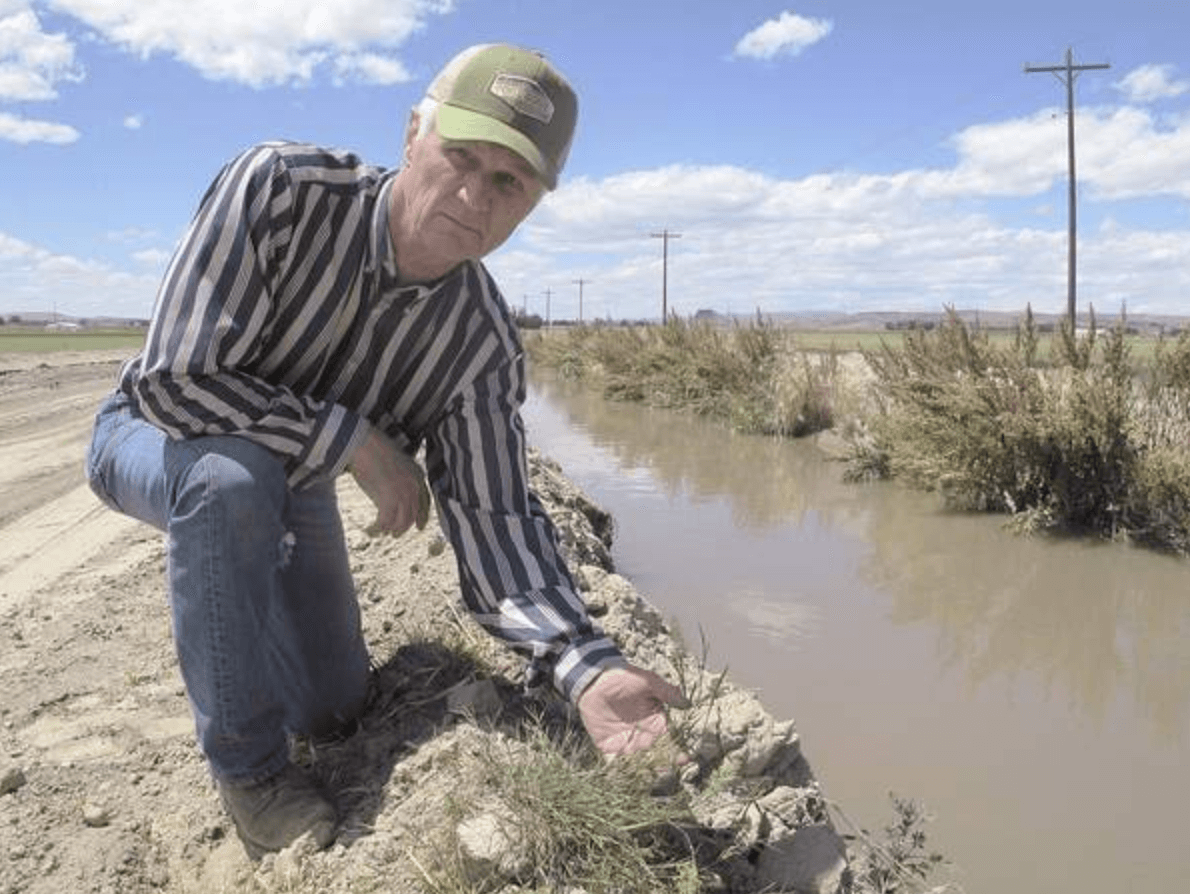
The grass arrived here uninvited, after crossing the Snake River from old seed fields in Idaho. The U.S. Department of Agriculture, which vets most new genetically engineered products, had not approved the plant’s release. But in 2010, landowners discovered it growing in great mats throughout the irrigation system that stretches like a spider web across Malheur County.
…
Creeping bentgrass has not created a catastrophe, as some anti-GMO groups warned it would. But it thrives in canals and ditches, where it collects sediment and impedes water flow, and it has proved difficult to control. That makes it a headache for Frahm and other growers — like the heavy snows that crushed their onion sheds last year, and the host of other weeds they already battle.
In an ischemic stroke a clot blocks a blood vessel to the brain, depriving oxygen and nutrients to part of the crucial organ. Without immediate treatment this can cause irreversible tissue damage.
…
Even after successful clot removal, however, the rush of blood back into the brain and the dying tissue left behind can lead to additional complications such as inflammation.
…
But now, armed with guidelines for more rigorous animal studies and a better understanding of the processes that occur after stroke, researchers believe they are closer to finding compounds that can effectively reduce brain damage and lessen long-term effects on neurological function. Recent investigations in mice reveal that addressing the immune response—by inhibiting its harmful effects immediately after stroke or promoting its ability to aid recovery—may indeed lead to better outcomes.
…
By combining Crry, a molecule that inhibits the complement system, and B4scFv, an antibody fragment engineered to identify stressed and injured cells, they were able to create a drug that could locate the stroke site and stop immune cells from attacking brain issue only there.
…
Animals treated up to 24 hours after stroke had significantly less brain damage and fewer neurological problems, such as impaired movement and memory, than the untreated animals.
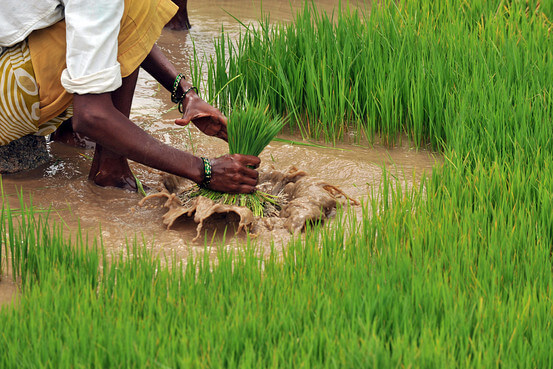
Researchers at the Hyderabad-based Indian Institute of Rice Research have developed a new variety of the popular Improved Samba Mahsuri (ISM) rice that can resist bacterial blight disease.
Bacterial blight disease, which affects rice crop, is caused by bacteria, Xanthomonas oryzae, and drastically reduces rice productivity.
The high yielding ISM variety is already protected against bacterial blight by three genes, but the new variety has been developed by adding another gene, Xa38, that increases the resistance. “Till now about 41 resistant genes have been identified from diverse sources.
These genes differ from each other in their mode of action. While some are broad spectrum, others are narrow in their resistance spectrum,” explained Dr Gouri Sankar Laha, who led the study, while speaking to India Science Wire.
The researchers used Marker assisted Backcross Breeding or MABB technique to accomplish the gene insertion. Unlike transgenic techniques used in genetically modified crops, MABB is less laborious but more efficient than traditional methods of ‘gene’ transfer. Besides it does not require regulatory clearances necessary for transgenic crops.